Key takeaways
- Short answer: wet grip cannot be fixed by naming one rubber hardness, tread depth or coefficient of friction.
- Slip resistance changes with the outsole material, tread, contact area, floor, liquid, temperature, wear and test motion.
- ISO 13287:2019 specifies a slip-resistance test method for personal protective equipment footwear.
Short answer: wet grip cannot be fixed by naming one rubber hardness, tread depth or coefficient of friction. The buyer must define the intended surface, contaminant, use case and test method, then approve the outsole compound and tread as one system. Bulk control should trace the rubber lot, molding conditions and agreed verification result.
Why a universal wet-grip number is misleading
Slip resistance changes with the outsole material, tread, contact area, floor, liquid, temperature, wear and test motion. A result measured on one surface cannot be presented as proof for a different market or use condition. This is why a useful footwear specification starts with the test setup, not with a marketing phrase such as “high grip.”
ISO 13287:2019 specifies a slip-resistance test method for personal protective equipment footwear. Its scope matters: footwear making a slip-resistance claim may fall into a regulated PPE context, while ordinary casual or running footwear may require a project-specific method selected with the laboratory and destination-market adviser. The standard can also inform product development tests on sole units, but it does not justify copying a pass value into an unrelated product brief.
Step 1: write the use condition before selecting rubber
Describe where the shoe is expected to be used. Urban pavement, indoor tile, gym flooring and light trail surfaces produce different design choices. Name the likely contaminant, such as water, detergent solution or another agreed medium. If the product will carry a traction or safety claim, confirm the applicable regulation and conformity route before tooling.
- Product category and destination market.
- Representative floor or surface.
- Dry, wet or contaminated condition.
- Test orientation, contact area and reporting format.
- Acceptance requirement approved by the buyer and qualified laboratory.
- Retest rule after a compound, pigment or tread change.
Conditioning also affects comparable results. ISO 18454:2018 defines standard atmospheres for conditioning and testing footwear and its components. Record the selected conditioning method in the report so a later sample can be compared under the same setup.
Step 2: approve compound and tread together
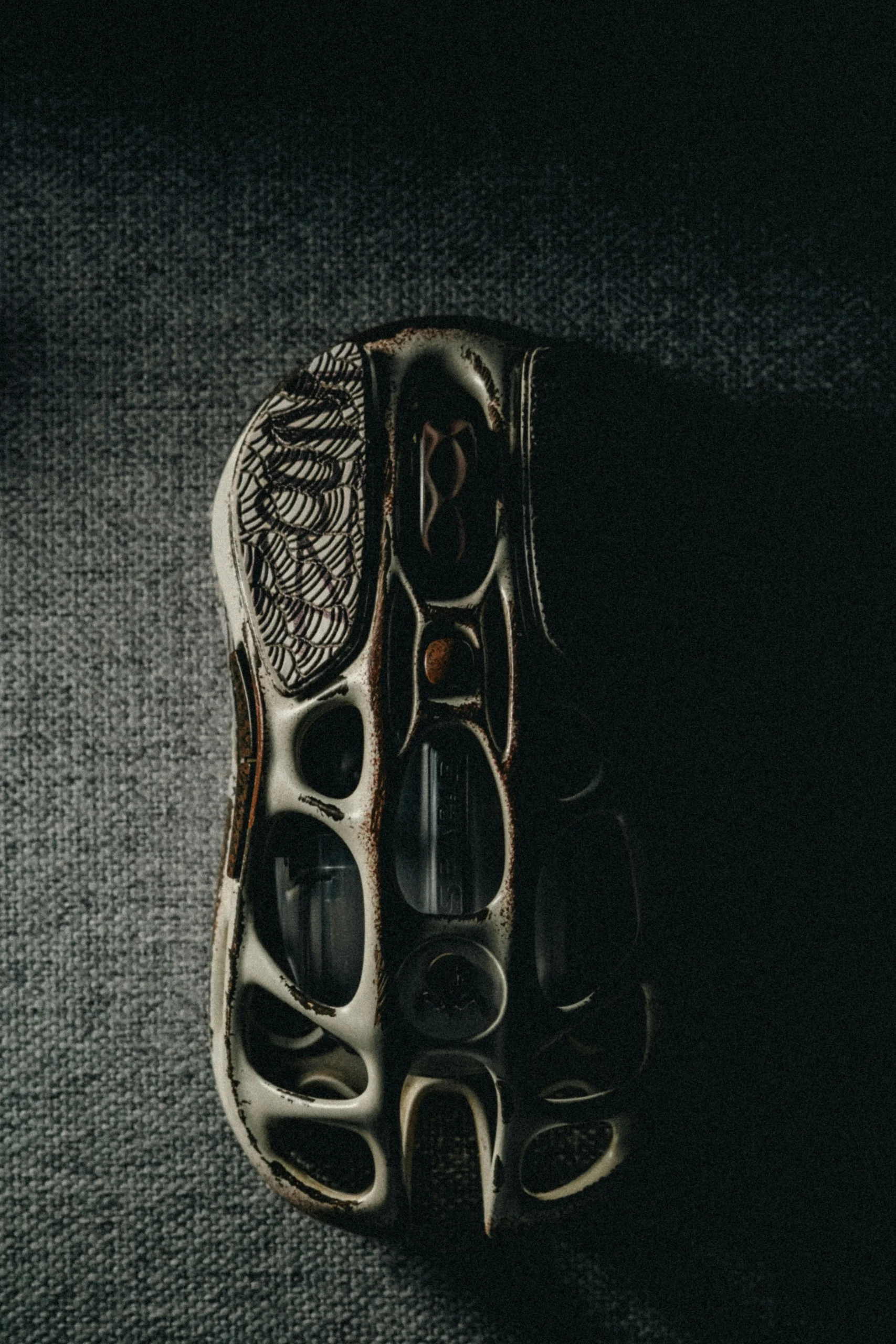
Rubber family, filler, plasticizer, cure state and hardness influence how the outsole contacts a surface. Tread affects drainage, edge contact, flexibility and the way debris is released. Changing either part can alter traction as well as abrasion, flex and molding behavior. A compound selected only for softness may wear too quickly; an aggressive tread may reduce the ground feel required by the product brief.
| Design item | What to lock | What to verify |
|---|---|---|
| Compound | Material code, color, hardness range and supplier | Lot traceability and agreed material tests |
| Tread | Approved drawing, channel direction and edge geometry | Molded dimensions and blocked channels |
| Flex zones | Groove placement and minimum wall areas | Flex behavior on the finished shoe |
| Surface finish | Texture and release process | Consistency across cavities |
| Claim wording | Approved market statement | Evidence matches the exact claim |
Abrasion should be reviewed beside grip rather than treated as a separate afterthought. ISO 20871:2018 provides a method for determining outsole abrasion resistance. The project still needs its own acceptance requirement based on material, use and market positioning.
Step 3: validate samples in a controlled sequence
- Screen candidate compound plaques or sole units under one documented method.
- Review molded outsole appearance, dimensions and hardness against the approved specification.
- Test the complete shoe because upper construction, contact geometry and flex can change the result.
- Repeat the agreed test after relevant ageing or wear conditioning if the market brief requires it.
- Approve one signed sample and test record before bulk material is released.
Keep raw results, specimen identity, surface, contaminant, conditioning, equipment and laboratory details together. A report that says only “pass” is difficult to compare after a formulation or mold revision.
Bulk production control
The approved outsole is a controlled component. The production file should connect compound purchase lots, mixing or supplied-rubber lots, pigment, molding machine, cavity, date and inspection result. Define which changes require renewed validation. A visually similar outsole is not evidence that the compound and performance are unchanged.
- Match the material code to the approved bill of materials.
- Record supplier lot and internal batch identity.
- Check molded dimensions, surface and channel definition.
- Use the agreed sampling plan for verification.
- Hold affected stock when traceability or test evidence is incomplete.
- Document corrective action and approval before release.
What a buyer should request
- Intended-use and destination-market brief.
- Outsole drawing with tread, flex and drainage details.
- Compound specification and supplier material data.
- Sample test plan with named surfaces and contaminants.
- Complete-shoe report linked to the approved sample.
- Bulk traceability and change-control procedure.
- Claim review showing that public wording matches the evidence.
Place these items inside the footwear technical specification and connect them to the in-line quality control plan. If the outsole construction is still open, compare the options in the outsole bonding methods guide.
Keytop Barefoot Shoes project terms
Keytop Barefoot Shoes supports OEM and ODM barefoot footwear development from 500 pairs per color and style. After the project inputs are confirmed, samples are normally developed in 10–21 days. Outsole test methods, acceptance requirements and claim wording are agreed for the specific product and destination market.
Method and limits
This guide is a sourcing and production-control framework. It does not publish a universal wet coefficient, rubber hardness, tread depth, cost saving or defect reduction. ISO 13287 applies to PPE footwear within its stated scope; suitability for a casual barefoot shoe must be confirmed with a qualified laboratory and market adviser.
FAQ
Does softer rubber guarantee more wet grip?
No. Compound chemistry, tread, surface, contaminant, conditioning and complete-shoe geometry affect the result. Compare candidate materials under the same documented test setup before approval.
Can a supplier quote one wet-grip value for all markets?
A value is meaningful only with its test method, surface, contaminant, conditioning, specimen and product scope. The buyer should also confirm whether a public traction claim creates regulatory obligations.
Should bulk outsoles be checked after sample approval?
Yes. Sample approval establishes the target construction. The control plan should define lot traceability, inspection, verification frequency and the response to a material or process change.
Send your outsole drawing, target surface and market brief to discuss a measurable approval plan.
Leave a Comment
Ask a sourcing question, add your view, or request follow-up from our team.