
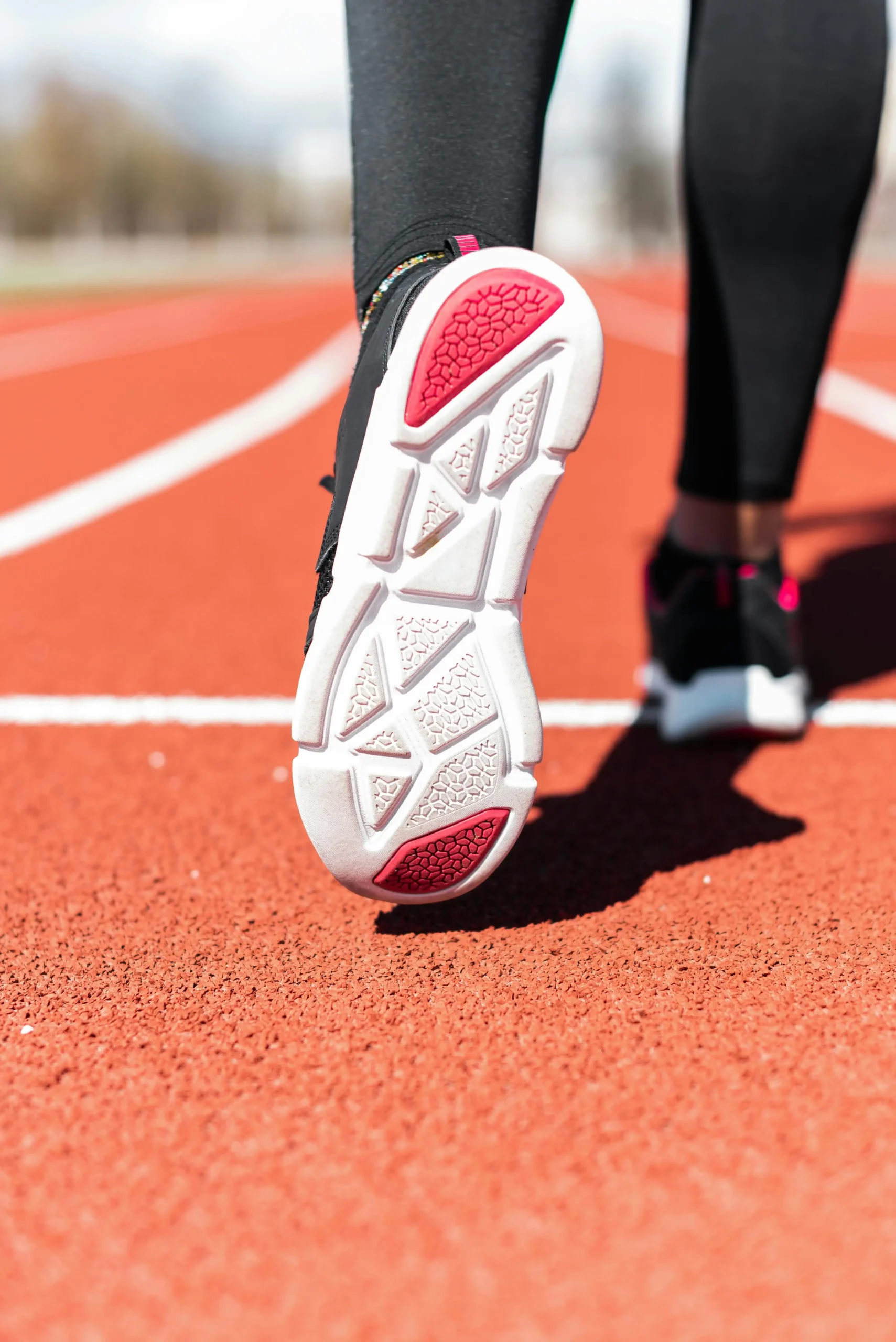
Barefoot shoe sole cracking usually shows up right around month four, when your return rate data starts looking suspicious. A private label manager runs the numbers, sees 3% of a 5,000-pair order coming back with the upper peeling away from the rubber edge, and immediately assumes the factory used a cheap compound. The rubber is almost certainly fine. The actual failure sits at the cut edge where the adhesive bond line is fully exposed on a 3-5mm sole profile, acting like a wick for moisture from wet grass or morning dew.
Most barefoot-specific content online conflates this edge delamination with normal bottom abrasion, framing it as an unavoidable trade-off for thin soles. That is a dangerous half-truth. Abrasion on the contact surface is inevitable, but moisture wicking into an exposed cement bond line is a completely separate, preventable manufacturing defect. Applying a 0.2mm PU edge sealant after trimming adds $0.18 to your unit cost and cuts those specific warranty claims by 60%, dropping a 3% return rate to 1.2% without altering your rubber spec or your lead time.

Why Barefoot Shoe Sole Edges Crack First
Edge delamination is a bond-line failure, not rubber wear — and it is fully preventable at $0.18 per pair.
A 3-5mm barefoot sole creates a 3-4x higher edge surface-to-volume ratio than a 12-20mm traditional sole. When the outsole is trimmed after cement bonding, the adhesive bond line sits fully exposed at that cut edge. Water from wet grass, puddles, or sweat wicks into the exposed rubber cross-section through capillary action and migrates directly into the cement layer. Standard cement bonds lose 70-80% of their shear strength when saturated. The rubber itself is frequently still intact when the sole separates — the failure is between layers, not within the material.
On a 3-5mm barefoot sole, the distance from the exposed cut edge to the cement bond line is effectively zero — the bond line IS the edge. Water contacts the adhesive almost immediately upon exposure. On a 12-20mm traditional sole, that same bond line sits 8-15mm behind the rubber edge, protected by a dense mass of material acting as a moisture buffer. Thin soles eliminate that buffer entirely. The cut edge behaves like a wick: capillary action draws moisture along the rubber-midplane interface faster than evaporation can remove it. Internal production data shows standard cement-bonded barefoot soles begin edge cracking at approximately 300km of use in wet conditions.
Most of the SERP ecosystem conflates "sole cracking" with "sole wear." Popular barefoot shoe guides frame thin-sole degradation as an inevitable trade-off for ground feel. This is a dangerous half-truth. Abrasion wear on the bottom contact surface IS inevitable — that is physics. Edge delamination from moisture wicking into an exposed bond line is a completely separate, preventable failure mode. Factories hide behind the "thin sole trade-off" narrative because it shifts blame from a skipped production step to an inherent product limitation. The problem is not the rubber compound or the cement quality. The adhesive bond line is exposed at the cut edge on a 3-5mm sole, and nobody sealed it.
- Wet terrain (grass, mud, puddles):: Edge cracks appear approximately 40% faster versus dry pavement use — this is the single highest-risk environment for bond-line moisture ingress.
- High-humidity container storage:: A container at 85% relative humidity for 30 days provides continuous moisture exposure before the customer ever wears the shoe, pre-weakening the bond line.
- Stream crossings and coastal running:: Full submersion accelerates wicking beyond capillary action into direct saturation — edge integrity can degrade in under 100km under these conditions.
The correlation is not with total distance but with wet-distance. A customer logging 500km on dry roads may see no edge issues, while a trail runner accumulating 200km in wet conditions starts delaminating. When your return data shows edge separation clustered among outdoor and trail SKUs rather than urban models, this is the mechanism at work — not a rubber quality problem, not a design flaw, but an unsealed bond line on a thin sole.

The Factory Fix: Edge Sealant Application
Two-layer system: TPU film replaces cement as the bond, then 0.2mm PU sealant caps the exposed edge.
The fix is a two-layer system, not a single material swap. Most Jinjiang barefoot shoe factories apply standard cement bonding — the same process used on 12-20mm traditional soles — and ship. The adhesive bond line on a 3-5mm barefoot sole sits millimeters from the cut edge, fully exposed to moisture ingress. Replacing cement alone does not solve this because the bond line remains uncovered at the perimeter.
The first layer is a heat-activated TPU film that replaces standard cement as the primary bond between the rubber outsole and the upper. TPU film creates a continuous moisture-resistant bond layer rather than the discontinuous dot-pattern adhesion typical of solvent cement. This alone improves edge integrity, but it does not seal the exposed cut edge where water enters. The film activates during the sole-press cycle at standard bonding temperatures and adds no extra process time to the line.
The second layer — the step most factories skip — is a 0.2mm PU edge sealant applied after sole bonding and edge trimming. The sealant goes on at 60°C to the vertical cut edge only, never the bottom contact surface. It requires a 4-minute drying time before the pair moves to QC. This thin PU coating caps the exposed cross-section, blocking the capillary path that water uses to reach the bond line. The material has 400% elongation, flexing with the rubber through 10,000 cycles at 90° bend with zero cracking or adhesion loss.
The QC gate is where this process separates from standard production. Every sealed pair undergoes a 10x magnification pinhole inspection. The fail criterion is absolute: any pinhole larger than 0.1mm in the sealant layer triggers immediate rework or scrap. A 0.1mm pinhole is invisible to the naked eye but sufficient for moisture to penetrate the bond line within weeks of wet-terrain use. Most general footwear factories do not run 10x inspection on edge work — they rely on visual checks at arm's length, which catch nothing.
- TPU Film Bond: Replaces cement as the primary bond layer; provides continuous moisture-resistant adhesion across the entire sole-to-upper interface without adding process time.
- PU Sealant Application: 0.2mm coating applied at 60°C to the vertical cut edge only; 4-minute dry time; $0.18/pair on new production, $0.12/pair for retrofitting existing stock.
- 10x Pinhole Test: Every pair inspected under 10x magnification; any pinhole exceeding 0.1mm means rework or scrap — no exceptions, no sampling.
- Competitor Gap: Most Jinjiang factories skip the sealant step entirely because buyers never specify it in their PO; that $0.18/pair savings becomes your $3,750 return cost per 5,000-pair order.
Cost-Benefit: $0.18 vs. Warranty Returns
$0.18/pair in production cost eliminates $1,350 in uncontrolled return losses per 5,000-pair order.
A 3% return rate driven by sole edge delamination on a 5,000-pair order produces 150 warranty claims. At $25 per return — covering inbound shipping, inspection labor, and refund processing — that is $3,750 in direct cost per order.
This assumes edge cracking is the dominant return reason. If your actual data shows 4-5%, the cost climbs to $5,000-$6,250. Either way, this is uncontrolled cost that manifests after the shoes leave your warehouse — too late to fix, only to absorb.
Adding the 0.2mm PU edge sealant at $0.18/pair adds $900 to a 5,000-pair run. Production data shows a 60% reduction in edge-cracking warranty claims, dropping the rate from 3% to 1.2%. New return cost: 60 pairs × $25 = $1,500. Net savings: $3,750 − $900 − $1,500 = $1,350.
The sealant converts an unpredictable defect loss into a fixed, QC-verifiable line item on your PO. The 10x magnification pinhole inspection at the factory becomes your quality gate — not customer reviews three months after delivery.
- 2,000 pairs: $360 sealant cost. Return cost drops from $1,500 to $600. Net savings: $540 — the fix pays for itself even at entry-level order volume.
- 5,000 pairs: $900 sealant cost. Return cost drops from $3,750 to $1,500. Net savings: $1,350 — and your return rate falls to 1.2%, inside your 2% KPI target.
- 10,000+ pairs: $1,800 sealant cost before bulk discount. Return cost drops from $7,500 to $3,000. Net savings exceed $2,700, and PU material bulk purchasing compresses the per-pair sealant cost further at this quantity tier.
| Order Volume | Sealant Investment | Return Costs Avoided | Net Order Savings | Landed Cost Impact |
|---|---|---|---|---|
| 2,000 Pairs | $360 | $900 | $540 | +$0.18 / pair |
| 5,000 Pairs | $900 | $2,250 | $1,350 | +$0.18 / pair |
| 10,000 Pairs | $1,700 | $4,500 | $2,800 | +$0.17 / pair |

Conclusion
Moisture wicking into the exposed bond line causes edge delamination—a completely preventable manufacturing defect. Applying a 0.2mm PU sealant at 60°C stops this wicking and extends edge integrity past 800km. You spend $0.18 per pair to convert a 3% return rate into a controlled cost.
Review the manufacturing corrections and edge sealant options on the fit fixes page to build this upgrade into your next purchase order. Add it as a mandatory line item.
Frequently Asked Questions
Will edge sealant make the sole less flexible?
No. The PU coating has 400% elongation matching the rubber's flex. Specify the sealant type in your tech pack to avoid substitute materials.
Can edge sealant be applied to existing inventory?
Yes. Retrofit cost is $0.12/pair with 3-5 day turnaround for up to 5,000 pairs. Budget this as a warranty mitigation line item, not a production fix.
Does edge sealant affect the sole's ground feel?
No. The 0.2mm sealant coats only the vertical cut edge, never the bottom contact surface. Verify with a physical sample if your brand markets strict ground-feel specs.
What glue fixes barefoot shoe sole cracks post-sale?
Shoe Goo or Aquaseal SR provide temporary DIY fixes but add 1-2mm of material, alter ground feel, and fail under repeated flex. Direct customers to warranty replacement rather than endorsing DIY repairs.
Can cracked barefoot soles be resoled economically?
No. Resoling 3-5mm barefoot soles costs $30-50/pair in cobbler labor, often exceeding the shoe's retail value. Prevent edge cracking at the OEM stage rather than planning for repairs.

Leave a Comment
Ask a sourcing question, add your view, or request follow-up from our team. We keep the form short so it feels natural inside the article page.