
Barefoot boots OEM specification needs a written specification before the buyer can decide whether Barefoot Boots OEM Specification Sample Checks fits the use case, specs, MOQ, sample approval path, and supplier quote process; otherwise suppliers may quote different product and approval assumptions.
Flexibility is the specification barefoot buyers actually check, and it is the one most spec sheets leave to adjectives. Putting a number on it is the whole job.
Buyer summary: Use barefoot boots OEM specification only after its specification, application fit, sample route, quantity rule, and supplier exceptions have been confirmed in writing.
Top Picks at a Glance
Compare Top Picks at a Glance against one RFQ revision. Each row should identify the requirement, approval evidence, and buyer action before production.
| Requirement | Factory control | Evidence to verify | Order risk | RFQ follow-up |
|---|---|---|---|---|
| Sample approval | Signed approval against tech pack and reference sample | Compare fit, finish, and construction to approved spec | Bulk production drifts from approved sample without re-approval | Request sample approval form and sign off in writing |
| MOQ and order quantity | MOQ compliance ensures line efficiency and cost control | Confirm MOQ per style, color, and size mix in quote | Order below MOQ triggers higher unit cost or delayed delivery | Verify MOQ and ask for mixed-size allowance before PO |
| Material / substrate | Incoming material inspection with certificate and physical test | Check thickness, abrasion, and tear strength against spec | Substituted material compromises performance or durability | Request material specification sheet and pre-production sample |
| Width or size tolerance | Size grade rule and fit check on sample set | Measure sample against approved size chart and test fit | Inconsistent sizing leads to high return rate | Request size set sample and grade rule document |
| Finish or color control | Color matching against Pantone and finish standard | Use light box and approved color sample for inspection | Color variation between batches affects brand consistency | Request color sample and sign off on standard |
Read the rows as one approval sequence. Start with sample approval because bulk production drifts from approved sample without re-approval. Verify it by asking the supplier to compare fit, finish, and construction to approved spec. Then resolve MOQ and order quantity; order below MOQ triggers higher unit cost or delayed delivery, so verify MOQ and ask for mixed-size allowance before po. Finish with material / substrate, confirm that the supplier can check thickness, abrasion, and tear strength against spec, and request material specification sheet and pre-production sample.
Give the barefoot-boot control sheet one identifier that also appears on the tech pack, outsole record, fit sample, size set, and packing proof. When two records disagree, the boot team should stop the affected release, name the controlling revision, and record whether geometry, grading, material, construction, or packout must be checked again. Procurement can then attach the closed sheet to the purchase order without turning a prior sample into automatic approval for a changed build.
ISO 2859-1 provides sampling procedures for lot-by-lot inspection by attributes. For production approval, align the inspection plan with ISO 2859-1 sampling procedures. Pantone’s physical Formula Guide is a production reference for spot-color specification and approval. Where color is specified, approve it against a physical Pantone Formula Guide rather than an on-screen value.
How We Evaluated the Options
| Option | Best fit | Trade-off | Risk to avoid | Verification | Follow-up |
|---|---|---|---|---|---|
| Pre-production sample (single size, prototype mold) | Early design validation; confirm zero-drop geometry and sole flexibility before tooling commitment. | Limited to one size; fit across sizes not checked; revisions may delay tooling schedule. | Approving a single-size sample risks overlooking size-grading defects; production tooling may be cut before full fit confirmation. | Request measurement report of stack height, drop, and toe-box width against tech pack; compare to approved spec. | After approval, request size-set sample or full-grading confirmation before bulk tooling. |
| Size-set sample (full range, multiple sizes) | Validate fit across all sizes; critical for boot construction where heel-to-toe drop must hold across grades. | Higher sample cost and lead time (10–21 days per Keytop lead time); requires full material commitment. | Delays overall timeline if multiple sizes fail; supplier may rush size-grading without proper fit test. | Inspect each size for consistent zero-drop, toe spring, and seam alignment; request fit test on at least 3 sizes. | Document deviations per size; approve only after all sizes pass; capture revision number. |
| Production sample (final material, finished construction) | Final approval gate before bulk; ensures material, construction, and packing match approved spec. | Requires prior approval of pre-production or size-set sample; changes at this stage are costly. | Approving without verifying all QC evidence (e.g., material test report, in-line inspection) may lead to defects in bulk. | Compare against approved tech pack; request material certificate (e.g., abrasion, tear strength); check packing and labeling. | Sign off with written approval; attach QC evidence; set production timeline and payment terms. |
| Material/lab-dip sample (color swatch, material composition) | Early material selection; confirm color, texture, and composition before committing to full sample. | Does not confirm construction or fit; must be followed by a full sample; cost of swatch may be charged separately. | Approving a lab-dip without specifying material stack or finish can lead to mismatch in final product. | Request physical swatch; compare to Pantone or reference; verify material thickness and composition (e.g., leather, mesh). | Once approved, incorporate into tech pack; request pre-production sample with this material. |
Use this decision matrix as an approval sequence, not as a supplier claim. For pre-production barefoot shoe OEM and ODM services (single size, prototype mold), a poor decision can mean approving a single-size sample risks overlooking size-grading defects; production tooling may be cut before full fit confirmation. Ask the supplier to provide measurement report of stack height, drop, and toe-box width against tech pack; compare to approved spec, then after approval, request size-set sample or full-grading confirmation before bulk tooling. For size-set sample (full range, multiple sizes), a poor decision can mean delays overall timeline if multiple sizes fail; supplier may rush size-grading without proper fit test. Ask the supplier to inspect each size for consistent zero-drop, toe spring, and seam alignment; request fit test on at least 3 sizes, then document deviations per size; approve only after all sizes pass; capture revision number. For production sample (final material, finished construction), a poor decision can mean approving without verifying all qc evidence (e.g., material test report, in-line inspection) may lead to defects in bulk. Ask the supplier to compare against approved tech pack; request material certificate (e.g., abrasion, tear strength); check packing and labeling, then sign off with written approval; attach qc evidence; set production timeline and payment terms.
Record why the buyer selected a prototype, size set, material trial, or production-intent boot sample, and list the evidence that this route can and cannot approve. A last, outsole, lining, toe-box, or grading change reopens the corresponding check even when the quotation is unchanged. The final handoff should show the numbered boot sample, remaining deviations, buyer sign-off, and the exact condition that authorizes bulk production.
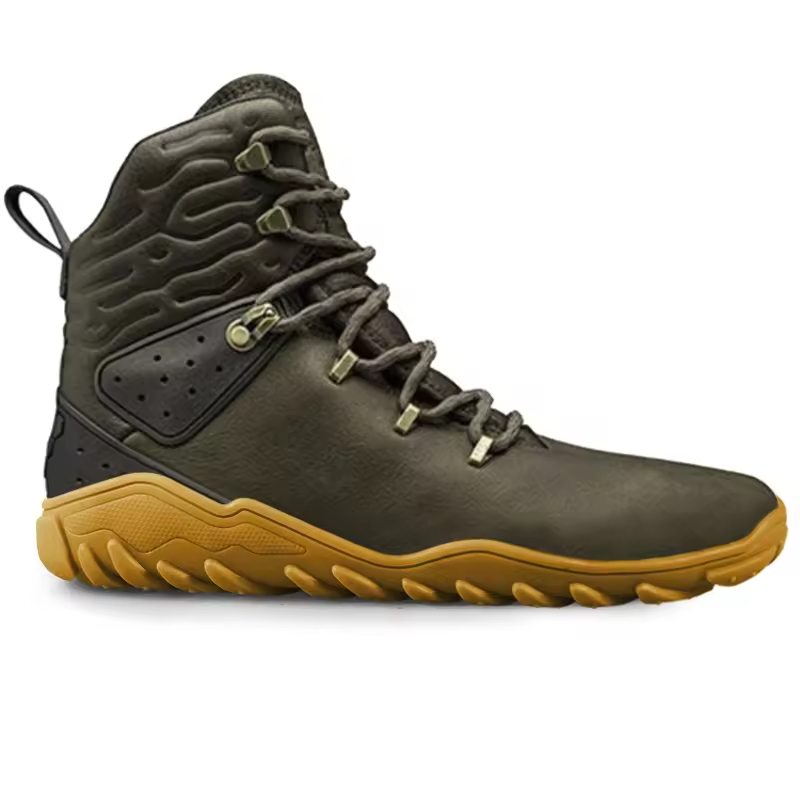
Best Overall Recommendation
- What is the exact stack height and drop measurement on the approved sample? Pre-production sample must match spec; 0mm drop is critical for barefoot shoe product range boots. Factory provides signed measurement report with photo evidence. Approved sample without measurement record allows drift in bulk production. Require written sample approval form with measurement fields.
- What is the minimum order per color per style and lead time for bulk production? Custom barefoot boot minimum order is 500 pairs per color per style; confirm lead time aligns with launch. Supplier confirms 500 pairs, 45-day lead time, mixed-size allowance. Ordering below minimum order triggers higher unit cost or delayed delivery. Request written quote with minimum order, lead time, and split-size policy.
- How does the factory verify material thickness, abrasion resistance, and tear strength? Barefoot boots require flexible yet durable materials; spec compliance must be tested. Supplier provides material specification sheet and in-house test results. Undocumented material properties may fail warranty or performance expectations. Request material spec sheet and pre-production sample for third-party test.
- What is the approval process for sample deviations before bulk production? Any deviation from approved sample must be documented and re-approved to avoid production errors. Supplier requires written deviation notice and re-approval before production. Unapproved deviations cause rejected shipment or out-of-spec product. Include deviation clause in sample approval form and purchase order.
- Can the factory provide traceable inspection records (incoming, in-line, final)? ISO 9001:2015 requires documented inspection; buyer needs proof of QC. Factory shares inspection reports with photos and pass/fail criteria. Without inspection records, quality issues are discovered only after shipment. Request sample inspection report and production QC plan before PO.
At this stage of the barefoot boots OEM specification process, you have already gathered technical requirements and samples from potential suppliers. The critical output that must exist before proceeding to the next stage is a validated supplier proof—such as a factory audit report or a sample test certificate—that confirms the factory can deliver on your flexibility and quality specs.
Best Value Recommendation
For barefoot boots OEM specification sample checks, the steps below turn best Value Recommendation into fit, construction, sample, QC, and RFQ checks a footwear supplier can confirm.
Supplier proof to verify
When evaluating best value, focus on factory execution rather than lowest unit price. Keytop Barefoot Shoes, a Jinjiang-based B2B barefoot shoe OEM/ODM manufacturer, provides detailed tech packs and sample checks that confirm their ability to meet zero-drop winter boot specifications. Verify supplier proof through physical sample testing and a documented approval process. This ensures that the supplier’s claimed capabilities match actual production results.
Use cases that fit
Best value recommendations depend on your target market. For indie brands seeking a reliable partner, barefoot shoe manufacturing for indie brands aligns with low-to-mid volume runs. Use cases include winter boots for outdoor enthusiasts who require durable, flexible soles and natural foot-shaped toe boxes. The quote request should specify materials, sole flexibility tests, and seam sealing requirements to avoid production risks.
RFQ and sample checks
Before bulk production, implement a structured quote request handoff. Annie, who works with B2B barefoot shoe buyers, recommends including a shoe tech pack checklist with every quote request. Sample checks must verify flexibility, zero-drop geometry, and material quality. A table comparing key approval criteria can streamline decision-making:
| Requirement | Approval Evidence | Production Risk |
|---|---|---|
| Zero-drop platform | Heel-to-toe measurement | Misalignment during lasting |
| Flexible sole | Bend test at 45° | Stiffness affecting gait |
| Natural toe shape | Toe spring measurement | Narrowing during moulding |
After verifying these points, you can confidently move to the next stage: bulk production negotiation. The information gained here reduces the risk of specification drift and ensures factory execution matches your barefoot boots OEM requirements.
Buying Guide
Choose a supplier based on documented sample proof, not on claims. The signal that justifies shortlisting is a written sample approval record tied to your specific zero-drop geometry, material spec, and packing requirement. Without that record, production can drift from the approved reference and rework cost lands on the buyer.
Decision criteria to confirm
Verify the supplier can produce a sample that matches your tech pack on stack height (6–8 mm for barefoot boots), zero-drop confirmation, and sole flexibility. Request a measurement report and material certificate (abrasion, tear strength) before moving to size-set samples. The risk of skipping this check is approving a prototype that passes a visual check but fails on graded fit or construction.
RFQ details to send
Use one commercial schedule for the quotation. Ask the factory to separate tooling, development, and recurring production charges, then state which buyer change would trigger a revised price. This makes later quote revisions auditable without repeating the construction checks covered earlier.
- Document material type (leather, nubuck, waterproof mesh) and thermal lining if required.
- Request evidence of incoming material inspection—flex, colorfastness, and bonding checks.
- Confirm sample lead time: base-model ODM uses 7–14 days; full OEM uses 10–21 days.
Production handoff details
Before approving bulk production, compare the approved sample against the original tech pack and verify the supplier’s QC evidence. The factory must have a written sample approval gate—such as the process used at the Keytop barefoot shoe factory—where requirement review, material feasibility, sample development, and signed approval precede deposit-backed production. Keep every revision under one number so the same checks support release, shipment, and reorder.
Source check: Shoe Tech Pack Checklist for OEM/ODM Manufacturer Quotes.
In conclusion
The final approval for barefoot boots OEM specification sample checks rests on documented proof that the factory has met every quote request requirement—flexibility spec, zero-drop alignment, material composition, and packing details. Before authorizing bulk production, compare the approved sample against the original tech pack, verify the supplier’s QC evidence, and confirm that cost, minimum order, and lead time assumptions are fixed under a single revision. This synthesis of checks turns sample approval into a production gate that prevents specification drift and rework. For a manufacturer that follows this structured handoff, such as Keytop Barefoot Shoes, the buyer can confidently approve a sample and move to bulk production.
To approve a sample, visit barefoot boots and confirm the final specification, quote assumptions, sample approval, QC evidence, approval risk, and supplier follow-up before bulk order.
Frequently Asked Questions
What should buyers confirm before ordering barefoot boots OEM specification sample checks?
Confirm the approved last, toe-box geometry, stack and drop target, upper and lining build, outsole compound, closure, seam treatment, size range, and packing record. The factory should return a marked specification showing which revision controls the sample before the buyer releases tooling or materials.
How should buyers compare MOQ, lead time, and quote terms?
Normalize each quotation to the same style, color count, size run, material build, packing method, and approval stage. Separate development charges from recurring production charges, and ask each factory to state the event that starts its production clock. Compare only responses that use the same written assumptions.
What sample, quality, or supplier checks reduce risk?
Measure the sample against the grading table, inspect flex points and seam alignment, and compare materials with the approved swatches. Ask for the inspection checkpoints that will be repeated in production, then sign a sample record that identifies every accepted deviation and the person who approved it.
Which sizes should be included in a size-set sample?
Choose sizes that expose grading risk rather than checking only the middle size. Include a smaller, middle, and larger size from the intended run, compare each measurement with the grading table, and record whether the zero-drop geometry and toe volume remain consistent before bulk release.
quote request handoff: Send Specs for Review.
Leave a Comment
Ask a sourcing question, add your view, or request follow-up from our team. We keep the form short so it feels natural inside the article page.