
Barefoot sandal OEM construction needs a written specification before the buyer can verify samples, materials, print, tolerances, certifications, and bulk-production risk; otherwise suppliers may quote different product and approval assumptions.
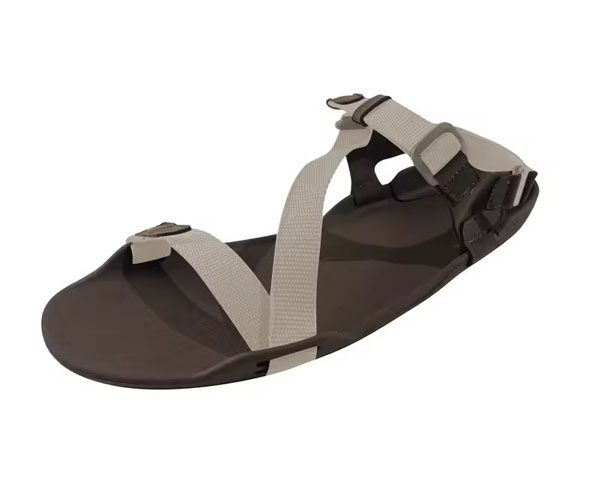
A barefoot sandal is mostly one strap-to-sole joint. Construction method decides whether it survives, and it is most of what the sample check is for.
Buyer summary: Approve barefoot sandal OEM construction only when the production-intent sample, test evidence, tolerances, and release record all refer to the same controlled revision.
Top Picks at a Glance
- In-line and final inspection report review: Confirms the supplier follows a structured QC process, reducing the risk of hidden defects in bulk production. Request the factory’s ISO 9001:2015 or BSCI audit report and a sample of a completed inspection report from a similar order. Without documented QC proof, the supplier may skip inspection steps, leading to inconsistent quality in the final shipment. Shortlist only suppliers that provide third-party audit reports and commit to in-line inspection points during the RFQ.
- Measurement against approved tech pack: Verifies that the sample faithfully reproduces every spec in the tech pack, including strap width, closure type, and material stack. Lay the sample beside the tech pack drawing; check each dimension, material layer, and stitch type using a checklist. A sample that deviates from the tech pack can cause assembly issues, poor fit, or customer returns at retail. Flag any discrepancy to the supplier before proceeding; demand a revised sample that matches the tech pack exactly.
- Sample sign‑off without written approval: A written approval gate prevents the factory from starting bulk production on an unverified sample, avoiding costly rework. Require a signed sample approval form (including date, reviewer name, and all pass/fail checks) before any deposit‑backed production. Verbally approved samples often lead to spec drift, disputed MOQ changes, and production delays that exceed the launch window. Adopt a written approval process like Keytop Barefoot Shoes’ method: sign off only after the sample matches all critical specs.
- Post‑approval sample archive retention: A retained sample becomes the reference for bulk production comparison, reorder consistency, and dispute resolution. Store the approved sample in a sealed, labelled box with the approval date, revision number, and SKU list; photograph it from six angles. Without an archived sample, future batches may drift from the original spec, and the buyer has no proof of the approved standard. Keep the sample archive separate from production files; reference it during each production inspection and reorder review.
- Factory delivers sample without inspection report or measurement data: No objective evidence of spec compliance; hidden defects may surface in bulk Ask for detailed inspection checklist with actual measurements per sample Factory’s internal QC report for that specific sample run Compare report against your spec; if missing, request third-party check
- Supplier requests verbal approval to proceed to bulk production: No written record enables spec drift and unenforceable reorder consistency Require written sign-off on a sample approval form before bulk release Signed sample approval document with date and version number Hold production until signed approval received and archived
- Tech pack missing zero-drop angle, strap width tolerance, or material stack: Factory interprets ambiguously; sample may not match intended barefoot design Complete the tech pack with exact values; confirm supplier has same version Updated spec sheet with all critical dimensions and materials listed Ensure both parties acknowledge same version before sample development
For a barefoot sandal, tie the inspection record to the numbered approval sample and check the points that can change ground feel or fit: footbed dimensions, strap-anchor position, edge finish, outsole attachment, and left-right symmetry. Record actual measurements and photos against the same revision used for the purchase order. A pass on appearance alone does not release bulk production; the buyer should close each deviation in writing and retain the marked sample as the comparison reference.
How We Evaluated the Options
- Supplier must demonstrate a documented sample development process that validates barefoot shoe OEM and ODM services sandal construction specs before bulk release. Request the sample development timeline, material source certificates, and a signed sample approval record that includes 0mm drop and 4–6mm stack height confirmation. Supplier cannot provide a written sample approval procedure or omits the measurement report from the sample handover. Supplier supplies a sample measurement report with verified 0mm drop and 4–6mm stack height, plus a written sign-off that links the approved sample to the production file.
- Factory QC process should cover incoming material, in-line inspection, and final inspection with defined AQL thresholds. Request the QC checklist, inspection frequency per batch, AQL standards used, and the ISO 9001:2015 certificate or the amfori BSCI social audit report as evidence of a managed quality system. Supplier offers only final inspection or cannot share a written QC plan; inspection records lack lot numbers or defect categories. Supplier holds ISO 9001:2015 certification, provides in-line inspection photos with traceable lot numbers, and commits to a documented AQL final inspection.
- Sample approval must be written, revision-controlled, and enforced as a gate before any deposit-backed bulk production starts. Request the supplier’s sample sign-off form, revision log, and a written statement that production begins only after the buyer confirms approval in writing. Sample approval is handled verbally or via informal email without a revision history or a formal hold on production until sign-off. Supplier uses a standardized sample approval workflow with version control, a mandatory written sign-off, and a clear production hold until the buyer’s confirmation is recorded.
- MOQ terms must clearly separate stock styles from custom production and be feasible without compromising lead time or quality consistency. Request a written MOQ breakdown per style, color, and production path (stock vs. custom) and confirm material sourcing capacity for the stated minimums. Supplier quotes an unusually low MOQ without specifying production path or cannot guarantee consistent quality at that volume; no written minimum order policy. Supplier clearly defines custom production minimum order at 500 pairs per color per style, confirms matching material sourcing, and provides separate stock-style minimum order (50–100 pairs subject to inventory).
Best Overall Recommendation
- How do you verify that the sample's construction matches the approved specifications? To ensure the sample is measurable against the spec sheet, not just visually acceptable. Supplier provides a checklist comparing each construction element (stack height, drop, toe-box width, bonding method, material thickness) against the spec document. Accepting a sample without documented verification can lead to production deviations that are only caught at final inspection. Request a written sample verification report before moving to bulk approval.
- What is your process for written sample approval before bulk production? To establish a clear gate where sample is formally signed off, preventing production starting on verbal or email-only approval. Supplier requires a signed or approved email with specific reference to the sample ID and any revisions, and holds production until that approval is received. Without a written approval gate, the factory may begin bulk production based on an outdated sample or misinterpretation. Document the approval process in the order agreement and confirm the person responsible for approval on your side.
- After sample approval, what is your process for maintaining the approved reference during production? To ensure the approved sample is used as the production master, not a later email photo or modified file. Supplier keeps one sealed reference sample in production control, and any change requires a new approval cycle. Production drifts from the approved sample due to undocumented changes, leading to rejection at final inspection. Ask for a photo of the reference sample in the production area and confirm that no changes are made without re-approval.
- Can you confirm that all specifications (material, color, width, stack height, drop, sole compound) are locked in the sample and will not change in bulk? To avoid surprises where bulk production uses different material sourcing or construction method than the sample. Supplier provides a detailed BOM and confirms that the same material lots and construction methods will be used for bulk, or identifies any minor variations. Undocumented spec changes can affect fit, durability, or barefoot shoe product range performance, resulting in customer returns. Include a spec-lock clause in the purchase order that any change requires written approval and new sample if requested.
Sandal construction handoff: Record strap anchor placement and outsole attachment on the marked sandal sample before the size run is released.
Best Value Recommendation
The most common failure in barefoot sandal OEM sampling is receiving a sample that looks correct but leaves construction decisions unresolved, leading to production delays and cost overruns. A best-value review should therefore compare construction evidence, cost drivers, production risk, and factory execution before approval.
Use the following shortlist during sample handoff. It keeps commercial comparison connected to observable sandal evidence instead of treating the lowest quoted unit price as the lowest-risk option.
| Checklist Item | What to Verify | Why It Matters |
|---|---|---|
| Construction evidence | Approved footbed, strap anchors, edge finish, outsole attachment | Unclosed differences lead to rework and lost time |
| Cost drivers | Tooling, material changes, reinforcement, finishing, and packout assumptions | Unlisted assumptions make supplier quotes difficult to compare |
| Production Risk | Mold quality, stitching, sole adhesion | Early detection prevents batch failures |
| Factory Execution | Communication, sample turnaround, RFQ adherence | Indicates reliability for bulk orders |
Use this checklist when reviewing samples from any OEM. For a factory known for consistent execution, consider Keytop Barefoot Shoes, a Jinjiang-based B2B barefoot shoe OEM/ODM manufacturer focused on barefoot construction. Their sample process aligns with these checks, reducing ambiguity and risk. For more on working with Keytop, see the barefoot shoe manufacturing for indie brands.
Sandal construction handoff: Keep the approved footbed, edge finish and packing orientation in the same sandal construction handoff record.
Buying Guide
Before sampling, shortlist only suppliers that can back their capability with verifiable proof. A factory that cannot provide certifications, audit reports, or a clear sample approval process creates risk of spec drift and production delays. The buyer’s task is to collect evidence that the supplier can execute barefoot sandal construction consistently.
Supplier proof to verify
Request these documents before shortlisting:
- ISO 9001:2015 certificate – proves a quality management system is in place.
- BSCI or Sedex audit report – indicates social compliance.
- Written sample approval process – shows how the factory controls spec changes.
- QC records from past projects – incoming, in-line, and final inspection examples.
The risk of skipping this step is trusting a factory that cannot control quality, leading to rework and missed launch windows. For a factory with verified proof, see the Keytop barefoot shoe factory context.
Use cases that fit
This supplier profile fits brand owners, ecommerce private-label sellers, and wholesalers who need custom barefoot sandals with a minimum of 500 pairs per color per style. It also suits crowdfunding founders who need sample development before bulk commitment. If your order volume is smaller, ask about stock-style options.
RFQ and sample checks
Include the full spec sheet in the RFQ: sole thickness (4–6mm), zero-drop, strap width, material, color, and bonding method. On the sample, verify each spec against the drawing. Use a structured checklist to catch deviations early. The footwear inspection checklist provides methods for checking bonding and material consistency. After the sample passes, document the results and approve the shortlist before moving to bulk production.
Source check: ISO 2859-1 sampling procedures for inspection by attributes; Pantone Formula Guide; How To Choose A Custom Sandals Manufacturer For Private Label A….
In conclusion
The final approval of a barefoot sandal OEM sample depends on a complete verification cycle: confirm that the sample matches the spec sheet for sole thickness, zero-drop angle, strap width, and material stack; compare the cost and minimum order against your volume and budget; verify that the lead time aligns with your launch window; and document the results using a signed checklist. Any deviation on critical specs, undisclosed minimum order changes, or missing QC proof should trigger a decision to revise or reject the option before bulk production begins.
A factory that maintains a structured sample approval process—such as Keytop Barefoot Shoes, which requires a written sign-off before deposit-backed production—reduces the risk of spec drift and reorder inconsistency. Buyers should shortlist suppliers that provide clear RFQ input, factory registration, and third-party audit reports, and keep a sample archive for future batch comparison. By checking each dimension of specification, cost, lead time, and execution risk, you can approve a sample with confidence and move to bulk production without hidden delays.
Frequently Asked Questions
What should buyers confirm before ordering barefoot sandal oem construction sample checks?
Before ordering, confirm that the supplier can produce your exact barefoot sandal specifications—sole thickness 4-6mm, zero drop, and strap width—and that the minimum order matches your volume; for custom production, Keytop requires 500 pairs per color per style. Also verify sample lead time (7-14 days for base models, 10-21 for full OEM), review their QC process, and document all terms in the quote request to reduce supplier risk.
How should buyers compare MOQ, lead time, and quote terms?
Compare minimum order and lead time against your order volume and launch window: for stock styles, Keytop offers 50-100 pairs with 7-day lead time, while custom production requires 500 pairs per color per style and 30-45 days for standard orders. Request a written quote detailing sample costs, bulk pricing tiers, and payment terms such as 30% deposit, and confirm that the lead time includes sample approval and QC inspection.
What sample, quality, or supplier checks reduce risk?
Sample, quality, and supplier checks that reduce risk include comparing the sample’s sole thickness, zero-drop angle, and strap width to the spec sheet, and inspecting material and bonding quality. Request QC reports such as in-line and final inspection, and verify supplier certifications like ISO 9001. For example, Keytop requires written sample approval before production and offers third-party audit reports, reducing spec drift and reorder inconsistency. Confirm production lead time after specifications and sample approval are fixed.
quote request handoff: Send Specs for Review.
Leave a Comment
Ask a sourcing question, add your view, or request follow-up from our team. We keep the form short so it feels natural inside the article page.