
Barefoot running shoe last grading OEM becomes difficult to approve when fit, size grading, materials, construction, and packing assumptions are split across different messages.
For barefoot running shoe last grading OEM, supplier review should connect the intended use, last and fit target, materials, sample evidence, and size-run approval in one record.
The sections below turn those decisions into sample checks, supplier questions, and RFQ inputs for footwear production.
Approval route: begin with requirement review before quotation, complete a material and construction feasibility check for the last and upper package, use sample development before bulk production to validate the graded size run, and require written sample approval before deposit-backed bulk production.
Set the procurement decision and approval boundary
Direct answer: Use this guide to help the buyer verify samples, materials, print, tolerances, certifications, and bulk-production risk. In this article, “Barefoot Running Shoe Last Grading Oem” means the buyer-side process of fixing inputs, checking supplier evidence, closing exceptions, and carrying one approved record into the order.
Prepared by Annie: For this Barefoot Running Shoe Last Grading Oem guide, annie works with B2B barefoot shoe buyers on OEM, ODM, private-label, sample, and bulk production projects at Keytop Barefoot Shoes.
Last updated: July 19, 2026 · Article revision 1.0.
Buyer scope → comparable RFQ → supplier evidence → identified physical approval → exception closure → controlled order or reorder handoff.
Method and evidence boundary: This Barefoot Running Shoe Last Grading Oem framework maps buyer inputs, supplier proof, approval risk, and the next handoff from the approved project brief and verified research records. Public references are used for decision context; project-specific MOQ, lead time, compliance, performance, and capability statements should come from the approved claim registry or be reconfirmed with the supplier. This guide supports procurement control and does not replace laboratory testing, project engineering, regulatory review, or a qualified professional’s decision where those are required.
Confirm buyer-owned specifications before supplier review
- What is the exact last grade and size-grading tolerance for each barefoot running shoe style? The last grade determines fit consistency across sizes; a mismatch causes returns or re-lasts. Supplier provides a last specification sheet with grade rule, tolerance in mm, and confirmation that the last matches the approved fit sample. Accepting a vague or unverified last grade leads to size-run fit failures and costly rework after bulk production. Request the last specification sheet and compare it against the approved fit sample before sample approval.
- Which buyer-owned specification parameters are locked before the supplier reviews the RFQ? Unlocked specs cause scope creep, re-quotes, and delays; the buyer should own the final parameters. Supplier acknowledges a controlled RFQ revision with confirmed fields, assumptions, and deviations listed separately. Starting supplier review without locked specs invites conditional pricing and sample mismatches. Document the locked specification matrix and send it as one controlled RFQ revision with a change log.
- How does the supplier verify that the last grade and size grading match the barefoot running shoe construction (stack height, drop, toe-box volume)? Barefoot construction requires specific last geometry; standard grading may alter fit or ground feel. Supplier provides a last-to-construction compatibility check record, including stack height and toe-box volume measurements. Ignoring construction-specific grading can produce shoes that fail the zero-drop or wide-toe-box requirement. Require a written last-to-construction compatibility check before sample development begins.
- What is the supplier’s process for documenting and approving last-grade changes during sample development? Uncontrolled last changes during sampling can shift fit and cause production deviations. Supplier uses a revision-controlled change log with buyer sign-off before any last modification. Undocumented last changes lead to fit drift and disputes over sample approval criteria. Verify that the supplier’s change log includes last-grade revisions and requires buyer approval before implementation.
Use barefoot shoe product range to align the related specifications and RFQ inputs.
RFQ checkpoint
Ask B2B buyers to share product category, target quantity, market, timeline, and reference files for a practical quote.
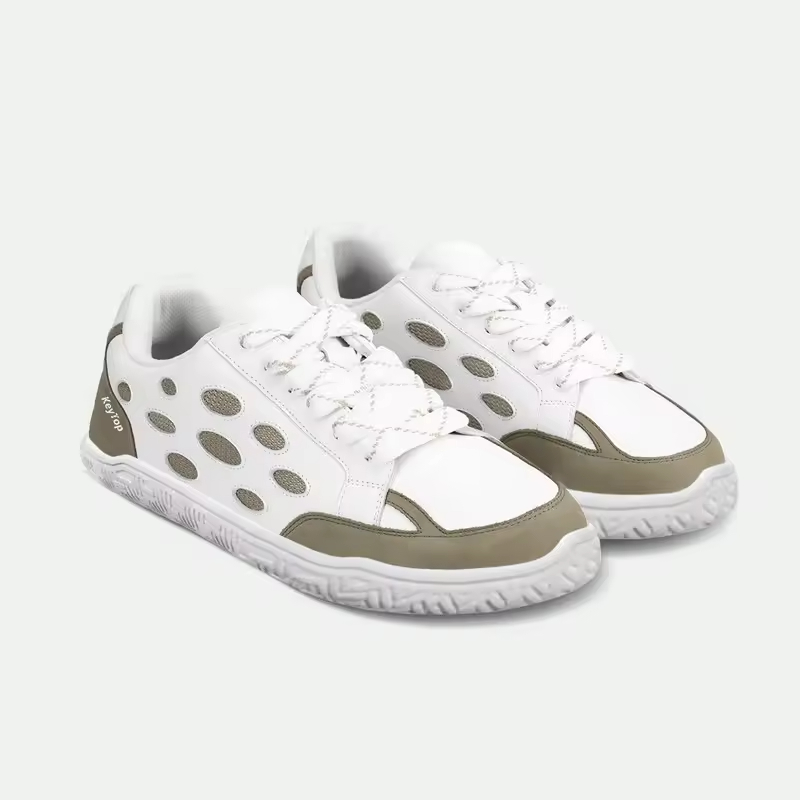
Build the last and toe-box approval matrix
- Last geometry and toe-box width should be verified against approved digital or physical reference. Request the signed last specification sheet with toe-box width, stack height, and size grading tolerance. Supplier provides only verbal confirmation or a generic last chart without buyer-specific measurements. Supplier supplies a measurement report with calibrated gauge, photo of last marking, and cross-reference to the approved sample.
- Approving a last without a physical sample increases risk of fit failure at bulk production. Request a physical sample (or sealed sample) of the approved last with a wear-test report from at least three testers in the target size range. Buyer approves based on digital rendering alone without a physical last sample. Buyer holds a physical last sample, signed and dated, with a wear-test pass record and documented corrections.
- Last specification should match the buyer's foot measurement data and intended barefoot fit parameters. Request the buyer's foot measurement data and the factory's last grading calculation showing how the data maps to the size run. Factory uses a generic industry grading table without adjusting for barefoot zero-drop and wide toe-box requirements. Factory provides a fit-to-data matrix that maps each buyer's foot measurement to the corresponding last size and includes a toe-box width ratio (e.g., foot width / last width).
For related specifications, sample inputs, and RFQ details, review barefoot shoe OEM and ODM services.
Request supplier evidence without assuming capability
The risk of shortlisting a barefoot running shoe last grading OEM supplier based on a catalog photo or general claim is that the factory’s actual last grading, toe-box volume, and size scaling may not match your spec. Documented sample, measurement, and production records close that gap before the quote.
Confirm the supplier’s last grading capability by requesting a measurement sheet that ties toe-box width, stack height, and size grading to a specific last revision. Reject any record that references a different batch or last ID. In the factory sample room, the QC team should produce a signed measurement sheet for the exact last revision submitted; if the records differ, hold the decision. Keep the signed measurement sheet, material certificate, and sample approval under one revision number. Advance only suppliers that back every capability claim with a traceable record, then move to requirement review through the barefoot shoe manufacturing for indie brands page.
Review quote or sample evidence before approval
Before sampling, the output that should exist before the next stage is a controlled evidence file that ties each last-grading spec, toe-box measurement, and size-scaling record to a single sample revision. Without this file, a supplier can quote one last while the sample proves another, and the buyer absorbs the rework cost.
- Request a measurement sheet that ties toe-box width, stack height, and size grading to a specific last revision. Reject any record that references a different batch or last ID.
- In the factory sample room, the QC team should produce a signed measurement sheet for the exact last revision submitted. If the records differ, hold the decision.
- Keep the signed measurement sheet, material certificate, and sample approval under one revision number. Advance only suppliers that back every capability claim with a traceable record.
A quote or sample is ready for approval only when every acceptance point is closed and every unresolved risk is documented. The risk to avoid is approving a sample that looks correct but cannot be reproduced at scale because the factory lacks a documented change-control gate. Verify the supplier’s change control by asking how they handle material substitutions, tooling adjustments, or process changes after sample approval. A factory that requires a written deviation review and re-approval before altering any approved input reduces the risk of spec drift. For a factory that maintains this written approval gate, visit the Keytop barefoot shoe factory page to request a requirement review before quotation.
Freeze changes for bulk production or repeat orders
The main risk of approving bulk production or a repeat order without a frozen change control is that the factory can alter the last, material, or packing between runs, and the buyer absorbs the cost of a mismatched shipment. A written change-control gate that ties every revision to a single sample, SKU, and packing spec prevents that drift.
Before bulk production, verify that the supplier maintains a single revision number linking the approved last-grading spec, toe-box measurement, sample, SKU, and packing configuration. Ask the factory to produce a signed change log that records every deviation, substitution, or process adjustment after sample approval. A factory that requires written buyer approval before altering any approved input reduces the risk of spec drift. For a repeat order, confirm that the same revision number applies; if the material, last, or packing has changed, reopen the affected checks and update the record. Carry this controlled revision file into the purchase order so the same baseline supports production, inspection, and reorder.
Prepare a comparable RFQ and handoff record
Before production release, the output that should exist is a single RFQ revision that lets each supplier answer the same product, quantity, evidence, and commercial basis. Without this, two quotes describe different shoes and the shortlist becomes a guess.
Buyer inputs to send to the supplier
Send the following inputs in one controlled file so the supplier can return a comparable offer and you can verify last grading capability before sampling.
- Controlled spec sheet: include the last ID, toe-box width, stack height, size grading chart, and zero-drop requirement. Every dimension should refer to the same last revision.
- Quantity and timing: state the custom production MOQ of 500 pairs per color per style and the target delivery window. The factory uses this to plan tooling and material ordering.
- Evidence requirements: request a signed measurement sheet, flex test report, and material certificate that all carry the same revision number. In the factory sample room, the QC team should produce these records for the exact last revision submitted.
- Quality and inspection plan: specify the acceptance method (AQL or buyer-defined) and who will perform final inspection. This prevents rework later.
Additional RFQ items include change control: require a written deviation log and re-approval process for any material, tooling, or process change after sample approval. This keeps the shortlist decision tied to a reproducible baseline.
Carry this controlled RFQ file into the discussion with the barefoot running shoes manufacturer to ensure every supplier claim is verifiable before the quote. For a detailed tech pack reference, see How to Prepare a Shoe Tech Pack for OEM Manufacturing.
Record the handoff decision
Keep the controlled input revision, open exceptions, evidence received, approval owner, and buyer follow-up in the same handoff record. This lets procurement compare the supplier response against the approved baseline before quote, sample, or production release.
Buyer questions about barefoot running shoe last grading OEM
Quote drift starts when the buyer and supplier confirm different last IDs, toe-box volumes, or size-grading rules before the RFQ. A controlled requirement review that names the exact last revision, measurement method, and tolerance basis prevents that gap.
What must be confirmed before quotation?
Confirm the last revision number, toe-box width at the ball and big toe, stack height, and size-grading interval before the supplier prices the shoe. Ask for the factory’s measurement sheet that ties each dimension to that specific last ID. The risk: a quote based on a different last or assumed grading produces a price that cannot match your spec. Verify by requesting a signed measurement record for the exact last revision. Advance only suppliers that provide this record before the quote.
What evidence belongs in sample approval?
The sample approval file should contain a signed measurement sheet for the submitted last revision, a material certificate for the upper and outsole, and a size-grading report for the full run. In the factory sample room, the QC team should produce these records for the exact sample revision. If the records reference a different last ID or batch, hold the approval. Keep the signed measurement sheet, material certificate, and sample approval under one revision number. Carry this controlled file into the RFQ handoff with the barefoot running shoes manufacturer.
Conclusion and next procurement action
The practical decision in barefoot running shoe last grading OEM sourcing is to verify every supplier claim against a single controlled revision before committing to a quote or sample. Confirm that the factory’s measurement sheet ties toe-box width, stack height, and size-grading interval to the exact last ID you specified, and reject any record that references a different batch or revision. This check closes the gap between a catalog promise and a reproducible spec, and it directly affects MOQ and cost because a mismatched last forces rework or a new tooling investment. Advance only suppliers that back every capability claim with a traceable record, then carry that controlled requirement file into the RFQ handoff so each supplier answers the same product, quantity, and evidence basis.
Before approving bulk production or a repeat order, document the change-control gate that ties every revision to a single sample, SKU, and packing configuration. Verify that the factory requires written buyer approval before altering any approved input, and ask for a signed change log that records every deviation or substitution after sample approval. This step protects your lead time and QC proof because a factory that maintains a frozen revision reduces the risk of spec drift between runs. For the RFQ and sample handoff, keep the signed measurement sheet, material certificate, and sample approval under one revision number, and reopen the affected checks if the material, last, or packing has changed. A supplier that maintains this controlled evidence file is ready for production release.
Barefoot running shoe last grading oem FAQ
What should a buyer confirm for barefoot running shoe last grading oem?
A buyer should confirm the exact last revision number, toe-box width at the ball and big toe, stack height, and size-grading interval before the supplier prices the shoe. The risk is that a quote based on a different last or assumed grading produces a price that cannot match your spec, so request a signed measurement record for the exact last revision before the quote. Ask how QC will check the sample, color, finish, packing, and bulk order.
What evidence should a supplier provide for barefoot running shoe last grading oem?
The supplier should provide a measurement sheet that ties toe-box width, stack height, and size-grading interval to the specific last ID you specified, and reject any record that references a different batch or revision. For custom production, the MOQ is 500 pairs per color per style, and the supplier should also provide a material certificate for the upper and outsole, and a size-grading report for the full run. Ask how QC will check the sample, color, finish, packing, and bulk order. Ask for a sample, specification confirmation, or QC evidence before approval. Include the confirmed requirement in the RFQ or sample approval notes.
How should changes be recorded before production or reorder?
Before bulk production or a reorder, document a written change-control gate that ties every revision to a single sample, SKU, and packing configuration. Verify that the factory requires written buyer approval before altering any approved input, and ask for a signed change log that records every deviation, substitution, or process adjustment after sample approval.
What should buyers verify before approving barefoot running shoe last grading oem?
Buyers should verify that the factory’s measurement sheet ties toe-box width, stack height, and size-grading interval to the exact last ID specified, and reject any record that references a different batch or revision. This check directly affects MOQ and cost because a mismatched last forces rework or a new tooling investment, so advance only suppliers that back every capability claim with a traceable record. Ask how QC will check the sample, color, finish, packing, and bulk order. Include the confirmed requirement in the RFQ or sample approval notes.
Leave a Comment
Ask a sourcing question, add your view, or request follow-up from our team. We keep the form short so it feels natural inside the article page.