
The sourcing record for wholesale: buyer use-case fit is incomplete until it supports this Translate an industry use case into packaging specs, risks, and RFQ questions.
Wholesale fit is a stock question: whether the range can be held in inventory and reordered without another sample round.
Buyer summary: For wholesale: buyer use-case fit, buyers should translate an industry use case into packaging specs, risks, and RFQ questions.
Define the Buyer Requirement
| Application | Fit condition | Risk to avoid | Specification or proof | Follow-up |
|---|---|---|---|---|
| Running | 4mm stack, zero drop, wide toe box | Incorrect stack height alters gait and comfort | Sample with material spec and construction drawing | Verify sample against 4mm stack and zero-drop spec |
| Trail | 6mm stack, lugged outsole for grip | Slippery on uneven terrain if outsole pattern is wrong | Outsole durometer and tread pattern documentation | Request trail sample and test on wet surface |
| Casual | 8mm stack, flexible upper for daily wear | Too stiff upper causes discomfort in all-day use | Flexibility test report and upper material sample | Check upper flexibility by hand and confirm 8mm stack |
| Kids | 4mm stack, zero drop, adjustable closure | Poor fit leads to blisters or tripping | Size run sample and closure mechanism test | Fit-test on children and verify closure security |
| Training | 4mm stack, stable heel for lateral moves | Instability during side-to-side exercises | Lateral stability test and heel counter stiffness | Perform lateral movement test on sample |
Evaluate Define the Buyer Requirement as one decision scope. Use this application fit table as an approval sequence, not as a supplier claim. For running, a poor decision can mean incorrect stack height alters gait and comfort. Request written proof and compare it with the approved sample or specification.
For wholesale buyer use-case, preserve the running decision under one revision number: keep the supplier response, marked sample, approved specification, quotation, and approval owner together. If the evidence conflicts with the approved record, hold the quote, sample, or production release until the deviation is explained in writing. Once the buyer and designated technical authority have accepted the evidence, carry the signed Define the Buyer Requirement record into the purchase order, production handoff, shipment release, and later reorder review so every team works from the same baseline.
- Specification details match zero-drop, wide-toe-box design: Material spec sheet and construction drawing with stack height and drop Supplier's technical team Mismatched specs cause returns and brand damage Verify specs against approved sample before bulk
- Quality control follows documented inspection steps: QC checklist and inspection criteria for each production stage Supplier's QC department Inconsistent quality leads to customer complaints Request QC report with each shipment
- Approval risk is managed via written sample sign-off: Signed sample approval form with material, color, branding Buyer and supplier jointly Verbal approval causes production disputes Lock sample as baseline before deposit
- Buyer follow-up includes lead time and order tracking: Production schedule and shipping milestone updates Supplier's account manager Delays disrupt retail launch plans Set checkpoints for sample and bulk stages
- Verification method uses measurable proof artifacts: Sample photos, test reports, or third-party inspection Supplier or independent inspector Unverified claims lead to costly rework Define acceptance criteria in quote request
Compare the Available Routes
Before you commit to a factory, verify the route with a physical sample or a documented measurement record. A sample that matches your spec sheet is the only proof that the factory can execute your design. Without it, every quote is just a number.
Use this checklist to compare OEM, ODM, and private-label routes:
- Specs: Does the factory provide a detailed spec sheet (materials, sole hardness, drop, width) before sampling?
- Production risk: Does the factory flag potential issues (e.g., sole adhesion, upper stitching) before you approve the sample?
- Factory execution: Can they show a production timeline with checkpoints for mid-line inspection?
- quote request/sample handoff: Is there a clear process for sending your quote request, receiving a sample, and approving it for bulk?
For example, a Jinjiang-based barefoot shoe OEM and ODM services/ODM manufacturer like Keytop Barefoot Shoes focuses on transparent sample workflows, which reduces the risk of miscommunication. When comparing quotes, ask each supplier to break down the cost per component and the MOQ per route—this makes the trade-offs visible.
After you compare, shortlist two factories and request samples from both. The one that delivers a sample closest to your spec, with clear documentation, is your best fit.
quote request checkpoint
Ask B2B buyers to share product category, target quantity, market, timeline, and reference files for a practical quote.
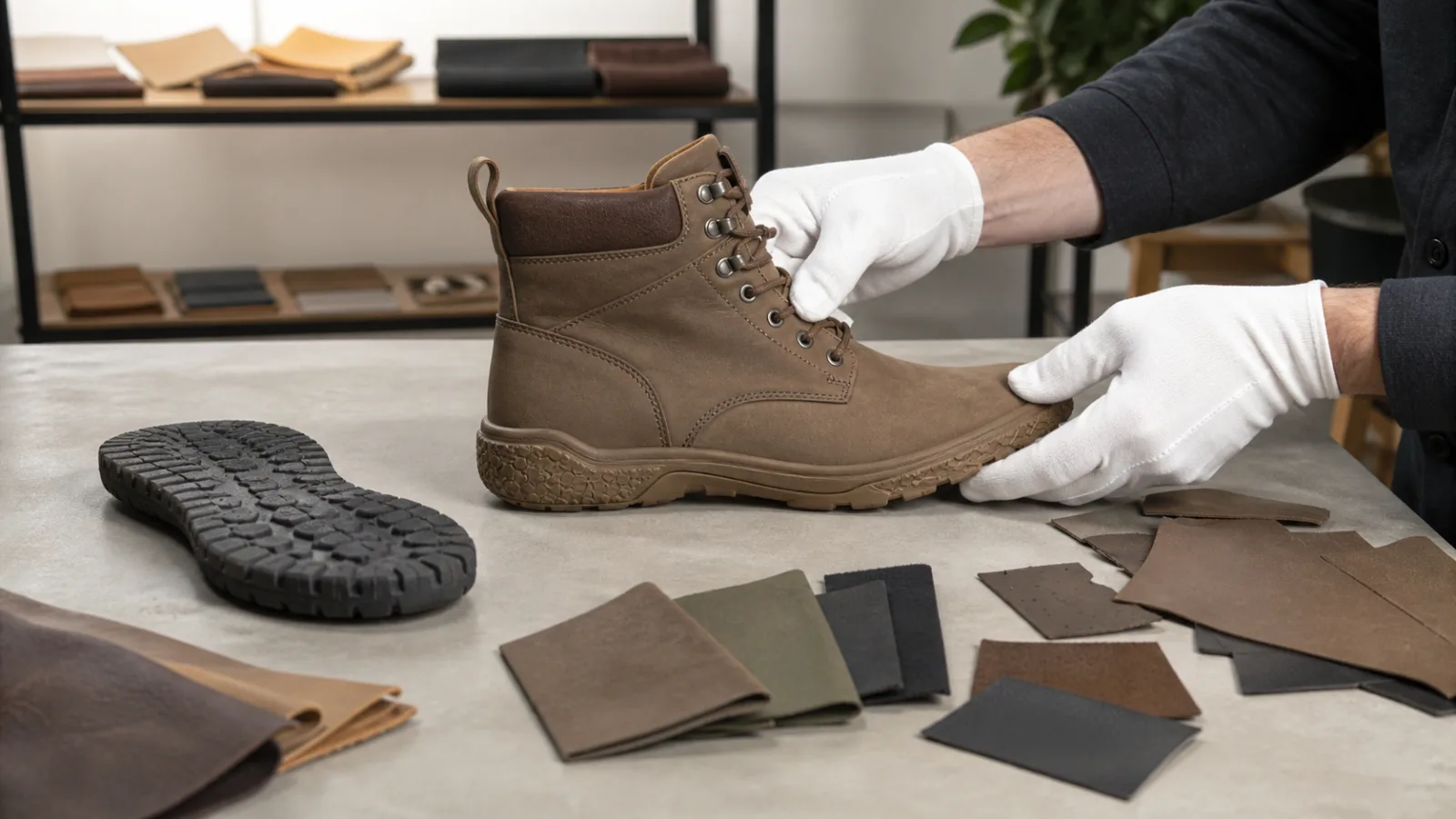
Review the Required Proof
For solutions-case, use a release rule: approve only when the supplier evidence matches the written requirement.
- Wholesale buyers of barefoot shoes need zero-drop, wide-toe-box construction in every size run. Stack height, drop, toe-box width, and material specs per product line. Mismatched specs cause returns and brand damage; verify against your use-case fit. Request a spec sheet and compare to your approved sample before bulk order.
- Quality control gates protect your brand from defects in high-volume production. In-line inspection points, AQL levels, and final random inspection criteria. Without QC proof, you risk shipping faulty goods and losing retail accounts. Ask for QC checkpoints and a pre-shipment inspection report per batch.
- MOQ determines your cash outlay and inventory risk for custom barefoot styles. Minimum order quantity per color per style, and stock style availability. Over-committing to MOQ ties up capital; under-ordering may delay reorders. Confirm MOQ for your target styles and plan order quantities against sales forecast.
- Buyer follow-up after sample approval prevents production drift and delays. Sample approval sign-off, production timeline, and deposit terms. Missing follow-up can lead to unauthorized changes and missed launch dates. Document approval in writing and schedule a production milestone check.
- Approval risk rises when specs change after sample sign-off, causing rework. Change control process for material, color, or construction modifications. Uncontrolled changes increase cost and delay; lock the baseline early. Define a change-request procedure and require written approval for any deviation.
Build the Decision Asset
When a wholesale buyer sends an quote request without a structured decision asset, the factory response becomes a list of promises that are hard to compare. The ambiguity shows up as conflicting specs, vague minimum order terms, or hidden production risks that only surface after sampling. The control is a three-part check that turns supplier claims into verifiable evidence: supplier proof, sample approval, and reorder control.
Supplier evidence to request
Before you evaluate cost or minimum order, verify that the supplier can actually execute your use case. Ask for documented production records that match your spec—material stack, sole hardness, stitch density, or last dimensions. For a barefoot shoe product range, this means confirming the zero-drop platform and wide toe box are reproducible, not just described. If the supplier cannot provide a measurement record or a reference product that matches, treat the claim as unproven.
Sample approval evidence
A physical sample is the only reliable proof of factory execution. Define the approval criteria before you receive it: which dimensions, materials, and construction details must match your written requirement. Measure the sample against your spec sheet, not against the supplier’s marketing photos. If the sample fails on a critical dimension, the production risk is high—do not proceed to bulk until the issue is corrected and re-approved.
Reorder control records
Wholesale success depends on repeatable quality. Establish a reorder control that triggers a new sample approval whenever the factory changes material suppliers, tooling, or production line. This prevents silent drift that can turn a good first batch into a failed reorder. Document the control in your quote request handoff so the supplier knows the standard is continuous, not one-time.
Use the table below to score each supplier against these three checks before you send the final quote request.
| Check | Evidence Required | Pass Criteria |
|---|---|---|
| Supplier proof | Production records or reference product | Matches your spec on key dimensions |
| Sample approval | Physical sample and measurement report | All critical specs within tolerance |
| Reorder control | Written change-notification process | Supplier commits to re-approval on changes |
This decision asset becomes the backbone of your quote request and sample handoff. It forces the factory to show evidence, not just assert capability, and it gives you a clear go/no-go gate before you commit to bulk production. For a deeper look at how to structure your sourcing workflow, see our integration playbook.
Prepare Comparable RFQ Inputs
At the quote request preparation checkpoint, the required output is a structured request that lets factories quote on identical terms. Without this, you cannot compare bids or hold suppliers accountable.
For a wholesale barefoot shoe program, your quote request must include five elements: product specs, cost or minimum order parameters, production risk controls, factory execution requirements, and a sample handoff protocol. Use the checklist below to build your quote request.
- Specs: Define the last, upper material, outsole thickness, drop, and size run. Attach a technical drawing or reference photo.
- Cost or minimum order: State your target price range and the quantity you are evaluating. Ask for tiered pricing at 500, 1000, and 2000 pairs.
- Production risk: Request a defect rate cap, inspection point, and material test report (e.g., abrasion or flex).
- Factory execution: Ask for the production lead time by stage, a communication contact, and a weekly progress report format.
- quote request/sample handoff: Define the sample approval criteria, the number of samples needed, and the deadline for sample delivery.
Keytop Barefoot Shoes, a Jinjiang-based B2B barefoot shoe OEM/ODM manufacturer, uses this structure to align buyer expectations with factory capabilities. Annie, who works with B2B barefoot shoe buyers on OEM, ODM, private-label, sample, and bulk production, recommends sending the same quote request to at least three factories to create a fair comparison.
For a quick audit, use this table to check your quote request completeness:
| RFQ Element | What to Include | Common Gap |
|---|---|---|
| Specs | Last, material, drop, size run | Missing size run or outsole thickness |
| Cost/MOQ | Target price, tiered quantities | No price range, vague MOQ |
| Production risk | Defect cap, inspection, test report | No inspection point defined |
| Factory execution | Lead time by stage, contact, reporting | No progress report requirement |
| Sample handoff | Sample criteria, quantity, deadline | No sample approval criteria |
Once your quote request is complete, you are ready to evaluate factory responses against the same baseline. For more guidance on building your quote request, see our blog.
Source check: ISO 2859-1 sampling inspection standard; Wholesale Child-Resistant Packaging: minimum order & Reorder Planning; How do I reduce supplier risk before placing a wholesale order?….
In conclusion
For wholesale: buyer use-case fit checklist, the next procurement action is a written quote request and sample approval record, not only a preferred style or unit price. Confirm the specification, minimum order assumption, artwork version, supplier capability, sample approval method, QC checkpoint, approval risk, and quote follow-up before bulk production.
Frequently Asked Questions
How should a b2b buyer match industry use case?
Match the use case by locking the product category first: running, trail, casual, kids, training, boots, or sandals. Each has a distinct stack height and drop, so confirm the spec sheet matches your target market. For custom production, the minimum order is 500 pairs per color per style; stock styles start at 50–100 pairs, subject to inventory.
Shortlist suppliers that can document their experience with your specific category, and verify the construction details in a physical sample before scaling. Compare cost and lead time across shortlisted factories, and confirm the production path—base-model ODM is faster than full OEM tooling. Approving the wrong structure or supplier proof can create quality, cost, or delivery problems.
Which supplier proof should buyers request for wholesale?
Request the supplier’s proof set: material specs, construction drawings, and any relevant proof: ISO 9001:2015 certification, amfori BSCI or Sedex SMETA audit reports, and GRS certification for recycled options. For wholesale, verify the factory can replicate the approved sample by asking for their production QC checklist and inspection process.
Check the sample lead time: base-model ODM samples take 7–14 days, while full OEM samples take 10–21 days. Confirm the minimum order and unit cost in the quote request, and document the sample approval before committing to bulk production. Approving the wrong structure or supplier proof can create quality, cost, or delivery problems.
What should buyers lock before approving buyer use-case fit checklist?
Lock the approved sample as the baseline, including material, color, branding, and packaging. Confirm the production lead time—standard orders take 30–45 days after sample approval and deposit, while complex custom projects take 45–60 days. Verify the minimum order and payment terms (T/T 30% deposit, 70% before shipment) in the quote.
Document the supplier’s quality control steps and inspection criteria in the quote request, and request a pre-shipment sample or inspection report. This ensures the bulk order matches the approved use-case fit checklist. Approving the wrong structure or supplier proof can create quality, cost, or delivery problems.
quote request handoff: Ask B2B buyers to share product category, target quantity, market, timeline, and reference files for a practical quote. Send Specs for Review.
Leave a Comment
Ask a sourcing question, add your view, or request follow-up from our team. We keep the form short so it feels natural inside the article page.