
The sourcing record for wholesale: supplier shortlist scorecard is incomplete until it supports this Shortlist Wholesale: Supplier Shortlist Scorecard suppliers using proof, capability, quality, MOQ, and delivery criteria.
Score wholesale suppliers on reorder lead time and stock consistency, because those two decide whether a range stays sellable.
Buyer summary: For wholesale: supplier shortlist scorecard, buyers should shortlist Wholesale: Supplier Shortlist Scorecard suppliers using proof, capability, quality, MOQ, and delivery criteria.
Define the Buyer Requirement
Begin the barefoot-footwear supplier shortlist with the exact construction program. Record the intended uses, last ownership, toe-box and zero-drop direction, upper and lining families, outsole development route, size and width grading, test expectations, colorway and SKU count, packaging, launch quantity, repeat-order pattern, and delivery market. Each score should point to factory evidence for that scope rather than a broad claim of shoe-making experience.
| Requirement | Factory control | Evidence to verify | Order risk | RFQ follow-up |
|---|---|---|---|---|
| Sample approval | Factory holds pre-production sample for buyer sign-off before bulk. | Compare sample to approved reference under buyer-approved viewing conditions. | Unapproved sample leads to bulk rejection and rework cost. | Request sample with marked approval owner and revision. |
| Material / substrate | Supplier verifies material composition and source per spec sheet. | Check material certificate and lab test for composition. | Substitute material alters fit, durability, or barefoot feel. | Ask for material data sheet and swatch set. |
| Width or size tolerance | Factory measures last and finished shoe against size specs. | Measure sample on last and compare to tolerance chart. | Oversized or undersized shoes cause returns and fit complaints. | Request size grading chart and fit sample set. |
| Finish or color control | Supplier uses color standard and batch-to-batch consistency check. | Assess color under standard light and compare to approved swatch. | Color mismatch across batches harms brand consistency. | Approve color swatch and request batch sample. |
| Packing format | Factory follows packing spec for carton, label, and barcode. | Inspect packing list and carton marking against PO. | Wrong packing delays customs and increases damage risk. | Confirm packing details in RFQ and approve packing sample. |
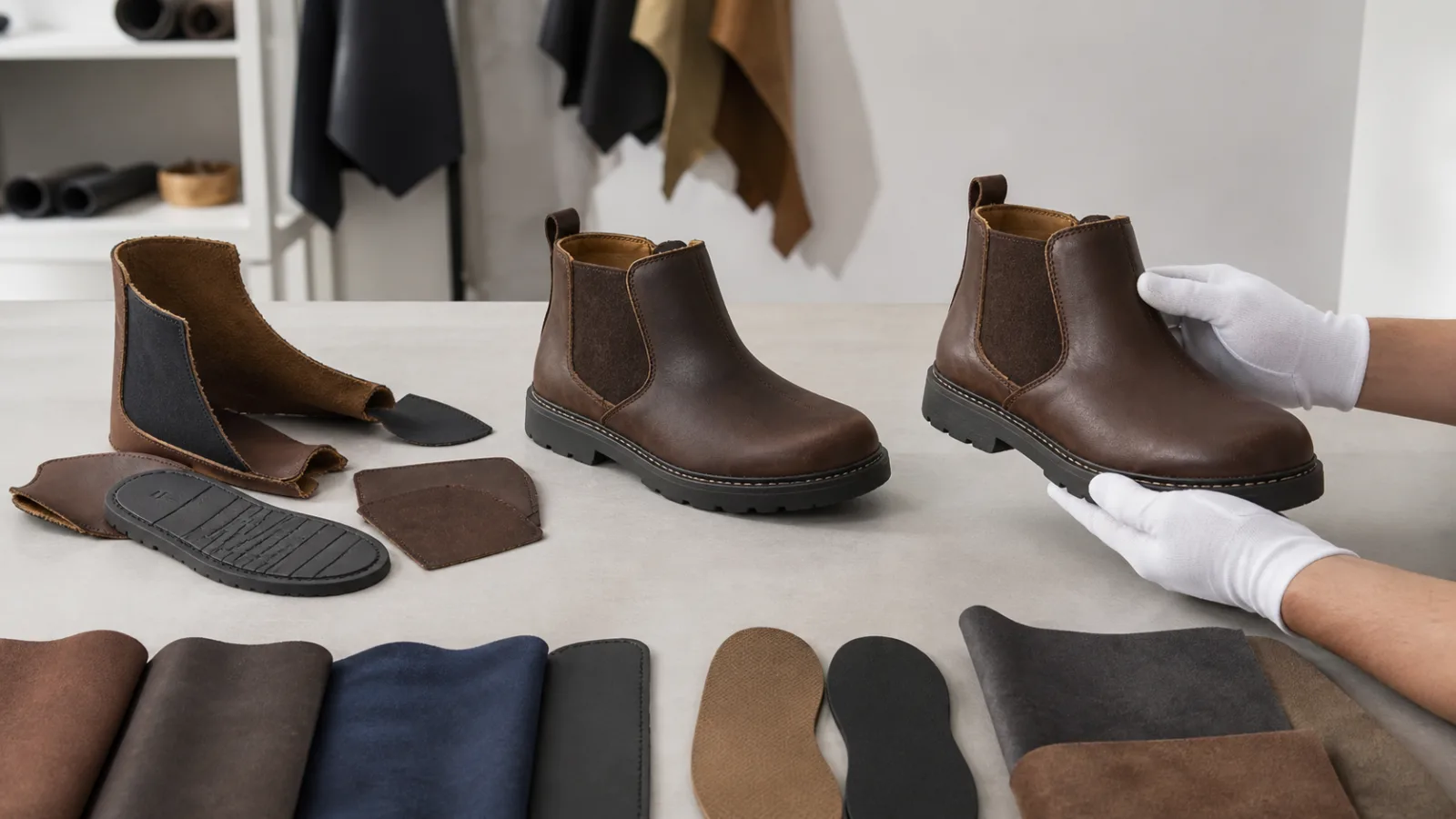
Read the scorecard along the footwear production path. Verify last and pattern engineering, size-set control, material and component traceability, outsole coordination, sample-room capacity, bonding or stitching controls, left-right symmetry, final measurement, labeling, paired packing, and repeat-order change control. Weight the proof against the buyer’s construction and assortment risk.
Keep the supplier response, factory and process map, last and pattern references, approved size set, bill of materials, outsole file, inspection evidence, corrective-action example, quotation, and approval owner under one shortlist revision. If a shortlisted factory relies on an unconfirmed outsole, material, test, or subcontracted process, mark the dependency and stop award until ownership and evidence are clear. Carry the signed scorecard into nomination, development, purchase, inspection, and repeat-order review.
Compare the Available Routes
| Option | Best fit | Trade-off | Risk to avoid | Verification | Follow-up |
|---|---|---|---|---|---|
| Current specification | Buyers with an approved sample and stable sales history. | Locks design; changes require new sample cycle. | Spec drift from supplier substitutions in bulk. | Compare bulk goods against sealed sample. | Document spec sheet and sample reference. |
| Alternative specification | Buyers testing material or stack height changes. | May shift cost and lead time; needs re-approval. | Unvalidated performance or fit issues. | Request pre-production sample and wear test. | Run pilot batch before full commitment. |
| Safer fallback | Buyers facing tight deadlines or budget caps. | Limited customization; may miss brand goals. | Stock style may not match target market. | Check stock availability and size run. | Order stock sample to validate fit. |
Evaluate Compare the Available Routes as one decision scope. Use this decision matrix as an approval sequence, not as a supplier claim. For current specification, a poor decision can mean spec drift from supplier substitutions in bulk. Ask the supplier to compare bulk goods against sealed sample.
For barefoot shoes manufacturer, preserve the current specification decision under one revision number: keep the supplier response, marked sample, approved specification, quotation, and approval owner together. If the evidence conflicts with the approved record, hold the quote, sample, or production release until the deviation is explained in writing. Once the buyer and designated technical authority have accepted the evidence, carry the signed Compare the Available Routes record into the purchase order, production handoff, shipment release, and later reorder review so every team works from the same baseline.
RFQ checkpoint
Ask B2B buyers to share product category, target quantity, market, timeline, and reference files for a practical quote.
Review the Required Proof
- Supplier capability: Verify factory runs zero-drop, wide-toe-box lines, not just general footwear. Dedicated barefoot shoe OEM and ODM services services with sample-room proof. Supplier claims barefoot skill but only shows standard last photos. Ask for barefoot-specific production photos and a trial sample.
- MOQ or order quantity: Confirm minimum order matches your order size: stock styles 50-100 pairs, custom 500 pairs per color per style. Written minimum order per product type and production path. minimum order quoted only for custom production, hiding stock flexibility. Request a quote that separates stock and custom MOQs.
- Quality control: Check for QC checkpoints during production and before shipment. Supplier shares inspection reports or third-party QC options. No QC documentation or vague 'we check quality' statement. Request a pre-shipment inspection report or sample approval record.
- Verification method: Confirm how the supplier proves claims: samples, certifications, or factory audit. ISO 9001:2015 certification, or amfori BSCI / Sedex SMETA audit reports, plus sample approval. Supplier refuses to share certificates or a physical sample. Ask for certification copies and a sample for QC verification.
- The risk is that Assess risk of approving a supplier without written proof of capability and minimum order. Supplier provides written sample approval before bulk production. Supplier pushes for deposit before sample sign-off. Document sample approval in writing before any bulk commitment.
Build the Decision Asset
Hold the barefoot shoe product range review when evidence for Supplier cannot show a sample from the same production line you will use. is unresolved; record the discrepancy, supplier owner, and release condition before approval.
- Supplier cannot show a sample from the same production line you will use. A separate sample line can hide tooling or material issues that appear only in bulk. Ask for a sample produced on the actual line, with the same materials and construction. Line-run sample with batch number and production date. Compare that sample against your approved reference before deposit.
- Supplier refuses to document the QC checkpoints for your order. Without written checkpoints, defects can slip through and you absorb return costs. Request a QC plan listing each inspection stage and the pass/fail criteria. Signed QC checklist or inspection report from a recent order. Approve the QC plan before bulk production starts.
- Supplier has no reorder control or lot traceability for repeat orders. Inconsistent batches mean your second order may not match the first, hurting your brand. Ask how they track lots and what changes trigger a new sample approval. Lot traceability record or reorder protocol document. Include a reorder clause in your contract requiring sample re-approval for any change.
Supplier evidence to request
Before you shortlist a supplier, ask for proof that matches your order size and production type. For stock styles, a photo or spec sheet may be enough. For custom production, request a sample that shows the actual construction. Verify the supplier can meet your minimum order and lead time in writing. This step prevents surprises later.
Sample approval evidence
A sample is your only real proof of fit and quality. Compare the sample against your specification for stack height, drop, and toe-box width. Measure it yourself if possible. Approve the sample in writing before any bulk production starts. This approval gate protects you from receiving shoes that do not match your brand's promise.
Reorder control records
A supplier who cannot commit to reorder terms is a risk for your ongoing business. Ask for a written reorder policy that includes price validity and lead time for repeat runs. Confirm the same production path and QC checks apply. This keeps your supply chain stable and your costs predictable.
Prepare Comparable RFQ Inputs
- Can you provide a sample for QC verification before bulk commitment? A physical sample confirms construction, level platform, and wide toe box match the approved specification. Supplier sends a pre-production sample within 7-14 days for base-model ODM. Approving bulk without sample risks off-spec shoes and costly rework. Request sample and compare against your specification checklist.
- What is your process for material and construction feasibility checks? Ensures your chosen materials and design can be produced at scale without defects. Supplier reviews material specs and construction before quoting, flagging issues early. Ignoring feasibility can lead to production delays or quality failures. Ask for a written feasibility report before sample development.
- How do you document sample approval before bulk production? A written approval gate prevents disputes and ensures the bulk run matches the approved sample. Supplier requires signed sample approval and keeps a reference sample for production. Without a gate, bulk may deviate from sample, causing rejection. Establish a written sample approval procedure with the supplier.
- What certifications and quality checks do you have in place? ISO 9001:2015 certification and amfori BSCI audit reports indicate process control and ethical practices. Supplier provides valid certificates and describes QC checkpoints during production. Missing certifications may lead to compliance issues or inconsistent quality. Request copies of certifications and a QC checklist for your order.
Source check: ISO 2859-1 sampling inspection standard; How Buyers Compare Wholesale Suppliers: minimum order, Specs, and Trend F…; What Is Wholesale Price? A Practical Guide for Global B2B Buyer….
In conclusion
Final approval of a wholesale supplier shortlist scorecard comes down to verification, not preference. Before you approve any candidate, check the specification against your RFQ line by line, confirm the cost and minimum order fit your order size, and verify the lead time in writing. Then compare the evidence each supplier provided for quality control, certifications, and financial stability. The supplier that documents every checkpoint—from material traceability to sample approval—earns the shortlist spot. When you are ready to move forward, request a quote with your finalized specification and ask for a sample that matches your production type. That sample is your last gate: approve it only after it passes your QC checks, then lock the order with a written agreement.
To request a quote for wholesale supplier shortlist, use wholesale to confirm the final specification, quote assumptions, sample approval, QC evidence, approval risk, and supplier follow-up before bulk order.
Frequently Asked Questions
How should a b2b buyer compare supplier options?
Compare suppliers on a scorecard that weighs specification fit, cost and minimum order impact, lead time, and supplier risk. For barefoot shoes, confirm the stack height and zero-drop construction match your target line, then check the minimum order against your order plan—stock styles may start at 50–100 pairs, while custom production requires 500 pairs per color per style. Verify lead time by production path: stock orders can ship within days, but full OEM samples and complex custom runs take longer, so confirm exact dates in the quote request.
Document each supplier’s capacity and proof, such as ISO 9001:2015 certification or an amfori BSCI audit report, and request a sample to verify quality before bulk commitment. Compare unit costs only after you have matched specifications and minimum order, and ask for a written quote that includes payment terms and any volume breakpoints—confirm these numbers in the quote request rather than assuming they are standard.
Which supplier proof should buyers request for wholesale?
Request proof that matches your order size and product type. For wholesale, ask for a sample of the exact style you plan to order, whether stock or custom, and verify the stack height, drop, and material against your spec sheet. For custom production, confirm the minimum order of 500 pairs per color per style and the lead time for samples—base-model ODM samples may take 7–14 days, while full OEM samples can take 10–21 days, so align this with your launch calendar.
Also request documentation of factory proof and quality control processes, such as ISO 9001:2015 certification or an amfori BSCI audit report, and ask for references or proof of similar past orders. Compare the sample against your approved spec, and if any detail differs, document the variance and request a revised sample before approving bulk production. Confirm reorder terms and lead times in writing to avoid surprises later.
What should buyers lock before approving supplier shortlist scorecard?
Lock the specification sheet, including stack height, drop, materials, and construction details, before approving any supplier. Confirm the minimum order and lead time for both samples and bulk production—stock styles may have a lower minimum order, but custom orders require 500 pairs per color per style, and production can take 30–60 days depending on complexity. Get a written quote that includes payment terms, such as T/T 30% deposit and 70% before shipment, and any volume-based pricing breaks.
Also lock the sample approval process: require a written sign-off on the sample before deposit-backed bulk production, and specify how QC will be handled during production and pre-shipment. Document the supplier’s reorder terms and capacity to ensure they can meet your ongoing demand, and confirm all numbers—cost, minimum order, lead time—in the quote request or sample approval to avoid ambiguity.
quote request handoff: Ask B2B buyers to share product category, target quantity, market, timeline, and reference files for a practical quote. Send Specs for Review.
Leave a Comment
Ask a sourcing question, add your view, or request follow-up from our team. We keep the form short so it feels natural inside the article page.