
A barefoot shoe RFQ is a revision-controlled request that lets factories answer the same product, quantity, evidence, and commercial basis. It is not a purchase order, final tech pack, compliance opinion, sample approval, or contract. If fixed requirements and open choices are mixed together, two prices can look comparable while describing different shoes.
Use QUOTE-LOCK: Quantity, Use case, Options, Test evidence, factory Evidence, quote Limits, Ownership, Change control, and version Keep. Each field is marked required, conditional, supplier-return, or closed so silence cannot become an approved assumption.
This guide provides a copy-ready RFQ structure, requirement-review gate, response matrices, clarification ledger, and comparison formulas. Engineering limits, test-method selection, legal terms, freight contracting, payment approval, and market compliance remain decisions for the responsible buyer or specialist.
Key Takeaways
- Issue one RFQ ID and revision, then require every offer, exception, sample request, and clarification to cite it.
- Separate buyer-fixed requirements, conditional options, and supplier-return evidence before quotation.
- Compare included work, conditional charges, timing triggers, and deviations in matrices rather than email prose.
- Measure field completion and cycle time from a stable ledger. No permissioned public Keytop RFQ-performance dataset is available here, so no result is claimed.
Q/U — Quantity, Assortment, and Use Case
Start with one copy-ready cover block. It closes the identity, route, quantity, and timing questions needed to review the request on the intended basis.
Copy-and-use RFQ cover block
- Control: RFQ ID [ ], revision [ ], issue date [ ], reply deadline [ ], buyer owner [ ], destination market [ ].
- Product route: stock [ ], existing-base private label [ ], full custom [ ]; intended activity [ ], wearer [ ], target launch window [ ].
- Assortment grid: style [ ], color [ ], size [ ], width [ ], pairs per line [ ], total pairs [ ]; requested alternative [allowed / not allowed].
- Timeline basis: sample decision date [ ], production-ready date [ ], destination [ ], clock-start event [ ], buyer-supplied inputs and due dates [ ].
Response block: accepted line [ ], exception [ ], proposed route [ ], evidence ID [ ], owner [ ], due point [ ].
| Review field | Buyer input | Risk if open | Response needed to close the row |
|---|---|---|---|
| Project identity | RFQ ID, revision, buyer, market, issue date, deadline | Reply attaches to an obsolete or unrelated request | Require the recipient to repeat the controlling ID before review |
| Assortment | Style-color-size-width lines and totals | A total hides the unit at which feasibility or minimum quantity applies | Request line-by-line acceptance or a named exception |
| Use and route | Activity, wearer, market, stock/private-label/custom route | The response evaluates another base model or development path | Ask for the proposed base model, construction route, and limitations |
| Timing | Requested dates, destination, start events, input due dates | A schedule is stated without its dependencies | Require start triggers and date impact for every late input |
Decision table 1. Reusable Q/U cover block. Copy the five control lines into the RFQ, then close each review row with a response or explicit exception.
Record the quote basis in one field.
Requirement-review-before-quotation gate: do not release the RFQ until the ID, revision, product route, assortment total, use case, timing trigger, buyer owner, and allowed alternative status are visible. If one remains open, assign the missing input and due point instead of asking the recipient to guess.
Use the barefoot shoe product range to classify the request before issuing the grid.
O/T — Options, Specifications, and Test Evidence
Convert the desired shoe into a confirmation matrix. Required rows control the quote; conditional rows activate only when the market, construction, claim, or buyer program triggers them.
| Specification group | Required buyer input | Risk if wrong | Verification and buyer follow-up |
|---|---|---|---|
| Fit and barefoot geometry | Target foot profile, last/base-model status, toe form, size system, width plan, measurement method, flex intent, insole condition | A general description hides a different last or grading basis | Return the proposed last/base model, measurement points, open questions, and sample route |
| Upper and components | Material and color references, lining, reinforcement, closure, outsole, insole, construction, substitutions | An unnamed alternative changes appearance, flex, evidence scope, or reorder consistency | Return component codes, source status, written alternatives, drawings, and process limits |
| Quality and test evidence | Inspection stages, defect classes, buyer limits, method-selection owner, market, exact material/construction revision, required documents | Evidence for another style, method, material, or revision is treated as direct proof | Return report identity, method, sample description, date, scope, limitation, and disposition owner |
| Artwork, labels, and packing | Artwork revision, barcode owner, label input, pair/box presentation, carton configuration, destination marks | Late files or an unclear ownership basis creates rework after product approval | Return marked layouts, packing reference, exceptions, and responsible file owner |
Decision table 2. QUOTE-LOCK specification matrix. Every supplier answer must point to the same RFQ revision and identify the evidence or owner that closes the row.
Method boundary: the matrix supplies fields and evidence questions, not universal footwear limits. Exact dimensions, tolerances, test methods, and pass criteria must come from the approved buyer specification, responsible technical owner, applicable market requirement, or authorized test plan.
Where retail identifiers are required, the buyer should name the assignment and artwork owner. GS1 barcode standards are an official identifier-and-carrier reference; they do not approve the shoe, artwork, or destination-market label content.
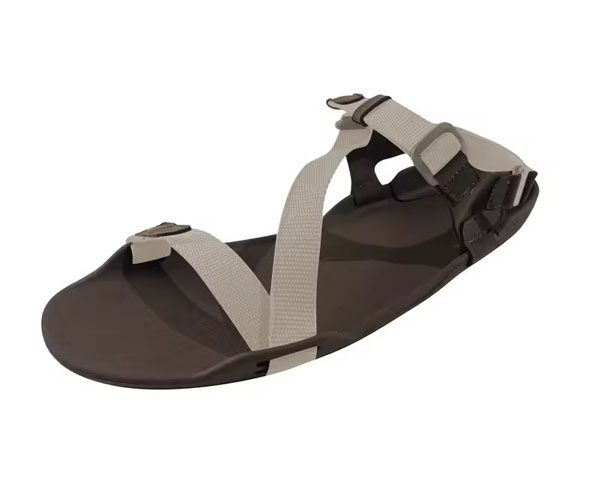
Compare running-use assumptions with the barefoot running shoes manufacturer before approving the sample basis.
RFQ checkpoint
Send one controlled RFQ revision with the product brief, assortment, required and conditional fields, evidence requests, quote basis, and change log for review.
E — Evidence-Backed Factory Reply
Require the factory reply to mirror the RFQ field order. Experience becomes decision evidence only when the answer names the proposed route, relevant record, limitation, exception, owner, and buyer follow-up for this configuration.
Factory reply checks
- Confirm. Repeat the accepted buyer input or cite the exact RFQ field and revision; “same as requested” is insufficient when several files exist.
- Prove. Attach a matching material record, drawing, controlled sample reference, process record, inspection example, or other evidence. Label another style as reference-only.
- Qualify. State dependencies, third-party steps, buyer-supplied inputs, development work, and limits that keep the answer provisional.
- Deviate visibly. Put every material, construction, dimension, color, packing, timing, or commercial alternative in a deviation column.
Own the close: name who will answer, sample, test, revise, or approve the point and when the evidence returns.
Do not shortlist when any condition below remains
- “Possible” has no construction route, matching evidence, limitation, or responsible owner.
- A certificate, report, sample, or photograph belongs to another material, style, market, process, or revision but is presented as direct proof.
- A critical assumption sits in email prose instead of the response matrix and deviation list.
- An unanswered mandatory field has no owner, due point, evidence request, or hold decision.
Process evolution: stage 1 is a basic inquiry; stage 2 adds a structured requirement file; stage 3 binds the response to evidence and deviations; stage 4 keeps the same revision through sample and production handoff. Move forward only when the current stage leaves an auditable record. The ISO 9001 quality management standard is useful official system context, but a system certificate is not product-specific proof for the requested shoe.
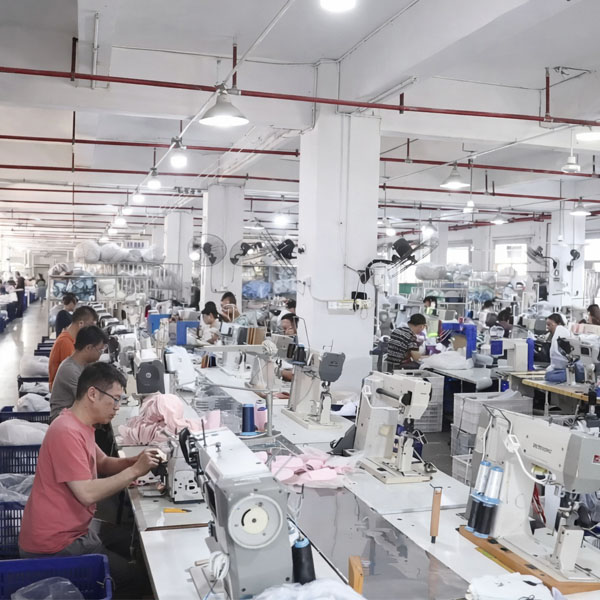
For an indie-brand program, carry the response matrix into barefoot shoe manufacturing for indie brands before requesting a sample.
L — Quote Boundaries and Comparable Offers
Advance only offers that answer the same RFQ revision, assortment grid, construction route, included work, delivery basis, timing trigger, quality plan, and deviation status. A lower unit price does not correct a different scope.
Normalize the commercial basis
- Record currency, delivery term and named place where applicable, payment-stage assumptions, validity, assortment basis, minimum quantity at its stated unit, and the exact revision priced.
- Keep stock, existing-base customization, and new-development routes in separate lanes. Mark every mismatch provisional before comparison.
| Offer-basis field | Offer A | Offer B | Close rule |
|---|---|---|---|
| RFQ and product revision | [ ] | [ ] | Must match |
| Assortment and minimum basis | [ ] | [ ] | Normalize by style, color, size, or order unit |
| Included and conditional charges | status [ ]; trigger [ ]; allocation [ ] | status [ ]; trigger [ ]; allocation [ ] | Retain raw amount, denominator, evidence, and owner |
| Sample and production clocks | start [ ]; dependencies [ ]; restart [ ] | start [ ]; dependencies [ ]; restart [ ] | Name revised date and owner after a restart event |
| Delivery basis and named place | [ ] | [ ] | Must use the same comparison basis |
Quality and inspection obligation. [ ]; [ ]; Name method, stage, owner, and exception.
Separate included and conditional charges
Use this checkpoint to clarify the buyer decision before the next specification, sample, or supplier comparison.
Lock timing assumptions and restart events
Before order release, verify keep sample and production clocks separate. For every late artwork file, unapproved material, changed assortment, new tooling need, failed sample, buyer revision, or delayed test record, capture: restart event [ ], affected clock [ ], date impact [ ], revised date owner [ ].
Comparable-offer gate: a reviewer must point to the same buyer input and response field for every cost driver, schedule assumption, sample inclusion, inspection obligation, and deviation. If one basis differs, label the line provisional and close it before commercial comparison.
Method boundary: these matrices normalize offers; they do not claim an achievable market price, universal minimum, or guaranteed schedule. Keep the raw offer, adjustment note, allocation rule, and decision owner with the blog research record so another reviewer can reconstruct the comparison.
O/C/K — Ownership, Change Control, and Version Lock
Treat the RFQ, offer, evidence, clarification log, and sample approval as one controlled record. Ask each question against the current RFQ ID; a correct answer tied to an obsolete revision cannot close the decision.
- Which revision does this offer answer? Expect the RFQ ID, issue date, acknowledged file list, and revision owner. Hold comparison until all four match.
- Which fields are fixed, provisional, deviated, or unanswered? Require one status per mandatory field, record the consequence of leaving it open, and assign a close action before comparison.
- Who owns each open decision? Expect approver, response owner, due point, evidence ID, and hold rule. Escalate a field missing any of them.
- What event requires requotation? Require a written impact statement when geometry, material, assortment, tooling, packing, testing, delivery, or commercial basis changes.
The RFQ should also cover revision log: Current file is acknowledged and superseded files are marked; Clarification log: Every mandatory field is closed or visibly accepted as an assumption; Offer comparison: A reviewer can reconstruct the decision without private chat history.
If final inspection uses acceptance sampling, record the buyer-approved method, lot definition, defect classes, acceptance basis, and disposition owner. The ISO 2859-1 sampling inspection standard is official context; citing it alone does not select the plan, approve the lot, or prove the respondent’s performance.
Confirm factory capability with one matching record.
Reproducible RFQ ledger: mandatory-field completion rate = completed mandatory reply fields ÷ total mandatory reply fields × 100. Clarification density = clarification items ÷ mandatory fields. Comparable-offer cycle time = comparable-offer timestamp minus RFQ issue timestamp. Revision rate = RFQs requiring a new commercial revision ÷ RFQs issued × 100. Keep definitions, timestamps, and project route stable. Keytop has not supplied a permissioned public RFQ-performance dataset for this article, so no rate, average, improvement, or benchmark result is claimed.
Hold and reopen the RFQ when the offer answers an older revision, a changed field lacks impact review, the sample and offer use different assumptions, or an open field has no owner. Send the corrected record to the named owner before requesting a revised offer.
Conclusion — Send One Controlled RFQ Revision
QUOTE-LOCK turns a price request into a comparable decision record: define Quantity and Use case, specify Options and Test evidence, require Evidence-backed replies, normalize quote Limits, then preserve Ownership, Change control, and version Keep. The consequence is accepting a price tied to another product, evidence scope, or commercial baseline.
Confirm factory experience with one matching construction, sample, or process record.
Before shortlisting, verify that every offer answers the same revision and separates confirmed fields, conditional assumptions, deviations, evidence, inclusions, restart events, and open owners. Keep the clarification and revision logs through sample approval.
Send your specs as one controlled RFQ revision with the cover block, assortment grid, specification matrix, evidence requests, charge matrix, timing matrix, and change log. Use custom barefoot shoe development to request requirement and feasibility review before asking for comparable offers. Do not request a final quotation until the requirement-review gate is closed.
QUOTE-LOCK RFQ FAQs
Can a supplier quote before every conditional field is closed?
Yes, if the offer labels the open field, states the priced assumption, explains the change trigger, and names the owner who must close it. Keep that line provisional until competing offers use the same assumption.
How should buyers compare two barefoot shoe quotes fairly?
Place both replies against the same RFQ revision. Normalize assortment, construction route, evidence scope, included work, conditional charges, delivery basis, inspection obligation, and timing trigger. Separate stock, private-label, and full-development lanes when they do not include the same work.
What changes require a revised RFQ?
Issue a new revision when a change affects product geometry, material, component, assortment, tooling, branding, packaging, test scope, quality limit, delivery basis, timing, price basis, or ownership. Record minor editorial corrections in the log and identify the corrected controlling file.
RFQ handoff: Send one controlled RFQ revision with the product brief, assortment, required and conditional fields, evidence requests, quote basis, and change log for review. Send Specs for Review.
Leave a Comment
Ask a sourcing question, add your view, or request follow-up from our team. We keep the form short so it feels natural inside the article page.