A factory can quote one construction while the fit sample proves another if buyers never freeze intended use, size-run rules, and approval ownership before sampling.
A usable factory answer states which fit, construction, material, and wear checks must pass before bulk production.
Use the checkpoints below to align fit evidence, construction notes, QC proof, and commercial assumptions before bulk production.
Direct answer: Approve this program only when intended use, construction or material route, measured sample, packing method, and quote assumptions sit on the same written revision—not when a catalog photo and a unit price arrive in separate chats.
Use a written sourcing sequence that covers the material and construction feasibility check; keep each checkpoint tied to the quote revision, sample evidence, approval owner, and bulk-production handoff.
Set the Kids Size Range and Market Standard
Compare the size range and market standard against one RFQ revision. Each row should identify the requirement, approval evidence, and buyer action before production.
| Specification | Quality control | Verification method | Risk to avoid | Buyer action |
|---|---|---|---|---|
| Sample approval | Sealed sample matches spec sheet, material report, and last matrix | Compare physical sample to approved spec; document on sample tag | Production deviates from approved fit without written sign-off | Hold bulk order until written sample approval is signed |
| Material / substrate | Stretch %, thickness, and flex point verified per last geometry | Request material behavior report and tension test on last | Upper distortion or seam failure during lasting or wear | Ask supplier for material certificate and test record before MOQ |
| Finish or color control | Color consistency across sizes and production lots within buyer-approved color tolerance | Compare production sample to approved color standard under buyer-approved viewing conditions | Color mismatch between sample and bulk order causing rejection | Request lab dip approval and in-line color check during production |
| Packing format | Individual poly bag, size-labeled, with inner box and outer carton spec | Inspect first packing sample against approved packing spec sheet | Damaged goods or incorrect labeling delays customs clearance | Approve packing sample and request packing checklist in RFQ |
Read the rows as one approval sequence. Start with sample approval because production deviates from approved fit without written sign-off. Verify it by asking the supplier to compare physical sample to approved spec; document on sample tag.
Keep the supplier response, marked sample, and approval owner under the same revision number. If any proof conflicts with the approved record, hold the quote, sample, or production release until the supplier explains the deviation in writing. Before closing the checkpoint, reconcile the latest drawing, sample, quotation, and approval comments, identify which record controls if they disagree, and document the resolution. Carry the signed size-range table into the purchase order and production handoff so the same checks support quote comparison, sample approval, shipment release, and later reorders.
Define age bands sample sizes and selling market
For kids barefoot shoes, age bands (first walkers, toddlers, juniors) determine the size range and grading increments. EU 19–38 covers most children, but your target market’s labeling standard (EU vs. US) affects width and length reference points. Select smallest, middle, and largest sizes within your age band to validate grading consistency. This prevents fit disputes and ensures the supplier’s last matrix matches your market’s foot morphology.
Avoid mixing incompatible labeling systems
EU and US sizing use different reference points for length and width, and mixing them on the same spec sheet causes grading errors. For example, EU 24 corresponds to US 7C but with different width allowances. Document your chosen system on the spec sheet and request the supplier’s written confirmation of their labeling standard. This eliminates ambiguity in the RFQ and prevents sample rejection due to misaligned size labels.
Build the Size-Grading Specification
| Cost driver | What changes it | Quote signal | Risk to avoid | Buyer action |
|---|---|---|---|---|
| Last dimension matrix for each size increment | Custom lasts for sizes outside standard molds | Supplier provides signed last dimension matrix | Hidden tooling cost if range exceeds standard molds | Request signed last dimension matrix before quote comparison |
| Upper material stretch and thickness per size | Material substitution or grade change across size run | Material behavior report for each upper component | Fit drift if stretch varies between sizes | Verify material report covers all sizes in range |
| Grading logic for length, width, and girth | Age band and labeling standard (EU vs US) | Written confirmation of grading increments | Misaligned size labels causing sample rejection | Confirm grading logic matches target market standard |
| Sample development for smallest, middle, largest sizes | Number of fit samples required | Sample lead time and cost per size | Fit drift across run if edge sizes not tested | Select three sizes for sample validation |
| QC inspection for each size increment | Inspection frequency and method | QC plan covering all sizes in run | Bulk fit failure if QC skips edge sizes | Require QC plan with size-specific checks |
For last dimension matrix for each size increment, a poor decision can mean hidden tooling cost if range exceeds standard molds. Request written proof and compare it with the approved sample or specification, then request signed last dimension matrix before quote comparison.
For the last dimension matrix checkpoint, keep the supplier response, marked sample, approved specification, quotation, and approval owner under the same revision number. If the evidence conflicts with the approved record, hold the quote, sample, or production release until the deviation is explained in writing. Carry the signed decision record into the purchase order, production handoff, shipment release, and later reorder review so every team works from the same baseline.
Confirm length width and increment rules
For kids barefoot shoes, EU 19–38 covers most age bands, but your target market’s labeling standard (EU vs. US) affects width and length reference points. Select smallest, middle, and largest sizes within your age band to validate grading consistency. This prevents fit disputes and ensures the supplier’s last matrix matches your market’s foot morphology.
State tolerances and measurement reference points
Specify the exact measurement points for ball girth, heel width, and toe-box length on the spec sheet. Inconsistent reference points cause grading errors between sizes. Request the supplier's written confirmation of their measurement method and tolerances for each point. This eliminates ambiguity in the RFQ and ensures the sample matches your fit intent before bulk production.
Use barefoot shoe product range to align the related specifications and RFQ inputs.
RFQ checkpoint
Share product category, target quantity, market, timeline, and reference files for a practical quote.
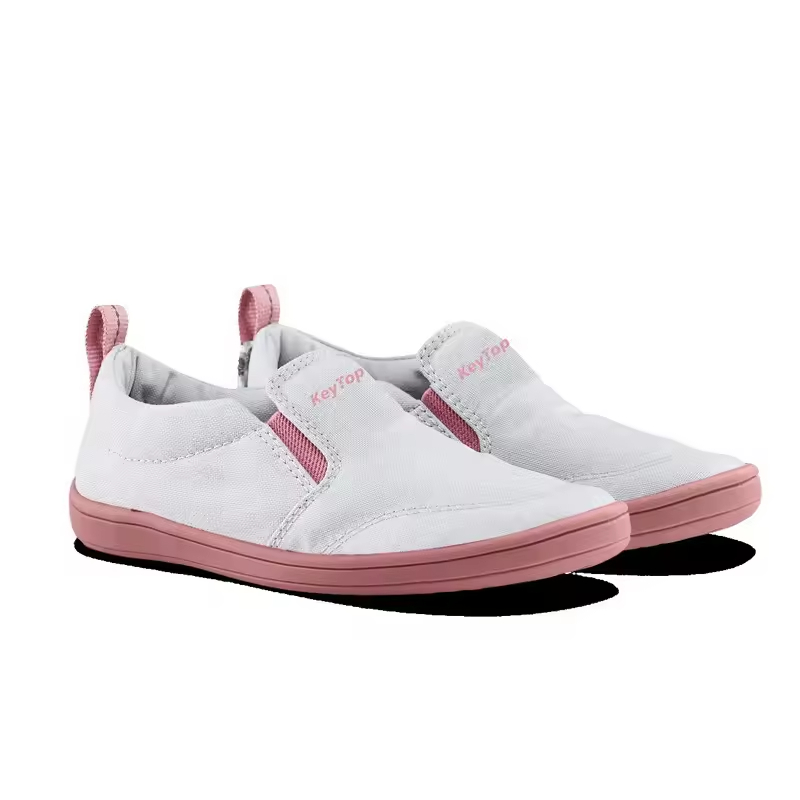
Define Toe-Box Shape and Fit Allowances
For kids barefoot shoe size grading toe box rfq checklist, treat the Define Toe-Box Shape and Fit Allowances items as RFQ inputs. Match each buyer input to written supplier confirmation, approval evidence, and the risk that would hold the quote.
- Specification details: This affects quote accuracy, MOQ, lead-time, cost, sample approval, quality control, reorder consistency for kids barefoot shoe size grading toe box rfq checklist. Keep kids barefoot shoe size grading toe box rfq checklist material, width, finish, packing, approval owner, and version in writing. Risk includes quote mismatch, quantity mismatch, lead-time delay, unexpected cost, sample rejection, quality dispute, packing error, reorder drift. Ask for RFQ confirmation, attach proof, and approve only after sample review.
- MOQ or order quantity: This affects quote accuracy, MOQ, lead-time, cost, sample approval, quality control, reorder consistency for kids barefoot shoe size grading toe box rfq checklist. Keep kids barefoot shoe size grading toe box rfq checklist material, width, finish, packing, approval owner, and version in writing. Risk includes quote mismatch, quantity mismatch, lead-time delay, unexpected cost, sample rejection, quality dispute, packing error, reorder drift. Ask for RFQ confirmation, attach proof, and approve only after sample review.
- Lead time: This affects quote accuracy, MOQ, lead-time, cost, sample approval, quality control, reorder consistency for kids barefoot shoe size grading toe box rfq checklist. Keep kids barefoot shoe size grading toe box rfq checklist material, width, finish, packing, approval owner, and version in writing. Risk includes quote mismatch, quantity mismatch, lead-time delay, unexpected cost, sample rejection, quality dispute, packing error, reorder drift. Ask for RFQ confirmation, attach proof, and approve only after sample review.
- This affects quote accuracy, MOQ, lead-time, cost, sample approval, quality control, reorder consistency for kids barefoot shoe size grading toe box rfq checklist. Keep kids barefoot shoe size grading toe box rfq checklist material, width, finish, packing, approval owner, and version in writing. Risk includes quote mismatch, quantity mismatch, lead-time delay, unexpected cost, sample rejection, quality dispute, packing error, reorder drift. Ask for RFQ confirmation, attach proof, and approve only after sample review.
Translate wide-toe intent into measurable dimensions
For kids barefoot shoe size grading toe box rfq checklist, keep translate wide-toe intent into measurable dimensions tied to define Toe-Box Shape and Fit Allowances so the approved fit, component choices, QC checks, and reorder reference remain aligned.
Check forefoot volume heel hold and opening fit
For kids barefoot shoe size grading toe box rfq checklist, the check forefoot volume heel hold and opening fit check should return a measured shoe sample, material confirmation, or test record before define Toe-Box Shape and Fit Allowances is approved.
See casual barefoot shoes for toe-box and fit allowances.
Plan Fit Samples Across the Size Run
The main failure mode when planning fit samples is approving the size run before the supplier has resolved the listed evidence gaps.
- Supplier cannot confirm grading consistency across smallest, middle, and largest sizes. Fit drift in edge sizes leads to returns and lost trust in your kids barefoot shoe range. Request sealed samples of the smallest, middle, and largest sizes in your target age band. Signed last dimension matrix showing ball girth, heel width, and length at each size. Measure samples at agreed reference points and compare to the matrix before approving.
- Supplier uses different sock thickness or foot form for each size sample. Inconsistent fitting conditions hide grading errors and cause bulk fit failures. Specify the exact sock thickness and foot form model for all size samples. Written confirmation of the sock and foot form used for each sample. Document the approved sock and foot form on the sample tag and spec sheet.
- Supplier cannot provide a signed matrix of last dimensions and upper material stretch. Without this matrix, hidden tooling costs for custom lasts may appear after quote approval. Hold the quote until the supplier provides the signed matrix for the full size run. Signed matrix covering last dimensions, upper material stretch percentage, and grading increments. Verify the matrix against your approved spec sheet and freeze it for production handoff.
- Supplier's grading logic does not match your target market's labeling standard (EU vs. US). Mixing EU and US reference points on the same spec sheet causes grading errors and sample rejection. Document your chosen labeling standard on the spec sheet and request written supplier confirmation. Written confirmation of the supplier's labeling standard and its alignment with your spec. Reconcile the supplier's confirmation with your approved spec sheet before sample development.
Choose edge and middle sizes for grading review
Select the smallest, middle, and largest sizes within your kids barefoot shoe age band to validate grading consistency. For example, in EU 19–38, test sizes 19, 28, and 38. This prevents fit drift across the run and ensures the supplier’s last matrix matches your target market’s foot morphology. Without this check, edge sizes may deviate from your fit intent, causing costly rework.
Use consistent socks foot forms and fitting notes
Specify the exact sock thickness and foot form model for all size samples. Inconsistent fitting conditions hide grading errors and lead to bulk fit failures. Document the approved sock and foot form on the sample tag and spec sheet. Request written confirmation from the supplier that the same conditions are used for every sample, ensuring repeatable fit verification across the size run.
Use custom barefoot shoe development to align the sample and production handoff.
Send a Quote-Ready Kids Footwear RFQ
Start the kids footwear RFQ with evidence for these questions:
- Can the supplier provide a signed last dimension matrix for each size in the target age band? Confirms supplier capability to produce consistent grading across the run, avoiding hidden tooling cost for custom lasts.
- What is the supplier's standard tolerance for length, width, and girth at agreed reference points? Defines acceptable deviation limits, preventing costly rework from out-of-tolerance samples. Supplier provides written tolerance values for ball girth and heel width, matching your spec sheet.
- Does the supplier have a material behavior report for the upper on the selected last? Verifies supplier capability to handle stretch and thickness without distortion, a key cost driver for material waste.
- What is the MOQ per size increment for custom kids barefoot shoes? Confirms supplier capability to produce your size range without order splits, affecting total cost per pair.
Resolve these questions before approval: can the supplier provide a sealed sample of the edge and middle sizes for fit validation? Validates grading consistency across the run, a core supplier capability check for fit quality.
Include size ratio materials packing and test needs
For kids barefoot shoes, the size ratio must match your target market's age band and labeling standard. Confirm the supplier's grading logic covers length, width, and girth increments. Material behavior reports and packing format should be included in the RFQ to avoid hidden cost. Test needs like tension on last and flex point verification ensure the upper sits smoothly without distortion, preventing sample rejection.
Separate confirmed inputs from supplier questions
Before sending the RFQ, freeze your approved size range, grading increments, and toe-box shape. List these as confirmed inputs on the spec sheet. Then ask the supplier to confirm their capability to meet each input with written evidence, such as a last dimension matrix and material report. This separation prevents ambiguous quotes and ensures the supplier's response is directly comparable to your baseline.
Use barefoot shoe manufacturing for indie brands to align the related specifications and RFQ inputs.
Conclusion: Freeze the Grading Logic Before Comparing Quotes
The final approval for your kids barefoot shoe size grading toe box RFQ checklist comes down to one decision: freeze the grading logic before comparing quotes. Check that the size range, width tolerance, and measurement reference points are documented and approved, then compare each supplier’s written confirmation against that baseline. Verify the cost per pair and MOQ for each size increment, and confirm that the lead time aligns with your production schedule. Hold the quote until the supplier provides a signed matrix of last dimensions and upper material stretch, and approve only after all evidence gaps are resolved. This sequence turns a risky RFQ into a repeatable sourcing handoff that protects your specification, cost, and quality from the first inquiry through bulk production.
To shortlist a supplier, visit kids barefoot shoes manufacturer and confirm the final specification, quote assumptions, sample approval, QC evidence, approval risk, and supplier follow-up before bulk order.
Kids Barefoot Shoe Size-Grading FAQ
Which quote terms should buyers compare before RFQ?
Compare the supplier’s written confirmation of your size range, grading increments, and toe-box shape against your approved spec sheet. Verify the cost per pair and MOQ for each size increment, and confirm that the lead time aligns with your production schedule. Hold the quote until the supplier provides a signed matrix of last dimensions and upper material stretch, ensuring no hidden tooling costs for custom lasts if the range exceeds standard molds. Ask how QC will check the sample, color, finish, packing, and bulk order.
What should buyers verify before approving kids barefoot shoe size grading toe?
Verify that the size range, width tolerance, and measurement reference points (ball girth, heel width) are documented and approved on the spec sheet. Request sealed samples of the smallest, middle, and largest sizes in your target age band, then measure these dimensions at agreed reference points to confirm the supplier’s grading logic maintains fit across the run. Approve only after all evidence gaps are resolved, and carry the signed decision record into the purchase order.
Which construction, materials, and outsole direction are expected?
For kids barefoot shoes, expect a zero-drop construction with a stack height of 4mm, a wide toe-box, and flexible outsole direction. The upper material should be confirmed for stretch behavior and thickness relative to the last’s ball girth, with a material behavior report requested from the supplier. Seams must avoid the last’s flex points, and the outsole should be designed for ground feel and flexibility, with all specifications documented in a signed matrix. Ask how QC will check the sample, color, finish, packing, and bulk order.
Which parts can use existing factory resources and which parts need custom development?
Existing factory resources can handle base-model ODM customization, which uses existing molds and patterns. Custom development is needed for new designs, special materials, or tooling-dependent features like custom lasts, which require full OEM sample lead times of 10-21 days and a minimum order quantity of 500 pairs per color per style. Confirm with the supplier which parts of your project fall into each category before quoting.
Primary references
These sources define the test methods and regulatory context referred to in this article.
- ISO 9001:2015 — Quality management systems — QMS requirements for controlled processes, records and continual improvement.
- ISO 2859-1:2026 — AQL sampling by attributes — Lot-by-lot sampling schemes and acceptance or rejection thresholds.
Leave a Comment
Ask a sourcing question, add your view, or request follow-up from our team.