
The sourcing record for trail barefoot shoes sizing tolerance for is incomplete until it supports this Verify samples, materials, print, tolerances, certifications, and bulk-production risk.
Trail barefoot shoes are worn with thicker socks and the foot swells over distance, so tolerance should be set against the worn condition.
Buyer summary: For trail barefoot shoes sizing tolerance for, buyers should verify samples, materials, print, tolerances, certifications, and bulk-production risk.
Define the Buyer Decision for Trail Barefoot Shoes Sizing Tolerance
- Compare measured insole length against the approved spec sheet. the buyer-confirmed requirement deviation changes the fit for trail barefoot shoes, causing returns. Use a calibrated ruler on the pre-production sample; record the reading. Bulk run drifts from sample; buyers reject the entire container. Sign off the dimensional inspection report before production starts.
- Verify the stack height tolerance stays within the buyer-approved tolerance of the the buyer-confirmed limit spec. Trail barefoot shoes rely on ground feel; excess height alters the ride. Measure at three points on the outsole with a digital caliper. Shoes fail the buyer's barefoot performance claim, leading to chargebacks. Document the average reading and attach it to the sample approval form.
- Confirm the toe-box width matches the graded size chart for all sizes. Narrow toe boxes defeat the barefoot purpose and cause discomfort complaints. Use a width gauge on the last; compare against the size-grade specification. Incorrect grading leads to size-specific failures and partial order rejection. Request the supplier's width-grading record for the full size run.
- Check the outsole thickness at the flex point against the 6mm spec. Thin spots cause early wear; thick spots reduce flexibility on trails. Cut a cross-section from the pre-production sample; measure with a micrometer. Bulk shoes fail abrasion testing and the buyer's warranty policy. Retain the cross-section sample as a reference for the bulk inspection.
Material and specification fit
The buyer must confirm that the supplier's material stack and last dimensions match the agreed spec sheet. A written tolerance table for insole length, stack height, and toe-box width prevents drift. Without this check, the bulk order may deviate from the approved sample, causing fit complaints and returns.
MOQ, cost structure, and lead time
Custom trail barefoot shoes require a 500-pair MOQ per color per style. The buyer should verify that the supplier's cost per pair includes the dimensional inspection step. Lead time for a custom production run is 30-45 days after sample approval. Confirm these terms in the RFQ before placing the deposit.
Supplier reliability and quality checks
The buyer obtains the supplier's ISO 9001 certificate and a recent BSCI audit report. A reliable supplier will provide a pre-shipment inspection report with dimensional measurements for each size. Without these checks, the buyer risks receiving shoes that fail the sizing tolerance and cannot be sold.
Confirm Product and Order Scope
For trail barefoot shoes, use a release rule: approve only when the supplier evidence matches the written requirement.
- Supplier uses calibrated measurement tools for trail barefoot shoe sizing tolerance. Calibration certificate for footbed length and width gauges used in final inspection. Supplier quality department or third-party calibration service. Uncalibrated tools cause inconsistent sizing across bulk production lots. Request calibration certificate during RFQ and verify renewal date.
- Supplier has dedicated sample room to produce pre-production samples for sizing approval. Sample approval report with measured dimensions and photos of the trail barefoot shoes. Supplier sample room and buyer quality representative. No sample approval increases risk of bulk order rejection due to fit issues. Approve sample in writing before authorizing bulk production.
- Supplier maintains a documented procedure for handling out-of-tolerance trail barefoot shoes. Standard operating procedure for rework or rejection of non-conforming pairs. Supplier quality manager. Without a procedure, defective pairs may ship or be reworked inconsistently. Review SOP during factory audit or request a copy before order confirmation.
Decision criteria to confirm
Before committing to a bulk order of trail barefoot shoes, confirm the supplier's sizing tolerance method. A written checklist ensures the factory uses calibrated tools, inspects every pair, and provides sample approval. Missing any step raises the risk of receiving out-of-spec product that cannot be sold to end customers.
RFQ details to send
During RFQ, ask the supplier to state their sizing tolerance range and measurement method for trail barefoot shoes. Request calibration certificates and sample approval procedures in writing. This upfront check prevents later disputes over acceptable fit and reduces the chance of costly rework or order rejection after production begins.
Production handoff details
At production handoff, verify the supplier has a documented process for handling out-of-tolerance trail barefoot shoes. Require daily inspection logs and a pre-shipment report that includes dimensional data. This step ensures any sizing issues are caught early and corrected before the bulk order ships to your warehouse.
quote request checkpoint
Ask B2B buyers to share product category, target quantity, market, timeline, and reference files for a practical quote.
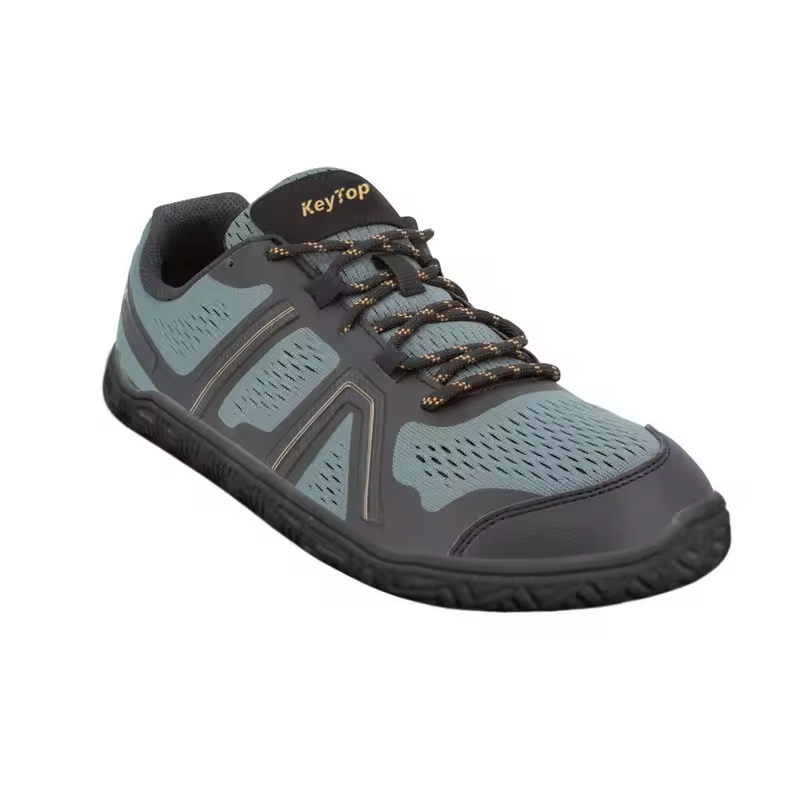
Build the Verification Checklist
- Supplier cannot produce consistent sizing across bulk trail barefoot shoe orders. Inconsistent sizing leads to high return rates and lost buyer trust in your brand. Require the supplier to share their last three pre-shipment inspection reports for similar orders. Pre-shipment inspection report showing size tolerance measurements for each production batch. Shortlist only suppliers who provide documented sizing consistency evidence.
- Supplier lacks documented process for handling out-of-tolerance trail barefoot shoe units. Without a process, defective units may ship, causing costly chargebacks and customer complaints. Ask for their written rework or rejection procedure for sizing deviations during production. Standard operating procedure document for non-conforming product handling. Verify the procedure is followed during a factory visit or video call.
- Supplier's sample approval record does not include actual measurement data for this order. Approval without data means the bulk run may drift from the sample without any check. Insist on a signed sample approval form that lists measured dimensions for each size. Signed sample approval form with recorded size measurements for all requested sizes. Compare bulk production measurements against this approved sample record.
- Supplier cannot confirm their measuring method for trail barefoot shoe sizing tolerance. Different measuring methods produce different results, making tolerance checks unreliable. Ask the supplier to describe their measuring tool and procedure for insole length and width. Written description of the measuring method and tool used for sizing checks. Cross-check their method against your own measurement standard before bulk production.
Compare Quote and Production Assumptions
The main failure mode for the current product is approval before the supplier has resolved the listed evidence gaps.
- How does the supplier verify sizing consistency across the bulk production run? Consistency across 500+ pairs per color per style is critical; a verification method ensures the quote matches the delivered product. Supplier uses a pre-shipment inspection that measures a statistically valid sample against the approved size standard. Inconsistent sizing leads to mismatched pairs and customer complaints, eroding trust in your trail custom barefoot shoe development brand. Require the PSI report to include sizing measurements and a pass/fail threshold in the production contract.
- What is the approval gate for sizing before bulk production begins? An approval gate prevents quote drift by locking the sizing standard before the factory cuts materials for the full order. Supplier requires a signed sample approval that explicitly confirms the sizing tolerance and measurement method. Skipping this gate allows the factory to produce shoes that deviate from the sample, forcing costly rework or rejection. Document the approval gate as a written milestone in the production timeline and confirm it during the quote review.
- What is the cost impact of tightening the sizing tolerance beyond the supplier's standard? Tighter tolerance may increase scrap and inspection costs; understanding this cost driver helps you budget and negotiate. Supplier provides a clear cost breakdown for standard versus tighter tolerance, with no hidden fees for additional QC. Ignoring the cost driver can inflate the total order price or force the supplier to cut corners on measurement accuracy. Ask for a separate cost line for tolerance control in the quote and compare it against your quality requirements.
Run the Review Before Approval
At this workflow checkpoint, you must have a written sizing tolerance requirement confirmed in the quote request and a supplier response that includes measurement data from the first bulk sample. Before moving to production, verify that the supplier’s submitted evidence matches your requirement exactly.
Questions to send back to the supplier
- What is the measured insole length for each size in the bulk sample lot, and how does it compare to the tolerance you agreed in the quote request?
- Can you provide a dimensional report for at least three pairs per size showing the variance across the production run?
- What percentage of units in the sample fell outside the agreed tolerance, and what corrective action will you take before bulk production?
When to revise, escalate, or reject
If the supplier cannot produce consistent sizing across the bulk sample, escalate to a revised quote request with tighter tolerances or reject the lot. Use a release rule: approve only when the supplier evidence matches the written requirement. for this sourcing program, the main failure mode is approval before the supplier has resolved the listed evidence gaps.
| Checkpoint | Required Evidence | Decision |
|---|---|---|
| RFQ confirmation | Written tolerance value agreed by both parties | Proceed to sample |
| Bulk sample measurement | Dimensional report from supplier | Compare to RFQ tolerance |
| Variance analysis | Percentage of units within tolerance | Approve, revise, or reject |
After review, send your decision back to the supplier with clear next steps. If approved, move to production. If revised, update the quote request tolerance and request a new sample. If rejected, escalate to your sourcing manager and consider alternative suppliers. Keytop Barefoot Shoes, a Jinjiang-based B2B barefoot shoe manufacturing for indie brands OEM/ODM manufacturer, follows this process for bulk orders. Annie works with B2B barefoot shoe buyers on OEM, ODM, private-label, sample, and bulk projects, ensuring sizing consistency from quote request to delivery.
Move from Review to RFQ or Sample
When a bulk buyer reviews a trail barefoot shoe sizing tolerance checklist, the concrete failure mode is approving a supplier without confirming that the quote request includes a written sizing tolerance requirement. The control that prevents this is a release rule: approve only when the supplier evidence matches the written requirement.
Inputs to include in the next message
- quote request-confirmed sizing tolerance requirement (e.g., the buyer-approved tolerance on insole length).
- Supplier’s written confirmation of that requirement.
- Measurement method used by the supplier (e.g., digital caliper on insole).
- Sample inspection plan (e.g., the agreed sampling plan for critical defects).
- Lead time for confirmation samples.
Ownership and sign-off for the next gate
- Buyer’s quality engineer reviews the supplier’s measurement report.
- Buyer’s sourcing manager signs off on the quote request confirmation.
- Supplier’s production manager provides the signed tolerance statement.
- Buyer’s product manager approves the sample order.
Before moving to quote request or sample, the buyer reviews that the supplier can produce consistent sizing across bulk orders. A table can help compare key decision factors:
| Factor | Buyer Verification Question |
|---|---|
| Specs | Does the supplier’s measurement report match the RFQ-confirmed tolerance? |
| Cost or MOQ | Is the sample cost within budget, and does the MOQ align with the bulk order plan? |
| Production risk | Has the supplier identified any dimensional variation risk in their process? |
| Factory execution | Does the supplier have a documented quality control process for sizing? |
| RFQ/sample handoff | Are the RFQ and sample order documents signed by both parties? |
After the table, the buyer records that the supplier’s evidence matches the written requirement. For example, Keytop barefoot shoe factory Shoes, a Jinjiang-based B2B barefoot shoe OEM/ODM manufacturer, provides measurement reports upon request. Annie, who works with B2B barefoot shoe buyers on OEM, ODM, private-label, sample, and bulk orders, can assist with the handoff. Once the buyer verifies the inputs and ownership, they can proceed to the next gate: quote request confirmation or sample order.
Source check: ISO 9001 quality management standard; The Retail Buyer's Playbook: 10 Questions to Ask a Shoe Manufac…; Lead Time, Shipment Inspection, and Packaging Checklist for Bul….
In conclusion
The sourcing choice for this order comes down to comparing the supplier’s stated sizing tolerance with the dimensions that actually matter for a 6mm stack and wide toe box, then verifying that the MOQ, per-pair cost, and lead time fit your procurement plan before any sample is approved. A supplier who cannot document its tolerance range in writing is a risk that should be shortlisted out, regardless of how competitive the quote looks.
Document the measured tolerance from the pre-production sample, retain the dimensional inspection report, and approve bulk production only when that evidence falls within the agreed range. That signed-off sample then becomes the sizing reference for the quote request handoff, so both manufacturer and buyer enter production with the same baseline and a clear QC checkpoint before shipment.
Trail Barefoot Shoes Sizing Tolerance FAQ
What should buyers confirm first?
Buyers should first confirm the supplier’s written sizing tolerance specification for each size run, including allowable deviation in foot length, toe-box width, and stack height (6mm for the current product). Check that the supplier can document this tolerance against a physical reference sample, and verify that the cost and MOQ (500 pairs per color per style for custom production) are based on meeting that tolerance, not a looser standard. Ask the supplier to state the lead time for a pre-production sample that will be used to validate the sizing tolerance before bulk production begins.
Which proof should be retained for approval and reorders?
Retain the signed-off pre-production sample and the supplier’s dimensional inspection report showing actual measurements against the agreed tolerance for each size. This proof should also include photos of the sample placed on a calibrated measuring grid, and the QC pass/fail criteria used. For reorders, request that the same reference sample is kept by the supplier, and ask for a new dimensional check on the first production lot to confirm consistency; store the original approval document and the inspection report in your order file. Approving the wrong structure or supplier proof can create quality, cost, or delivery problems.
Which warning signs should stop the order?
for this sourcing program sizing tolerance checklist for bulk orders, turn the answer into a written quote request note: intended use, ribbon width, material, finish, packing method, and approval owner. Ask the supplier what sample proof or QC record will confirm the same result in production. A vague answer can turn into quote mismatch, sample delay, packing damage, or repeat-order drift.
quote request handoff: Ask B2B buyers to share product category, target quantity, market, timeline, and reference files for a practical quote. Send Specs for Review.
Leave a Comment
Ask a sourcing question, add your view, or request follow-up from our team. We keep the form short so it feels natural inside the article page.