
The sourcing record for crowdfunding: product selection is incomplete until it supports this Choose the right product type, structure, material, or specification.
Pick a product that can be made at both 500 and 5,000 pairs, because a campaign will not tell you in advance which one you get.
Buyer summary: For crowdfunding: product selection, buyers should choose the right product type, structure, material, or specification.
Define the Buyer Requirement
Compare Define the Buyer Requirement for crowdfunding: product selection against one RFQ revision. Each row should identify the requirement, approval evidence, and buyer action before production.
| Requirement | Factory control | Evidence to verify | Order risk | RFQ follow-up |
|---|---|---|---|---|
| Sample approval | Factory holds pre-production sample against approved spec sheet before bulk run. | Measure sample against dimensional, material, and finish tolerances using calibrated tools. | Unapproved samples can lead to rejected goods and missed campaign launch dates. | Request a pre-production sample and sign off on a written approval record. |
| MOQ and order quantity | Factory confirms minimum 500 pairs per color per style for custom production. | Check the supplier's MOQ schedule for stock styles at 50–100 pairs subject to inventory. | Under-ordering may cause stockouts; over-ordering ties up capital before campaign funds clear. | Ask for a quantity break quote and confirm lead time for your target order volume. |
| Material / substrate | Factory tests incoming material lot for composition, thickness, and tear strength. | Request a material data sheet and cross-reference with your specification for substrate type. | Substituted materials alter fit, durability, and barefoot feel, risking backer dissatisfaction. | Request a material swatch card and approve the substrate before sample production. |
| Width or size tolerance | Factory uses graded last measurements and checks width tolerance per size run. | Measure sample across size run with calipers; compare to your width specification range. | Off-tolerance widths cause returns and sizing complaints, eroding campaign trust. | Request a size-set sample and approve the width tolerance in the spec sheet. |
| Finish or color control | Factory inspects color consistency under buyer-approved viewing conditions and checks finish against approved standard. | Use a color spectrophotometer or physical color chip to verify each production batch. | Color drift between batches creates mismatched pairs and damages brand consistency. | Request a color standard chip and approve the finish before bulk production. |
For crowdfunding: product selection, use Define the Buyer Requirement as the decision scope. Read the rows as one approval sequence. Start with sample approval; use the risk and buyer-action columns to decide whether its evidence is sufficient. Verify it with the inspection method and approval evidence recorded in the table.
For this crowdfunding: product selection sourcing record, keep the supplier response, marked sample, and approval owner under the same revision number. If any proof conflicts with the approved record, hold the quote, sample, or production release until the supplier explains the deviation in writing. Before closing the checkpoint, reconcile the latest drawing, sample, quotation, and approval comments, identify which record controls if they disagree, and document the resolution. Carry the signed Define the Buyer Requirement table into the purchase order and production handoff so the same checks support quote comparison, sample approval, shipment release, and later reorders.
Compare the Available Routes
| Option | Best fit | Trade-off | Risk to avoid | Verification | Follow-up |
|---|---|---|---|---|---|
| Current specification | Matches your campaign's target price point and delivery window | May limit material upgrades or color options available at stock MOQ | Stock inventory could sell out before campaign ships, causing delays | Check current stock levels and mixed-size availability for your barefoot shoe product range | Request a stock availability confirmation and reserve pairs for your campaign |
| Alternative specification | Adjusts stack height or outsole compound to hit a lower cost per pair | Changes feel or durability compared to your original design brief | New spec may require sample approval and extend lead time by 10–21 days | Confirm the alternative material is in stock and passes your wear-test criteria | Submit the alternative spec for a feasibility check and sample quote |
| Custom option | Full control over material, color, branding, and packaging for your brand identity | Requires 500 pairs per color per style MOQ and 30–45 days production after sample approval | Tooling or special material orders add non-refundable upfront costs | Request a written sample approval before depositing for bulk production | Send your custom spec sheet for a cost breakdown and sample timeline |
| Safer fallback | Uses an existing base model with minor ODM changes to reduce risk | Limited to existing molds and material options, restricting differentiation | Base model may already be sold by other brands, diluting uniqueness | Confirm which base models are available and request a non-disclosure agreement | Shortlist two base models and request ODM customization samples within 7–14 days |
Evaluate Compare the Available Routes as one decision scope. Use this decision matrix as an approval sequence, not as a supplier claim. For current specification, a poor decision can mean stock inventory could sell out before campaign ships, causing delays. Ask the supplier to check current stock levels and mixed-size availability for your barefoot shoe product range, then request a stock availability confirmation and reserve pairs for your campaign.
For crowdfunding: product selection, preserve the current specification decision under one revision number: keep the supplier response, marked sample, approved specification, quotation, and approval owner together. If the evidence conflicts with the approved record, hold the quote, sample, or production release until the deviation is explained in writing. Carry that signed Compare the Available Routes record into the purchase order, production handoff, shipment release, and later reorder review so every team works from the same baseline.
RFQ checkpoint
Ask B2B buyers to share product category, target quantity, market, timeline, and reference files for a practical quote.
Review the Required Proof
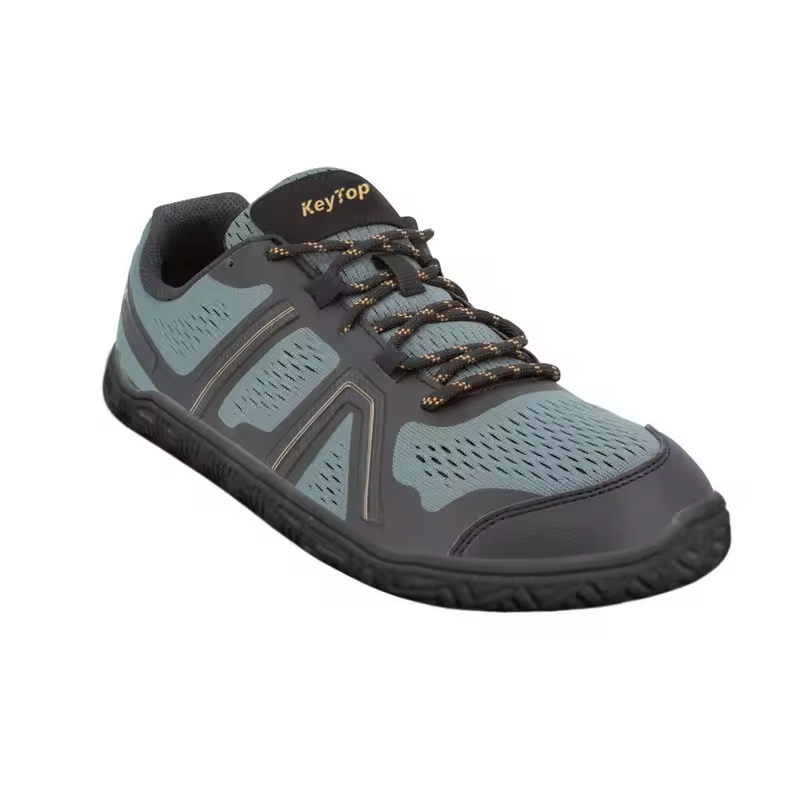
Before committing to a production run, confirm your supplier can deliver on specs, cost, and quality. Start with an RFQ that includes your target price point, material stack, and size range. Ask the supplier to provide a sample that matches these requirements exactly. For example, a Jinjiang-based barefoot shoe OEM like Keytop casual barefoot shoes can produce a sample with a 4mm stack height and zero-drop sole—verify this against your campaign’s performance promise.
| Checklist Item | Buyer Verification Question |
|---|---|
| Spec compliance | Does the sample match the RFQ’s material, sole thickness, and weight? |
| Cost or MOQ | What is the unit price at your minimum order quantity? |
| Production risk | Can the factory show a defect rate report from a recent run? |
| Factory execution | Do you have a documented QC process for each batch? |
| RFQ/sample handoff | Will the supplier provide a signed spec sheet with the sample? |
Use this checklist to evaluate the supplier’s proof. If any item fails, request a revised quote request or a new sample before proceeding. This step ensures your product selection is based on verifiable evidence, not assumptions.
Build the Decision Asset
At this process checkpoint, you must have a completed quote request with confirmed spec, cost, and MOQ ranges from at least two suppliers. The output that must exist before the next stage is a side-by-side comparison of supplier responses that passes three checks: supplier proof, sample approval, and reorder control.
Supplier Proof Check
Ask each factory for a recent order invoice or packing list that matches the product type and volume you plan to crowdfund. Verify the factory name, address, and contact match your quote request recipient. Do not accept a business license alone; request a dated photo of the production line running your target material. For custom barefoot shoe development shoes, confirm they have made thin-sole, wide-toe-box styles before by requesting a spec sheet from a past run.
Sample Approval Check
Before approving a sample, confirm it meets your campaign’s performance promise. Measure the sole thickness, weight, and flexibility against your quote request spec. Use a buyer verification question: “Does this sample match the material and construction method stated in your quotation?” If the factory cannot provide a sealed sample with a signed spec sheet, reject and move to the next supplier.
Reorder Control Check
To avoid stockouts during your campaign, ask: “What is your confirmed MOQ for a reorder of the same style within 90 days?” If the factory cannot guarantee the same price and lead time for a reorder, flag this as a production risk. Document the reorder terms in a simple table.
| Check | Buyer Verification Question | Required Evidence |
|---|---|---|
| Supplier proof | Can you provide a dated production photo and a recent invoice for a similar product? | Invoice + production photo |
| Sample approval | Does the sample match the material and construction in your quotation? | Sealed sample + signed spec sheet |
| Reorder control | What is your confirmed MOQ and price for a reorder within 90 days? | Written reorder terms |
Once all three checks pass, you have a decision asset that reduces production risk and supports a confident campaign launch. Hand off the approved quote request and sample to your project manager before placing the bulk order.
Prepare Comparable RFQ Inputs
- Can you produce stock barefoot shoe styles in mixed sizes within 50–100 pairs? Confirms the supplier can fill a crowdfunding pre-order without requiring custom MOQ. Supplier confirms inventory for stock styles and accepts mixed-size orders at the stated MOQ range. Ordering below minimum order or incompatible size mix delays fulfillment and increases per-unit cost. Request a current stock list and lead time for a 50-pair mixed-size test order.
- What is your approval risk if we need a custom outsole for trail barefoot shoes? Custom tooling adds lead time and cost; early risk assessment prevents campaign delays. Supplier provides a clear sample timeline (10–21 days) and states tooling cost is included in the custom minimum order. Hidden tooling charges or extended lead times can push crowdfunding delivery past the promised date. Request a written quote for the custom outsole including tooling amortization and sample approval gate.
- How do you handle buyer follow-up after sample approval for bulk production? A clear post-approval process ensures production stays on schedule and within spec. Supplier provides a production timeline, mid-run inspection point, and a pre-shipment quality report. Without follow-up, production drift or delays go unnoticed until shipment, risking campaign failure. Define a written production checkpoint schedule and request a pre-shipment sample from the first bulk run.
- What quality control checks do you perform on barefoot shoe uppers and soles? Verifies the factory has dedicated QC for zero-drop construction and material durability. Supplier lists specific checks: seam strength, sole adhesion, stack height, and material defect inspection. Inadequate QC leads to high defect rates, customer complaints, and damage to the crowdfunding brand. Request a copy of the QC checklist and arrange a video call to observe the inspection line.
Source check: ISO 2859-1 sampling inspection standard; Crowdfunding – Small Business Financing: A Resource Guide – Res…; Checklist What you need to go to Manufacturing.
In conclusion
The final approval of your product selection checklist comes down to verifying that each shortlisted item aligns with your campaign’s target price, delivery timeline, and quality promise. Compare the documented specifications against the supplier’s confirmed minimum order and lead time, then validate the sample against your performance requirements before approving any production run. This structured check ensures you move forward with a factory that can deliver on your crowdfunding commitments without unexpected cost overruns or delays.
To request a quote for crowdfunding: product selection, use crowdfunding to confirm the final specification, quote assumptions, sample approval, QC evidence, approval risk, and supplier follow-up before bulk order.
Frequently Asked Questions
How should a b2b buyer choose product type?
Only if you first shortlist product types by matching your campaign’s target price point and performance promise to the factory’s proven spec range. Check the stack height, drop, and material options against your intended use—for example, a 4mm stack for running versus 8mm for casual—and compare the minimum order per color per style, which for custom production is 500 pairs. Verify supplier risk by requesting a sample that matches your chosen spec, then document the approval before moving to bulk.
Which supplier proof should buyers request for crowdfunding?
Request the factory’s business license, product proof such as ISO 9001:2015 certification or an amfori BSCI audit report, and a sample that matches your specification sheet for material, dimensions, and weight. For crowdfunding, also verify the evidence of their production capacity—annual output exceeding 1 million pairs is a strong signal—and confirm the lead time for base-model samples (7–14 days) versus full OEM samples (10–21 days). After sample approval, follow up with an quote request that locks the cost, minimum order, and payment terms.
What should buyers lock before approving product selection checklist?
Before approving the blog, lock the specification details—stack height, drop, and material—and confirm the minimum order for your chosen production path, whether stock styles (50–100 pairs) or custom (500 pairs per color per style). Document the sample approval in writing, verify the lead time for standard production (30–45 days), and define the reorder trigger including minimum quantity and cost stability. For more detail on this process, refer to the blog that outlines the full buyer checklist. Ask the supplier to confirm factory capability and who owns follow-up.
quote request handoff: Ask B2B buyers to share product category, target quantity, market, timeline, and reference files for a practical quote. Send Specs for Review.
Leave a Comment
Ask a sourcing question, add your view, or request follow-up from our team. We keep the form short so it feels natural inside the article page.