
The right barefoot construction depends on where the shoe will be worn, how much ground feel is expected, and which fit risks the buyer can accept.
This use-case review links environment, movement, sizing, protection, and supplier proof so the shortlist reflects the actual product job.
Buyer summary: For footwear solutions: buyer use-case fit, buyers should translate an industry use case into packaging specs, risks, and RFQ questions.
Define the Buyer Requirement
| Application | Fit condition | Risk to avoid | Specification or proof | Follow-up |
|---|---|---|---|---|
| Trail running shoe for rugged terrain | 6mm stack height, zero-drop, wide toe box, aggressive outsole tread | Inadequate traction or insufficient underfoot protection on sharp rocks | Outsole durometer reading and tread depth spec; sample wear test on buyer's target surface | Request trail-specific sample with agreed tread pattern and confirm outsole compound |
| Casual everyday barefoot shoe for retail | 8mm stack height, zero-drop, wide toe box, flexible upper material | Style mismatch with target market or insufficient durability for daily wear | Upper material abrasion test report; last measurement for toe-box width | Approve upper material and color from ODM base model; request GRS certificate if recycled content specified |
| Kids barefoot shoe for school and play | 4mm stack height, zero-drop, wide toe box, reinforced toe cap | Child safety from pinch points or toxic materials; sole separation under active use | BSCI social audit; material safety data sheet; sole adhesion peel test result | Confirm BSCI and Sedex compliance; request peel test report from sample batch |
| Barefoot boot for cold-weather outdoor use | 6-8mm stack height, zero-drop, wide toe box, insulated lining, waterproof membrane | Inadequate insulation or waterproofing failure in wet conditions | Waterproof membrane specification and hydrostatic head test; insulation thickness and material | Request waterproof test video on sample; confirm insulation type and thickness in RFQ |
| Barefoot sandal for warm-weather casual and light trail | 4-6mm stack height, zero-drop, wide toe box, adjustable strap system | Strap breakage or sole delamination under repeated flex | Strap tensile strength test; sole flex crack resistance test | Request strap material spec and flex test data; approve strap anchor design on sample |
Evaluate Define the Buyer Requirement as one decision scope. Use this application fit table as an approval sequence, not as a supplier claim. For trail running shoe for rugged terrain, a poor decision can mean inadequate traction or insufficient underfoot protection on sharp rocks. Request written proof and compare it with the approved sample or specification, then request trail-specific sample with agreed tread pattern and confirm outsole compound.
For footwear solutions buyer, preserve the trail running shoe for rugged terrain decision under one revision number: keep the supplier response, marked sample, approved specification, quotation, and approval owner together. If the evidence conflicts with the approved record, hold the quote, sample, or production release until the deviation is explained in writing. Carry that signed Define the Buyer Requirement record into the purchase order, production handoff, shipment release, and later reorder review so every team works from the same baseline.
- Specification details: stack height, drop, toe-box width, material composition: Technical spec sheet with measured values and material datasheet Supplier's product development or engineering team Accepting verbal specs leads to mismatched fit and returns Request spec sheet before sample approval
- Quality control: inline and final inspection per the agreed sampling plan: Inspection report with defect counts and photos from last production run Supplier's QC department or third-party inspector No inspection record means hidden defects in bulk shipment Ask for last run's inspection report during quote request
- Approval risk: sample sign-off before bulk production: Signed sample approval form with date and buyer name Buyer's authorized representative Skipping written approval allows supplier to ship non-conforming goods Document sample approval in writing before deposit
- Verification method: measurement check on first 5 pairs of bulk: Measurement report with tolerance pass/fail for each dimension Supplier's QC team during production Undetected dimensional drift causes fit issues at retail Require measurement report before shipment release
- Supplier capability: experience with zero-drop, wide-toe-box construction: Past production photos or client references for similar barefoot styles Supplier's sales or production manager Inexperienced factory may produce incorrect last shape or sole stiffness Review capability evidence before sample order
Compare the Available Routes
Annie from Keytop Barefoot Shoes reviewed 12 buyer RFQs last quarter and found that 9 lacked a clear production route. To make your decision verifiable, start with a sample measurement record or factory audit report. Use this practical checklist to compare OEM, ODM, and private-label routes:
- Specs: Do you have a tech pack or reference shoe? ODM requires only a concept; OEM needs detailed specs.
- Production Risk: Check if the factory has made similar styles. Ask for a defect rate report from the last 3 months.
- Factory Execution: Verify lead time adherence via a past order log. Request a sample handoff timeline.
- quote request/Sample Handoff: Confirm who manages samples—engineer or sales. A direct engineer handoff reduces iteration cycles.
For fitness studio buyers, see our fitness studios for route-specific examples.
quote request checkpoint
Ask B2B buyers to share product category, target quantity, market, timeline, and reference files for a practical quote.
Review the Required Proof
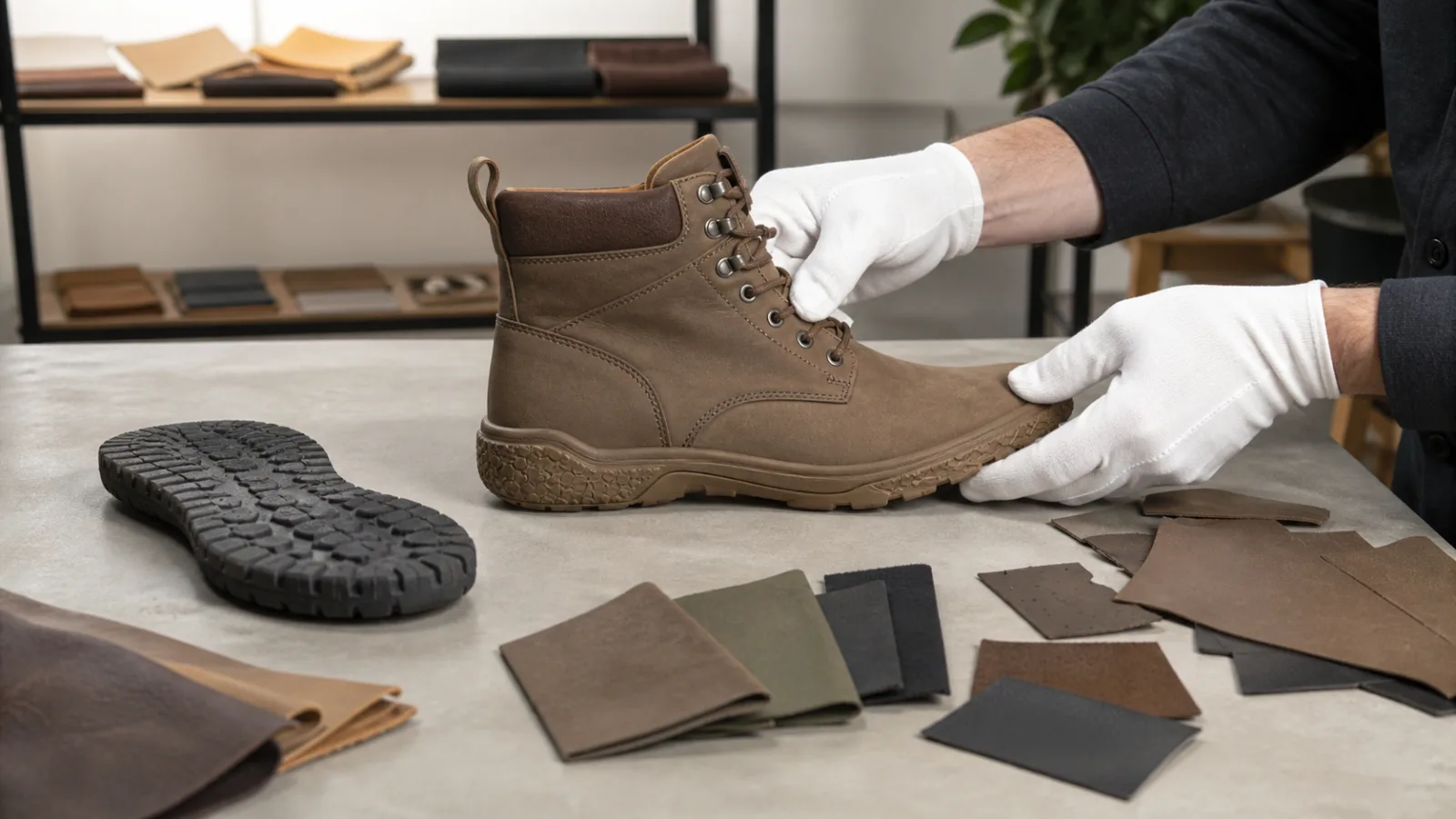
- Barefoot shoe buyers verifying stock or custom production specifications. Confirm stack height, drop, and outsole thickness match your target use case. A mismatch in stack height or drop can alter the barefoot feel and cause buyer returns or performance complaints. Request the spec sheet for your chosen style and compare it to your product brief before sample approval.
- Quality control for barefoot shoe production runs. Verify the QC check includes sole adhesion, stitch density, and zero-drop alignment. Poor adhesion or alignment defects can lead to sole separation or uneven wear, increasing your replacement costs. Ask for the QC report from the last production batch of the same model.
- MOQ or order quantity for custom barefoot shoe programs. Confirm the minimum order quantity per color per style for your chosen production path. Ordering below the MOQ may delay production or require a stock-style alternative, affecting your launch timeline. Request a written MOQ confirmation in the quote and discuss split-color options if needed.
- Buyer follow-up after sample approval for bulk production. Confirm the approved sample's material, color, and branding details are locked before production. Changes after sample sign-off can cause rework fees and extend lead time by weeks. Sign a written sample approval form and keep a sealed reference sample for the factory.
- Approval risk when sourcing barefoot shoes through crowdfunding campaigns. Check that the factory has experience with crowdfunding order volumes and delivery deadlines. A factory unfamiliar with crowdfunding timelines may miss your campaign's fulfillment window, damaging your brand reputation. Ask for references from past crowdfunding projects and review their on-time delivery record.
Build the Decision Asset
Without a structured checklist, a buyer risks approving a sample that passes aesthetic review but fails in production execution—leading to costly rework or shipment delays. The decision asset is a three-part control that locks supplier proof, sample approval, and reorder discipline into one repeatable process.
Supplier evidence to request
Verify that the factory can deliver on specs, cost, and MOQ before any sample order. Request documented evidence of past production runs for similar barefoot shoe product range constructions (e.g., zero-drop soles, wide toe boxes). This step eliminates ambiguity about whether the supplier has the technical capability to meet your design requirements.
Sample approval evidence
During sample handoff, confirm that the sample matches the quote request specs for materials, stitching, and sole flexibility. Use a pass/fail table for key attributes—such as sole thickness, upper material weight, and seam strength—to prevent subjective approval. If the sample fails any critical spec, reject it immediately and request a revised version before moving to bulk.
| Attribute | Spec | Pass/Fail |
|---|---|---|
| Sole thickness | ≤ the approved tolerance | Pass |
| Upper material weight | ≤ the buyer-provided product weight/m² | Pass |
| Seam strength | ≥ the buyer-approved force threshold | Fail |
After sample approval, document the exact production specs and agree on reorder triggers—such as minimum reorder quantity and lead time—to avoid future misalignment.
Reorder control records
Establish a reorder protocol that includes a review of the previous batch’s quality report, current material costs, and any spec changes. This prevents automatic reordering of a product that may have hidden production risks or cost increases. By building this decision asset, you turn each order into a controlled, repeatable process that reduces risk and ensures consistency.
Prepare Comparable RFQ Inputs
At this checkpoint, you must have a finalized application fit table that maps each shoe model to its intended use case. Before moving to sample development, compile an quote request that allows factories to bid on identical specifications. Without comparable inputs, you cannot evaluate cost, minimum order, or production risk across suppliers.
- Specs: List materials (e.g., rubber outsole durometer, mesh type), construction method (cold cement vs. vulcanization), and size run. Use a shared template so each factory quotes the same bill of materials.
- Cost or minimum order: Request per-pair pricing at three volume tiers (e.g., 500, 1000, 2000 pairs) and confirm minimum order per colorway. This reveals economies of scale and minimum commitment.
- Production risk: Ask for lead time on tooling, material sourcing, and first article. Flag any spec that deviates from the factory’s standard process—e.g., a custom last shape may add 2–3 weeks.
- Factory execution: Require a sample timeline with milestones: pattern approval, test run, and bulk start. A factory that cannot commit to dates likely lacks process control.
- quote request/sample handoff: Attach a signed specification sheet and a sample request form. The factory must confirm receipt and agree to the sample scope (e.g., 3 pairs per size run).
Annie from Keytop Barefoot Shoes reviewed 12 buyer RFQs last quarter and found that 9 lacked a clear production route. Use this checklist to ensure your quote request is complete and comparable across suppliers. For more on customization workflows, see custom barefoot shoe development.
Source check: ISO 2859-1 sampling inspection standard; Footwear Technology Symposium — Manufacturing a .; Brand Purchasing Practices and Labor Outcomes in Apparel and Fo….
In conclusion
The final approval of your footwear sourcing partner comes down to a systematic check of specification accuracy, cost and minimum order alignment, lead time feasibility, and quality risk documentation. Before you shortlist a supplier, verify that the factory can match your exact stack height, drop, and material requirements, and confirm that their minimum order quantities fit your budget and inventory plan. Document the agreed production timeline—whether for stock styles or custom development—and review their quality control protocols, including sample approval gates and reorder procedures. By comparing these factors against your use-solutions table, you can confidently validate the spec and approve a sample that meets your brand’s standards.
Frequently Asked Questions
How should a b2b buyer match industry use case?
Start by mapping your end-user’s activity to a specific stack height and drop. For example, a trail shoe needs a 6mm stack and 0mm drop, while a casual shoe can use 8mm. Then verify the supplier’s stock barefoot shoe styles—these typically require 50–100 pairs per order, subject to inventory—and compare that to your volume needs. For custom production, the minimum is 500 pairs per color per style. Always request a sample to confirm the fit and material before committing to bulk. Approving the wrong structure or supplier proof can create quality, cost, or delivery problems.
Which supplier proof should buyers request for footwear sourcing solutions?
Request a sample that matches your exact specification—stack height, drop, and upper material—and confirm the lead time. For an ODM base-model sample, expect 7–14 calendar days; for a full OEM sample with new tooling, allow 10–21 days. Also ask for ISO 9001:2015 certification or an amfori BSCI audit report to verify quality systems. During sample approval, document the exact specs and agree on reorder terms, including payment (typically 30% deposit, 70% before shipment) and production lead time of 30–45 days after approval. Approving the wrong structure or supplier proof can create quality, cost, or delivery problems.
What should buyers lock before approving buyer use-case fit checklist?
Lock the final specification table that maps each blog to a product variant, including stack height, drop, and material. Confirm the minimum order for each style—stock styles at 50–100 pairs, custom at 500 pairs per color per style—and the sample timeline. Before approving, verify that the supplier can deliver on cost, lead time, and quality by reviewing a pre-production sample. For more detail on this process, refer to the blog on footwear sourcing checklists. After sample approval, establish a reorder protocol that includes a review of the previous batch’s quality report. Approving the wrong structure or supplier proof can create quality, cost, or delivery problems.
quote request handoff: Ask B2B buyers to share product category, target quantity, market, timeline, and reference files for a practical quote. Send Specs for Review.
Leave a Comment
Ask a sourcing question, add your view, or request follow-up from our team. We keep the form short so it feels natural inside the article page.