
Key takeaways
- Short answer: A barefoot shoe factory fits a buyer when its product route, technical capability, evidence system, capacity and change controls match the project.
- A capable supplier for an existing platform may not be the right supplier for a new last and outsole program.
- Request last drawings or measurements, size grading rules, a finished in-shoe measurement method and representative-size evidence.
Short answer: A barefoot shoe factory fits a buyer when its product route, technical capability, evidence system, capacity and change controls match the project. Evaluate the factory against the exact last, sole, upper, size range, materials, tests and order structure rather than relying on a generic capability presentation.
A capable supplier for an existing platform may not be the right supplier for a new last and outsole program. The buyer should first define which decisions are fixed, which are open and which party supplies the design data. The capability review can then test whether the supplier has the people, equipment, process records and approval system for that route.
Classify the product route
| Route | Buyer need | Factory capability to verify |
|---|---|---|
| Existing platform | Use an available last, sole and construction with defined branding or material options | Platform specification, size range, change history, approved materials and production evidence |
| Platform modification | Revise selected fit, upper, material or component details | Pattern engineering, component compatibility, sample controls and impact assessment |
| Full custom OEM or ODM | Create project-specific geometry, tooling, patterns or construction | Last and sole development, engineering records, tooling control, tests and staged approvals |
Document the route in the RFQ. Terms such as private label, OEM and ODM are used differently across suppliers, so the deliverables matter more than the label.
Evaluate barefoot-specific technical capability
Last and finished internal geometry
Request last drawings or measurements, size grading rules, a finished in-shoe measurement method and representative-size evidence. ISO 19409 specifies last dimensions and ISO 19410-1 addresses in-shoe measurement. The official pages for ISO 19409 and ISO 19410-1 provide the method scope; the buyer and factory still need to define project landmarks, equipment and tolerances.
Pattern, grading and closure control
Ask how the factory controls pattern versions, seam allowances, reinforcement placement, closure reach and grading. Inspect an opened sample where hidden layers affect toe space, flex or pressure distribution. Representative sizes should link to the same pattern revision and measurement sheet.
Sole engineering and attachment
Verify outsole drawings, compound identification, flex-zone control, sole-to-last matching, preparation method and attachment records. For a new outsole, confirm how tooling revisions, material changes and finished-shoe validation are documented.
Match evidence to the capability claim
| Capability claim | Evidence to request | Decision question |
|---|---|---|
| Last development | Drawing, revision history, size grading and sample measurements | Can the supplier reproduce the approved geometry? |
| Material sourcing | Named supplier, data sheet, approved swatch and substitution rule | Is the approved material traceable? |
| Sample engineering | Sample code, issue log, revision notes and written disposition | Can open issues be traced to closure? |
| Production quality | Incoming, in-line and final control records linked to the specification | Are checks performed at useful process gates? |
| Testing | Method, specimen, conditions, result and acceptance criterion | Does the report apply to the exact product or material? |
| Reorders | Approved reference, change declaration and retained records | Can the supplier identify changes before production? |
Do not request unrelated project photographs or client records that may be confidential. A factory can demonstrate capability through redacted process templates, controlled samples, equipment records and evidence created for the buyer's own project.
Review quality systems and certificates in context
Check the legal entity, site, certificate scope, status and issuing body. Keytop lists ISO 9001, BSCI, Sedex and GRS among its credentials. ISO explains that ISO 9001 concerns a quality management system, not a product performance certificate. Review the official ISO 9001 explanation and certification guidance.
Pair system evidence with product records. For example, a controlled inspection process does not by itself prove fit or outsole performance; those questions require an approved specification, sample and relevant product evidence.
Verify capacity against the order profile
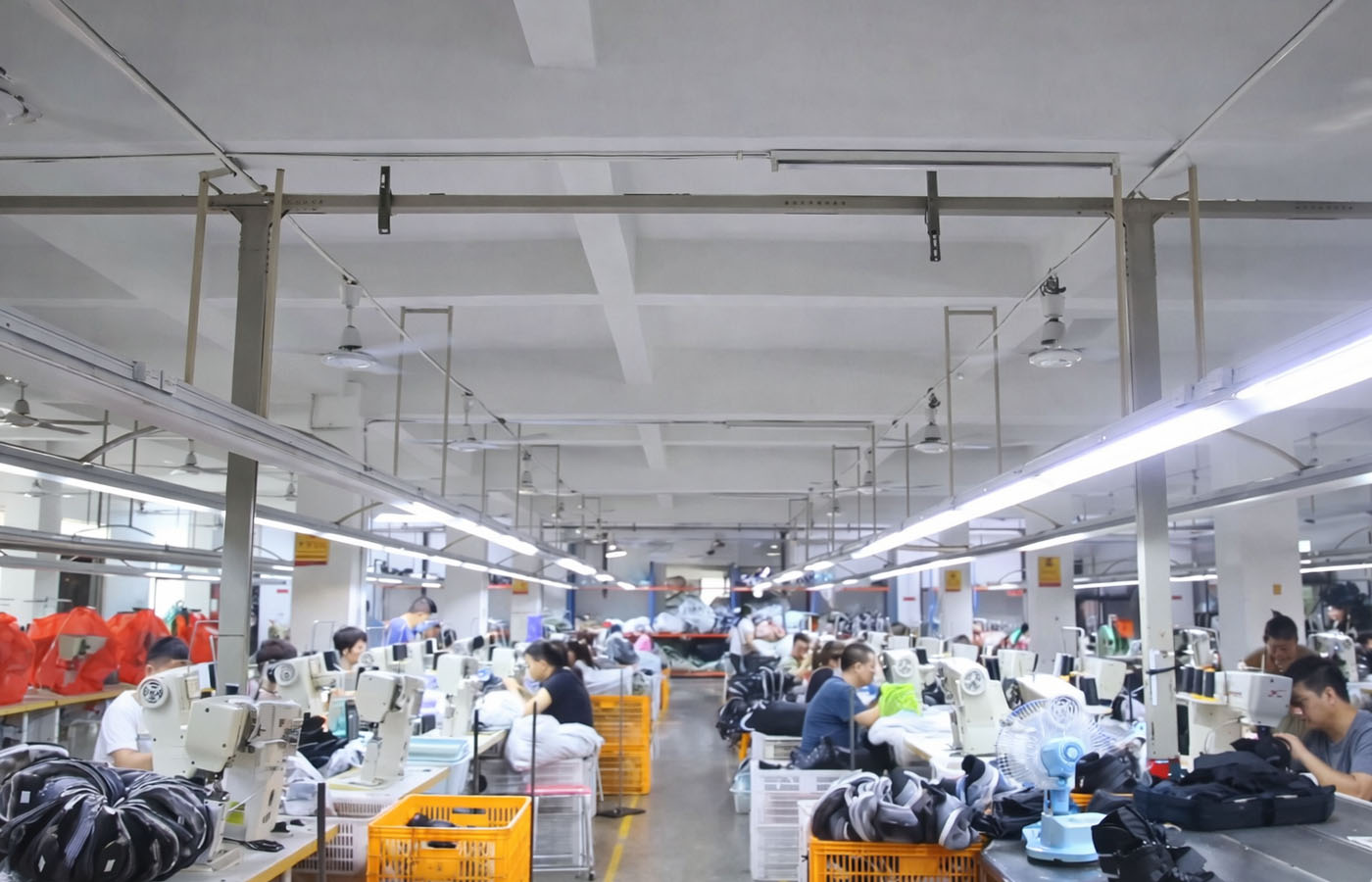
Capacity should be reviewed by product construction, line loading, size and color complexity, material readiness, packaging and quality gates. Ask the supplier to confirm the project schedule after the specification and order profile are known. A factory-wide monthly number is useful context but does not replace a project plan.
Keytop's confirmed capacity is 50,000 pairs per month. Custom OEM and ODM production starts at 500 pairs per color and style. Samples are normally developed in 7–14 days after the specification, last or platform, patterns, materials and other required inputs are confirmed.
Score the factory with evidence-based gates
- Route match: the factory can execute the selected platform, modification or custom route.
- Technical match: last, pattern, sole, material and size capabilities align with the specification.
- Evidence match: claims are supported by documents, samples and process records.
- Capacity match: the supplier confirms a feasible project plan for the order profile.
- Quality match: controls are linked to the specification and reaction plan.
- Change-control match: material, tooling, pattern and process changes require disclosure and approval.
- Communication match: open questions, owners and decisions are recorded in a shared action log.
The supplier communication assessment provides test scenarios for requirements, substitutions, nonconformance and schedule discussions.
Build the approval package
Before bulk release, link the quotation, specification, material references, sample code, measurements, test evidence, packaging proof and written approval. The sample approval workflow shows how to keep these items under one revision.
Method and limits
This checklist supports B2B supplier screening. It does not certify a factory, promise product results, predict cost or set a fixed development or production schedule. Buyers should verify documents with the relevant issuer and approve project-specific evidence.
FAQ
Which factory proof should a barefoot shoe buyer request?
Request evidence tied to the route: last and grading data, controlled patterns, material references, sample records, product tests, process controls and change declarations.
Does ISO 9001 prove the shoe will pass a product test?
No. ISO 9001 addresses the quality management system. Product performance requires an applicable method, correct specimen, defined conditions and acceptance criterion.
What should be frozen before custom sample development?
Confirm the product route, size range, last or fit data, construction, materials, colors, branding, evidence plan and approvers. Record open assumptions separately.
Send the product route, size range, specification and order profile to discuss a capability review.
Leave a Comment
Ask a sourcing question, add your view, or request follow-up from our team. We keep the form short so it feels natural inside the article page.