
Before approving a barefoot boot sample for cold-weather use, buyers need to verify how the lining, seams, zipper construction, and conditioning checks work as one system.
A supplier response should tie material data, construction records, conditioned sample checks, and change control to the current RFQ and sample revision. Catalog claims and unit price alone do not close approval.
This checklist helps buyers define use conditions, request proof, record red flags, and lock the handoff inputs required before bulk production.
Direct answer: For barefoot boot lining zipper cold weather sample approval checklist, release the order only after the intended use, approved construction, test record, commercial terms, and sign-off responsibility all match. If one item remains unresolved, return it to the responsible buyer or supplier before bulk production.
Copy this barefoot boot lining zipper cold weather sample approval checklist approval record into the RFQ file. Keep every checked item on the same revision before releasing the order.
- ☐ Final specification and intended use
- ☐ Supplier feasibility and documented exceptions
- ☐ Sample or inspection evidence
- ☐ Commercial assumptions, owner, decision, and date
Move the barefoot boot lining zipper cold weather sample approval checklist order forward only when each gate leaves written evidence for the next. Return an unresolved specification, sample, or quote exception to its owner before bulk production.
Define the Boot Use Case and Cold-Weather Exposure
Start Define the Boot Use Case and Cold-Weather Exposure with evidence for barefoot boot lining zipper cold weather sample approval checklist:
- Verify lining material spec sheet against quote request tolerances: Lining thickness and moisture-wicking performance directly affect insulation and comfort in cold weather. Request a documented spec sheet listing material, thickness, insulation weight, and moisture-wicking test report.
- Confirm zipper gauge and slider type match approved reference: Heavier gauge resists cold stiffening; lighter puller may break under gloved use. Request the supplier's written zipper specification and compare to the approved reference sample.
- Run cold-condition zipper pull force test: Cold conditioning reveals stiffening or snagging that is not visible at room temperature. Place sample in cold chamber at quote request-specified temperature, then measure zipper pull force with a pull gauge.
- Inspect lining continuity from heel to zipper track: Exposed edges or misalignment cause snagging and reduce durability in cold weather. Visually inspect the lining fabric along the zipper track; request a marked-up spec drawing from the supplier.
Document all measurements on a sample tag for bulk matching: A locked sample with recorded dimensions ensures bulk production matches the approved performance. Record lining thickness at three points, zipper gauge, insulation weight, and stitch density on a sample tag.
Separate urban winter trail and workwear needs
Urban winter trail use demands a boot that resists slush, salt, and intermittent cold, while workwear requires sustained insulation and moisture management for long shifts. The lining and zipper system must balance flexibility for walking with durability for repeated flexing. Define the primary use case in the quote request so the supplier selects appropriate materials and construction methods.
Identify moisture friction and temperature risks
Moisture from snow or sweat can freeze inside the boot, increasing friction on the zipper and causing lining stiffness. Temperature cycling between cold outdoors and heated indoors accelerates material fatigue. The buyer must specify the expected temperature range and moisture exposure in the quote request, and request cold-condition test results that simulate the actual use environment before sample approval.
Specify the Lining System Before Sampling
For barefoot boot lining zipper cold weather sample approval checklist, treat Specify the Lining System Before Sampling as a release rule: approve only when the supplier evidence matches the written requirement.
- Lining fabric extends continuously from heel to zipper track without exposed edges or misalignment. Written spec sheet with lining material, thickness, and seam placement diagram. Supplier quality or production manager. Gaps or misalignment cause snagging, cold-weather stiffness, and premature lining failure.
- Lining thickness and insulation weight match quote request tolerances at three points: forefoot, midfoot, heel. Calibrated measurement report with before-and-after cold-condition thickness values. Supplier QC department or third-party lab. Deviations alter cold-weather insulation and moisture management, increasing return rates.
- Moisture-wicking test report confirms lining performance under specified temperature and humidity range. Written test report with method, temperature, humidity, and wicking rate. Supplier or accredited test facility. Inadequate moisture management leads to freezing inside boot, zipper friction, and buyer dissatisfaction.
- Supplier capability to produce lining system on same production line as bulk order. Signed production statement confirming sample line matches bulk line and materials. Supplier production manager or quality director. Line or material substitution changes cold-weather performance and voids sample approval.
Additional RFQ items include cold-condition zipper pull force and lining flex stiffness measured after conditioning at quote request temperature. Pull gauge and flex test results with pass/fail criteria documented on sample tag. Supplier QC or sample room technician.
Confirm lining material coverage and seam placement
Request a spec sheet that shows the lining fabric extends continuously from heel to zipper track without exposed edges. Any gap or misalignment is a rejection criterion that can cause snagging in cold weather. Compare the seam placement diagram against your quote request tolerances before approving the sample. This prevents approving a lining that fails under repeated flexing.
Check thickness handfeel and moisture-management assumptions
Measure lining thickness at forefoot, midfoot, and heel using a caliper, and compare against your quote request tolerances. After cold conditioning, remeasure to confirm no permanent deformation. Request a moisture-wicking test report that matches your specified temperature and humidity range. This turns a subjective handfeel into a verifiable spec that gates sample approval.
Use barefoot sandals manufacturer to align the related specifications and quote request inputs.
RFQ checkpoint
Ask B2B buyers to share product category, target quantity, market, timeline, and reference files for a practical quote.
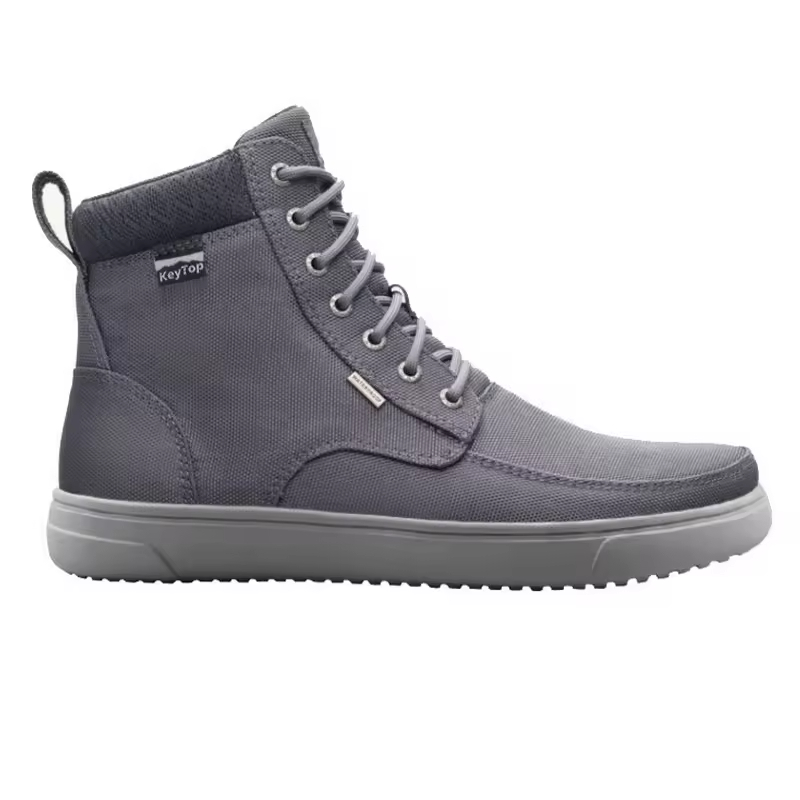
Image note: existing Keytop Barefoot Shoes media provides project context only; it is not article-specific approval evidence.
Approve Zipper Construction and Operation
Start Approve Zipper Construction and Operation with evidence for barefoot boot lining zipper cold weather sample approval checklist:
- Supplier proposes a zipper type or gauge not listed in the quote request without documented cold-weather testing. An unverified zipper may stiffen or jam at low temperatures, causing the boot to fail in cold-weather use.
- Lining fabric does not extend continuously from heel to zipper track, or has exposed edges. Gaps or misalignment can cause snagging in the zipper slider, leading to lining damage and cold-weather performance failure.
- Zipper pull force after cold conditioning exceeds the quote request tolerance or shows any snagging during full operation. Excessive force or snagging indicates material or construction issues that will worsen in sustained cold use.
- Supplier cannot provide a signed production statement confirming the sample was made on the same line with bulk materials. Without this statement, the bulk production may differ from the approved sample, introducing cold-weather performance variance.
Additional RFQ items include lining thickness, zipper gauge, or insulation weight deviates from quote request tolerances after cold conditioning. Deviation indicates material substitution or construction change that can alter cold-weather insulation and flexibility. Reject the sample; any deviation is a rejection criterion requiring a corrected sample.
Verify zipper type gauge puller and backing
Check that the zipper type, gauge, puller design, and backing material match the quote request specification. A mismatched gauge can cause jamming in cold weather, while an incorrect puller may be difficult to operate with gloves. Request the supplier's zipper spec sheet and compare it against your quote request tolerances before approving the sample.
Inspect opening force alignment and snag risks
After cold conditioning, measure the force required to open and close the zipper using a pull gauge. Check that the zipper track aligns with the boot opening without the lining catching in the slider. Any hesitation, snagging, or force exceeding your quote request tolerance is a rejection criterion that must be corrected before sample approval.
Use barefoot shoe OEM and ODM services to place approve zipper construction and operation in the wider buying path.
Run Cold-Condition Sample Checks
The main failure mode in Run Cold-Condition Sample Checks is approving barefoot boot lining zipper cold weather sample approval checklist before the supplier has resolved the listed evidence gaps.
- Does the supplier have documented cold-condition sample conditioning and test protocols? Without a standard conditioning method, sample results cannot be compared across batches or against the quote request. Supplier provides a written procedure specifying temperature, duration, and humidity for cold conditioning before measurement. Approving a sample conditioned differently than bulk production can cause cold-weather performance failures in the field. Request the supplier's cold-conditioning protocol and confirm it matches your quote request before sample approval.
- Can the supplier provide a signed lock sample and component list that matches the cold-condition test results? A lock sample and component list are the only proof that the approved cold-weather performance can be repeated in bulk. Supplier delivers a sealed reference sample with a signed component list and a spec sheet showing lining thickness, zipper gauge, and insulation weight. Without a lock sample, bulk production may deviate from the approved cold-weather performance, causing returns or field failures. Require a signed lock sample and component list before approving the sample for bulk production.
- Does the supplier measure zipper pull force and lining flexibility after cold conditioning? Cold temperatures increase material stiffness and zipper friction, which can cause snagging or jamming during use. Supplier provides a test report showing zipper pull force and lining flexibility measured at the quote request-specified cold temperature. Approving a sample without cold-condition zipper and lining tests can lead to boots that are difficult to operate or fail in cold weather. Request the cold-condition zipper pull force and lining flexibility test report and compare against your quote request tolerances.
- Does the supplier have a documented process for verifying that the lining extends continuously from heel to zipper track without exposed edges? Exposed edges or misalignment can cause snagging, lining wear, and cold-weather performance issues. Supplier provides a seam placement diagram and a written inspection method that confirms continuous lining coverage without gaps. Approving a sample with exposed edges or misalignment can lead to lining failure and buyer complaints in cold conditions. Request the supplier's seam placement diagram and inspection method, and verify against your quote request tolerances before sample approval.
Condition samples consistently before comparison
Cold-condition testing is only valid when every sample is conditioned at the same temperature and duration specified in your quote request. Without a standard protocol, the supplier may test at a different temperature, making results non-comparable to bulk production. Request the supplier's written conditioning method and confirm it matches your quote request before sample approval.
Check flex stiffness lining movement and zipper operation
After cold conditioning, measure the force required to open and close the zipper using a pull gauge, and check that the lining does not catch in the slider. Any hesitation, snagging, or force exceeding your quote request tolerance is a rejection criterion. Document the results on a sample tag and compare them to your quote request tolerances before approving the sample.
Use barefoot shoe manufacturing for indie brands to align the sample and production handoff.
Lock the Boot Sample for Bulk Handoff
Treat the approved boot as the factory’s physical comparison reference, not as a ceremonial sign-off. Release bulk production only after the sample revision, component specification, workmanship acceptance rules, and commercial effect of any open change are recorded together. An unresolved lining or zipper change can force another sample round, delay the production slot, or change the quoted cost.
Record approved components and workmanship points
Give the lock sample a unique revision and attach the signed approval record. The component record should identify the approved lining construction, insulation or moisture-barrier layer where specified, zipper type and supplier reference, boot-opening measurement, and size used for approval. Add photographs of the zipper ends, lining-to-tape clearance, seam finish, and any cold-weather sealing detail; record measurements and tolerances from the buyer’s specification rather than inventing generic limits.
These records let incoming, in-line, and final inspection compare production with the same reference. If the factory proposes a different material lot, zipper component, lining thickness, or attachment method, log the proposal as a change request with its reason, sample evidence, price effect, and schedule effect. Keep the affected bulk work on hold until the buyer signs the revised reference.
Define production inspection and change-control triggers
Convert the lock sample into an inspection plan that names each check, its method, the buyer-approved acceptance rule, the inspection stage, and the decision owner. For zipper performance after cold conditioning, the RFQ should state the conditioning temperature and duration, then require the inspector to record operating force and any snagging; the article does not substitute an unsupported universal threshold. Changes to the lining construction, zipper specification, last, outsole, or agreed tolerance should trigger isolation of affected work, a supplier deviation report, and buyer re-approval before production resumes.
Before issuing the purchase order, confirm whether the custom-production minimum of 500 pairs per color per style applies and whether a late re-approval changes unit price or lead time. Send the signed sample revision and inspection plan to both the production and QC owners, then retain the same record for reorder comparison. Review the barefoot boots manufacturer route when the boot construction or sample path still needs supplier confirmation.
Conclusion: Approve the Boot as a System, Not as Separate Components
The final approval for a barefoot boot lining zipper cold weather sample comes down to one comparison: does the supplier’s documented spec sheet, sample measurements, and cold-condition test results all align with your RFQ? Approve the boot as a system—not as separate components. Verify that the lining material, thickness, and moisture-wicking performance match the stated values, that the zipper operates smoothly after cold conditioning, and that the seam and zipper track alignment shows no snagging or misalignment. Any deviation in thickness, gauge, or pull force is a rejection criterion that must be corrected before the sample can be locked for bulk production.
Document the approved sample with a signed spec sheet and a sealed reference unit, and attach the cold-condition test report and inspection notes from each check. This package becomes the baseline for bulk handoff. At Keytop Barefoot Shoes, Annie follows ISO 9001 practices to archive every component dimension and test result, ensuring the supplier can repeat the approved system in production. Before authorizing bulk, reconfirm that the supplier’s MOQ, lead time, and production capability match the RFQ assumptions. A shortlist of suppliers who provide this level of documented evidence reduces the risk of cold-weather performance failures in your final product.
Barefoot Boot Lining and Zipper FAQ
What lining proof should buyers request before approving a cold-weather barefoot boot sample?
Request a documented spec sheet from the supplier that lists the lining material, thickness, insulation weight, and moisture-wicking test report before approving the sample. Compare these values against your RFQ tolerances and confirm the lining fabric extends continuously from heel to zipper track without exposed edges, as any gap or misalignment is a rejection criterion that could cause snagging in cold weather.
How should buyers check zipper operation after cold conditioning?
After cold conditioning the sample at the temperature and duration specified in your RFQ, measure the force required to open and close the zipper using a pull gauge, and check that the zipper track aligns with the boot opening without the lining catching in the slider. Document any hesitation, snagging, or increased force, and reject the sample if the force exceeds your tolerance or if any snag occurs during full operation.
Which measurements should buyers record for the lining, zipper, and boot opening?
Record lining thickness at three points (forefoot, midfoot, heel) using a caliper, the zipper gauge and slider type, and the boot opening circumference, all compared against your RFQ tolerances. Also document the cold-condition zipper pull force, insulation weight, and stitch density, and attach these measurements to a sample tag that becomes the baseline for sample approval and bulk production matching. Approving the wrong structure or supplier proof can create quality, cost, or delivery problems. Ask for a sample, specification confirmation, or QC evidence before approval.
What sample approval proof should buyers request before production?
Reject the sample if the lining thickness, zipper gauge, or insulation weight deviates from your RFQ tolerances, if the zipper snags or requires force exceeding your tolerance after cold conditioning, or if the lining fabric has exposed edges or misalignment with the zipper track. Any material substitution or construction change also triggers rejection, requiring a corrected sample before bulk approval to prevent cold-weather performance failures. Ask for a sample, specification confirmation, or QC evidence before approval.
Primary references
These sources define test methods or regulatory context. Set pass/fail limits in the buyer-approved specification; a linked standard does not prove that a specific sample passed.
- ISO 9001:2015 — Quality management systems — QMS requirements for controlled processes, records and continual improvement.
- ISO 2859-1:2026 — AQL sampling by attributes — Lot-by-lot sampling schemes and acceptance or rejection thresholds.
Leave a Comment
Ask a sourcing question, add your view, or request follow-up from our team. We keep the form short so it feels natural inside the article page.