
Barefoot boots private label winter sourcing is hard to compare when buyers do not define the intended use, fit target, sample checks, and size-run approval path before quotation.
For barefoot boots private label winter sourcing, compare suppliers by the shoe samples, measurement records, material confirmations, and QC evidence behind the quote.
The checks below help buyers compare footwear samples and quotations against one written approval record.
Winter-boot control route: finish requirement review before quotation, run a material and construction feasibility check for lining, upper, outsole, and closure, use sample development before bulk production to test the approved build, and document written sample approval before deposit-backed bulk production.
Set the procurement decision and approval boundary
Choose the development route before comparing private-label barefoot boot quotations. The route determines which fit, flex, upper, closure, and packing evidence the buyer should approve.
| Option | Best fit | Trade-off | Risk to avoid | Verification | Follow-up |
|---|---|---|---|---|---|
| Existing validated platform | A program that can use an available last and sole architecture | Customization stays within the confirmed platform | Decorative changes can hide an unverified fit or flex change | Request the identified reference boot and compare the proposed change list | Shortlist only after every change is declared |
| Modified platform | A buyer who needs controlled upper, closure, lining, or outsole adjustments | Changed components require targeted repeat checks | One modification can alter fit, flex, entry, or durability | Wear, flex, and pack the revised physical trial against the retained baseline | Record affected checks before the next trial |
| New development | A program whose use case cannot be met by a confirmed platform | More buyer inputs and physical approval stages are required | Aesthetic approval may precede fit and construction readiness | Approve last direction, construction trial, wear trial, and packed reference in sequence | Release the next stage only when the prior decision is signed |
Keep the selected route, intended wearer and use, size range, fit reference, flexibility target, upper and lining package, closure, outsole, labels, and pack under one revision. If a supplier proposes a different route, ask for the changed assumptions and repeat evidence before accepting the quotation.
Record the decision parameters in the RFQ: fit reference, last route, size range, upper and lining construction, closure, outsole and flexibility target, weather-use boundary, labels, and packing. Mark each specification as confirmed, proposed alternative, or open.
Confirm buyer-owned specifications before supplier review
- Does the supplier provide a dimension report and material certificate with the first sample? Verifies that the sample matches your approved stack height, drop, lining, and waterproofing specs before bulk deposit.
- What is the written sample approval process before bulk production? Ensures a documented gate exists to prevent production starting on an unapproved sample, which can lead to costly rework.
- How does the supplier verify thermal lining and waterproofing performance on the sample? Confirms that thermal and waterproof claims are backed by test evidence, not just material labels.
- Does the supplier maintain a single revision number for the spec, sample, and quotation? Ensures all documents are traceable to the same approved baseline, preventing mix-ups during production and reorder.
Resolve these questions before approval: what is the supplier's process for handling a sample that fails inspection? Reveals whether the supplier has a corrective action plan and re-inspection step, not just a pass/fail result.
Use private label barefoot shoes for ecommerce sellers to align the related specifications and RFQ inputs.
RFQ checkpoint
Ask B2B buyers to share product category, target quantity, market, timeline, and reference files for a practical quote.
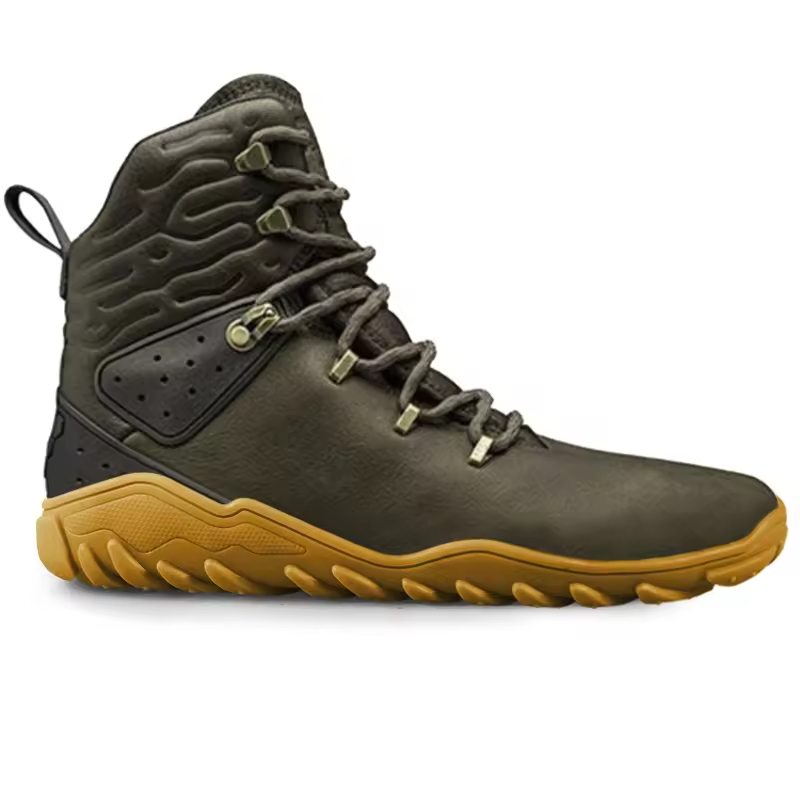
Build the barefoot-boot approval matrix
- Thermal lining and waterproofing specification for winter boot: Lining or membrane substitution without retest may fail cold-weather performance and void buyer claims Buyer product manager after reviewing material test reports (thermal resistance, waterproof rating) Compare material certificates and seam-sealing photos against approved spec; confirm 0mm drop in sample measurement report Request material test reports and sealed sample before bulk production deposit
- Base model selection for ODM winter boot (existing mold): Base model may not match buyer fit or thermal performance; sample revision adds 7–14 days Buyer procurement lead after sample measurement and fit check Verify stack height, drop, lining, and waterproofing against approved spec sheet; confirm lead time and MOQ per color Request ODM spec sheet and base model sample; hold bulk deposit until sample approval
- Full OEM custom winter boot design and pattern: New design may require multiple sample rounds; tooling changes add 10–21 days and risk MOQ adjustment Buyer product manager and factory project lead after feasibility review Inspect sample against dimension report, material certificates, and construction checklist; confirm 0mm drop Submit product brief for feasibility review; approve sample before bulk production
- Production lot release for winter boot order: Uninspected lot may contain non-conforming sizes, colors, or construction variants; rework delays shipment 30–45 days Buyer quality representative after pre-shipment inspection (SHIP-HOLD sequence) Map lot to approved sample revision, PO, size-color breakdown, and defect classification; confirm coverage map Sign release record or issue hold with written deviation explanation; carry decision into PO and shipment release
For related specifications, sample inputs, and RFQ details, review custom barefoot shoe development.
Request supplier evidence without assuming capability
A comparable quote for barefoot boots private label winter sourcing starts with a supplier’s documented sample, material, and production record, not a catalog photo or verbal promise. Without that evidence, a shortlist can advance a factory whose sample looks correct yet cannot reproduce the same stack height, thermal lining, or waterproofing at scale.
Require the supplier to submit a controlled evidence file that ties each winter boot spec—upper material, lining type, outsole compound, 0mm drop confirmation, thermal resistance, waterproof rating—to a specific sample revision and QC record. In the sample room, the QC team should produce a signed measurement sheet and flex test certificate for the exact sample submitted. If the records reference a different batch or compound, hold the shortlist decision until the evidence is reconciled.
- Check: Does the supplier provide a written sample approval gate with a deviation log and reorder control note?
- Verify: Request material test reports (thermal resistance, waterproof rating) and check sample for liner attachment and seam sealing.
- Risk: Accepting a visual sample without documented proof can lead to bulk orders that fail fit, thermal, or waterproof expectations.
- Carry the signed evidence file into the blog for related sourcing controls before requesting a quote.
Review quote or sample evidence before approval
Before sampling, the output that should exist before the next stage is a controlled evidence file that ties each winter boot spec—upper material, lining type, outsole compound, 0mm drop confirmation, thermal resistance, waterproof rating—to a specific sample revision and QC record. Without this file, a shortlist can advance a factory whose sample looks correct yet cannot reproduce the same stack height, thermal lining, or waterproofing at scale, absorbing rework cost later.
Use this checklist to separate accepted evidence from unresolved risks before approving the shortlist:
- Confirm the evidence file names the exact sample revision, material batch, and test result for every spec listed in the RFQ. If any spec references a different batch or compound, mark that line as unresolved.
- Compare the physical sample against the signed measurement sheet for stack height, drop, and sole thickness. If the numbers differ beyond the stated tolerance, flag the line and request a written deviation.
- Verify the QC record includes flex, abrasion, and waterproofing tests performed on the same sample revision. If the test certificate references a different sample ID, hold the shortlist decision until the evidence is reconciled.
- Document the revision number and approval owner. Keep this record with the RFQ so the same checks support production release and reorder.
Carry the signed checklist into the purchase order and production handoff, approving only when all lines are closed.
Freeze changes for bulk production or repeat orders
The quote is only comparable when the supplier ties every spec, sample, and packing detail to one revision number. Without a freeze gate, a factory can approve a sample, then substitute a lining or outsole compound during bulk production, and the buyer absorbs the mismatch.
Before bulk production, document the approved sample revision, SKU code, and packing spec in one controlled record. The risk to avoid is a reorder that drifts from the original sample because the factory used a different material batch or box size. Verify by asking the supplier to provide a signed change-control log that lists every approved input and any deviation. If the log references an older revision or missing SKU, hold the production release until the record is reconciled. For repeat orders, confirm that the approved material, last, and construction remain available; if one changes, reopen only the affected checks. Carry this freeze record into the purchase order so the same baseline controls shipment and future reorders.
Prepare a comparable RFQ and handoff record
Before production release, the output that should exist is a single RFQ revision that ties every buyer input—upper material, lining type, outsole compound, 0mm drop confirmation, thermal resistance, waterproof rating, branding method, and packing spec—to one supplier response. Without this, a factory can quote one construction while the sample proves another, and the buyer absorbs the mismatch in rework or reorder cost.
Buyer inputs to send to the supplier
Send a controlled RFQ that separates confirmed fields from open assumptions. The risk to avoid is a quote that assumes a different material grade, lining thickness, or outsole durometer than what you need. Verify by asking the supplier to confirm each input against a written spec sheet and return a signed acknowledgment before pricing. Use this checklist to close the RFQ handoff:
- State the intended use case (winter, cold climate, thermal, waterproof) and target market so the supplier selects appropriate materials and construction.
- List every required spec: stack height (6–8mm for barefoot boots), 0mm drop, upper material (leather, nubuck, waterproof mesh), lining type (thermal or standard), outsole compound, and waterproofing method.
- Specify branding and packing: logo placement method (embroidery, embossing, woven label), retail box design, polybagging, and any FNSKU or barcode labeling.
- Define the sample approval gate: written sign-off on the measurement sheet, material certificates, and construction checklist before bulk deposit.
Confirm MOQ (500 pairs per color per style for custom production) and lead time (30–45 calendar days after sample approval and deposit).
In the factory sample room, the QC team should produce a signed measurement sheet and flex test certificate for the exact sample revision submitted. If the records reference a different batch or compound, hold the shortlist decision until the evidence is reconciled. Carry this signed RFQ record into the purchase order and production handoff so the same baseline controls shipment and future reorders. For a complete program, review the barefoot boots page.
Record the handoff decision
Keep the controlled input revision, open exceptions, evidence received, approval owner, and buyer follow-up in the same handoff record. This lets procurement compare the supplier response against the approved baseline before quote, sample, or production release.
Buyer questions about barefoot boots private label winter sourcing
The supplier’s signed measurement sheet and material test report for the exact sample revision is the evidence that makes a quote comparable. Without it, a shortlist can advance a factory whose sample looks correct yet cannot reproduce the same stack height, thermal lining, or waterproofing at scale.
What must be confirmed before quotation?
Confirm the upper material, lining type, outsole compound, 0mm drop, stack height, thermal resistance, and waterproof rating against a written spec sheet. The supplier should return a signed acknowledgment before pricing. The risk: a quote assumes a different material grade or lining thickness, leading to a mismatch between sample and bulk production.
What evidence belongs in sample approval?
The sample approval file should contain a signed measurement sheet, flex test certificate, and material test reports for the exact sample revision. In the factory sample room, the QC team should produce these records. If the records reference a different batch or compound, hold the approval. The risk: the factory can substitute a lining or outsole compound during bulk production.
Carry this controlled evidence file into the RFQ and sample approval stage. For a complete program, review the barefoot boots page.
For barefoot boots private label winter sourcing, use barefoot shoe OEM and ODM services to align the product baseline, sample evidence, packing record, and quote owner before order release.
Conclusion and next procurement action
The practical decision from this article is to treat every winter boot spec—upper material, lining type, 0mm drop, thermal resistance, and waterproof rating—as a controlled input that should be documented in a single revision file before any quote, sample, or production order proceeds. Without that file, a shortlist can advance a factory whose sample looks correct yet cannot reproduce the same construction at scale. For a custom barefoot boot project starting at 500 pairs per color per style, the procurement action is to validate the spec against the supplier’s evidence file and approve the sample before releasing the bulk deposit; the standard production lead time of 30–45 calendar days after sample approval then provides a reliable timeline for winter inventory.
To validate the spec, visit barefoot boots and confirm the final specification, quote assumptions, sample approval, QC evidence, approval risk, and supplier follow-up before bulk order.
Barefoot boots private label winter sourcing FAQ
What should a buyer confirm for barefoot boots private label winter sourcing?
Approval is appropriate only when the buyer first documents every winter boot spec—upper material, lining type, outsole compound, 0mm drop confirmation, thermal resistance, and waterproof rating—in a single controlled revision file. The risk is that a factory can approve a sample based on one construction but produce bulk units using a different lining batch or outsole compound. Verify by asking the supplier to confirm each input against a written spec sheet and return a signed acknowledgment before any quote or sample request. For custom production, the MOQ is 500 pairs per color per style, and standard production lead time is 30–45 calendar days after sample approval and deposit.
What evidence should a supplier provide for barefoot boots private label winter sourcing?
The supplier should provide a controlled evidence file that ties each winter boot spec—upper material, lining type, outsole compound, 0mm drop confirmation, thermal resistance, and waterproof rating—to a specific sample revision and QC record. The risk to avoid is a shortlist advancing a factory whose sample looks correct yet cannot reproduce the same stack height, thermal lining, or waterproofing at scale. Verify by asking the supplier to submit a signed measurement sheet, flex test certificate, and material test reports for the exact sample revision submitted. If the records reference a different batch or compound, hold the shortlist decision until the evidence is reconciled.
How should changes be recorded before production or reorder?
Before bulk production or reorder, document the approved sample revision, SKU code, and packing spec in one controlled record. The risk to avoid is a reorder that drifts from the original sample because the factory used a different material batch or box size. Verify by asking the supplier to provide a signed change-control log that lists every approved input and any deviation. If the log references an older revision or missing SKU, hold the production release until the record is reconciled. For repeat orders, confirm that the approved material, last, and construction remain available; if one changes, reopen only the affected checks.
Who is private label right for?
Private label barefoot boots are right for brand owners, ecommerce sellers, wholesalers, specialty retailers, and crowdfunding founders who want to sell winter boots under their own name without building a factory. The buyer should confirm the spec—upper material, lining type, outsole compound, 0mm drop, stack height (6-8mm for barefoot boots), thermal resistance target, and waterproof rating—before requesting a quote. The MOQ for custom production is 500 pairs per color per style, and standard production lead time is 30–45 calendar days after sample approval and deposit. Request an ODM spec sheet and base model sample if using an existing winter boot base model, or submit a product brief for feasibility review if requiring full OEM custom design.
Leave a Comment
Ask a sourcing question, add your view, or request follow-up from our team. We keep the form short so it feels natural inside the article page.