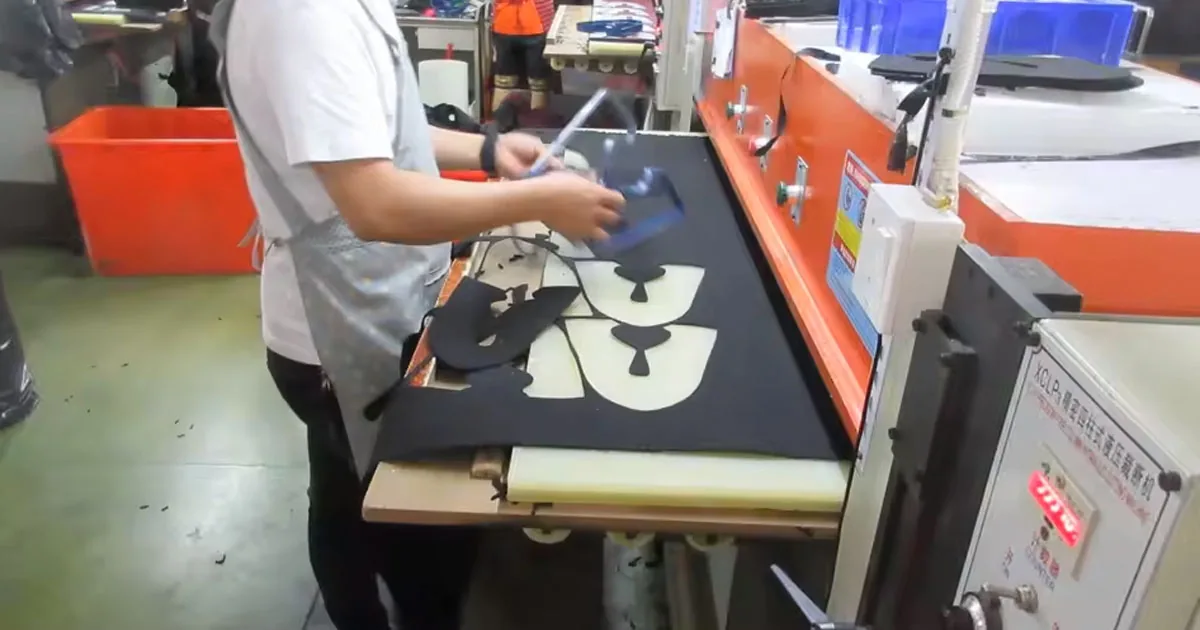
Toe box volume is the reason the product exists, and it is set by the last rather than by the pattern. Grading the run proportionally from a single approved size compresses toe splay at the small end and leaves the large end loose.
Forefoot width and shoe length take different grading increments. On a conventional last that mismatch is a comfort detail; on a barefoot last it decides whether the size still delivers the feature it was bought for.
Below are the ways to state the intended toe box geometry, how to verify the last against the pattern, where to take repeatable measurements across graded sizes, and the fit and flex checks to run on samples.
Direct answer: Toe box volume is set by the last, so it has to be verified on every graded size rather than on one approved sample. Fix the measurement points for forefoot width, toe height, and toe spring, record them across the full size run, and confirm that width and length carry different grading increments.
Copy this approval record into the RFQ file. Keep every checked item on the same revision before releasing the order.
- ☐ Final specification and intended use
- ☐ Supplier feasibility and documented exceptions
- ☐ Sample or inspection evidence
- ☐ Commercial assumptions, owner, decision, and date
Move the barefoot shoe toe box last grading OEM sample approval order forward only when each gate leaves written evidence for the next. Return an unresolved specification, sample, or quote exception to its owner before bulk production.
Define the intended toe-box geometry
Compare the rows below against one RFQ revision. Each row should identify the requirement, approval evidence, and buyer action before production.
| Specification | Quality control | Verification method | Risk to avoid | Buyer action |
|---|---|---|---|---|
| Material / substrate | Verify substrate composition matches approved material data sheet. | Cross-check physical sample against MDS and request signed supplier declaration. | Substituting lower-grade material that fails flex or adhesion tests. | Request material data sheet and keep sample swatch for bulk audit. |
| Sample approval | Confirm sample matches all dimensions and aesthetics per RFQ. | Compare sample measurement sheet to RFQ tolerances; sign off only after full check. | Releasing bulk without signed approval record, causing fit drift. | Approve sample in writing and file measurement sheet with supplier. |
| Width or size tolerance | Check toe-box width per size in graded last set. | Use caliper on last and compare to graded spec sheet. | Distorted toe-box geometry across sizes, leading to returns. | Request signed measurement sheet for each size before approval. |
| Finish or color control | Verify color match against approved standard under buyer-approved viewing conditions. | Visual check with color card or spectrophotometer reading. | Color variation between sample and bulk production. | Request color standard and hold sample for bulk comparison. |
| Packing format | Confirm packing matches agreed specification (inner box, labels, outer carton). | Inspect sample packing unit and check label content. | Wrong packing leads to customs delays or retail rejection. | Approve packing sample and request packing specification sheet. |
Read the rows as one approval sequence. Start with material and substrate, because a lower-grade substitute can fail flex or adhesion tests; cross-check the physical sample against the material data sheet and request a signed supplier declaration. Then resolve sample approval, because releasing bulk without a signed approval record causes fit drift; approve the sample in writing and file the measurement sheet with the supplier. Finish with width and size tolerance: check the last with a caliper against the graded spec sheet and request a signed measurement sheet for each size before approval.
Keep the barefoot shoe toe box last grading OEM sample approval supplier response, marked sample, and approval owner under the same revision number. If any proof conflicts with the approved record, hold the quote, sample, or production release until the supplier explains the deviation in writing. Before closing the checkpoint, reconcile the latest drawing, sample, quotation, and approval comments, identify which record controls if they disagree, and document the resolution. Carry the signed geometry table into the purchase order and production handoff so the same checks support quote comparison, sample approval, shipment release, and later reorders.
Verify the last and pattern relationship
Verify the last and pattern relationship before sample approval or bulk release, and keep the supplier proof with the approval record.
- Toe-box stiffness affects fit; check the material against the buyer-approved bend test standard. Request the swatch bend test report with designated durometer and pass/fail result. Supplier cannot produce a material test report or names a different durometer. Dated material certificate matches the approved reference and includes bend test data.
- Supplier must demonstrate process control for last and pattern alignment. Request the documented last-pattern alignment procedure with graded tolerance. Supplier gives vague answers about how they match last to pattern pieces. ISO 9001-certified process with past last approval records and clear alignment steps.
- Unilateral sample changes during approval cause bulk fit rejections. Request written sample approval with dimension record and revision number. Supplier requests verbal approval or skips dimension record sign-off. Supplier provides numbered revision with buyer sign-off and production freeze until approval.
Browse the barefoot shoe product range for related product routes.
RFQ checkpoint
Share your product category, target quantity, market, timeline, and reference files for a practical quote.
Inspect toe-box shape across graded sizes
To approve a graded last set, confirm each size reproduces the intended barefoot toe-box geometry from the RFQ without distortion.
Use repeatable measurement points
- Define reference points from the master last (e.g., widest point, tip radius).
- Use a fixed distance from the heel centerline for consistent measurement.
- Record width and height at each reference point for every size in the grade.
Check symmetry and shape retention
During RFQ sample handoff, attach these measurement records to the approval documentation. For more on sample approval workflows, see our guide for indie brands. This reduces production risk and clarifies buyer expectations for tooling cost allocation.
Related specifications and RFQ inputs: barefoot running shoes manufacturer.
Run fit and flex checks on samples
Observe toe movement under load
During sample approval, place the shoe on a test foot and apply body-weight pressure to simulate walking. Watch the toes: they should splay naturally without hitting the side or top of the toe box. Any restriction indicates a last shape or volume mismatch.
Flag pressure caused by construction
Even a correct last can produce pressure points if the upper stitching, lining, or sole attachment pulls the toe box inward. Run a finger along the interior seam lines while the shoe is flexed. Mark any area where the material feels tight or leaves a red mark on the test foot.
Practical checklist for sample fit and flex review
- Toe splay under static load – confirm all toes can move freely
- Toe-box height – no top-of-toe contact when standing
- Flex point alignment – bend matches the ball of the foot, not mid-arch
- Interior seam pressure – no raised stitching or lining bunching
Additional RFQ items include heel hold – foot does not slide forward during flex.
Document each observation against the RFQ toe-box geometry. If the sample fails any point, request a revised last or construction adjustment before bulk production. For a full guide on last grading and sample approval, see our barefoot shoe manufacturing blog.
For sample and production handoff, see barefoot shoe manufacturing for indie brands.
Release the approved toe-box standard to bulk
Define the requirement and success criteria
Before bulk production, translate the approved toe-box geometry from the RFQ into a documented standard. This standard must include measurable criteria such as toe-box width, big toe angle, and vertical space. Both buyer and factory sign off on these criteria as the baseline for all future orders.
Confirm execution details with the factory
Verify that the factory’s production team has received the standard and understands the inspection points. Confirm if the same last and multi-size grading methodology used during sample approval will be applied to bulk. Request a summary of the execution plan, including who will conduct in-line checks and how deviations will be flagged.
Approve samples and control reorder risk
The following table outlines the key dimensions to include in the standard:
| Dimension | Acceptance Criteria | Verification Method |
|---|---|---|
| Toe-box width | As per approved sample | Measure across widest point |
| Big toe angle | Within RFQ tolerance | Angle gauge on last |
| Vertical space | Minimum specified in RFQ | Height gauge |
| Size grading | Consistent geometry across sizes | Compare consecutive lasts |
Adjust values based on your specific RFQ. The buyer must confirm these with the factory.
Use a practical checklist to finalize the standard:
- Toe-box width and big toe clearance match the approved sample.
- Grading across sizes maintains barefoot geometry without distortion.
- Inspection protocol is documented and shared with the quality team.
- Reorder trigger: any change in last, material, or grading process requires re-approval.
Ensure that all sample approval records are retained for comparison during bulk audits. This prevents drift in toe-box shape across production runs.
More sourcing guides are on the blog.
Source check: ISO standard reference. Record the acceptance rule, evidence owner, and approval step in the RFQ or quality file.
In conclusion
The final approval of a barefoot shoe toe-box last grading hinges on documented verification that each size in the graded set reproduces the RFQ geometry without distortion. Before signing off, check that the supplier has provided a signed measurement sheet for every size, confirming toe-box width, big toe angle, and vertical space against your spec. Verify the ball girth on the last using a caliper, and ensure the factory’s multi-size grading methodology scales the toe-box proportionally—not as a single shape applied across sizes. This step directly controls quality risk and prevents bulk fit failures that lead to returns. For custom production starting at 500 pairs per color per style, a written sample approval backed by these measurements is the standard handoff before deposit-backed bulk production. To move forward, validate the spec with your supplier and request a quote that includes the last-grading documentation as a deliverable.
Commercial follow-up: barefoot shoe OEM and ODM services. Before requesting a quote, file the accepted specification, sample evidence, QC owner, and open supplier items.
Frequently Asked Questions
How should buyers measure a barefoot shoe toe box?
Measure the toe-box width, big toe angle, and vertical space at the size-graded last, not just the sample. Compare these dimensions directly against your RFQ specification and request a signed measurement sheet for each size from the supplier. Verify the ball girth and toe-box width on the last using a caliper, and document any deviation before sample approval.
Can one toe-box shape work across every size?
Only if the supplier uses a dedicated grading rule that scales the toe-box geometry proportionally across all sizes. A single toe-box shape applied to multiple sizes will distort the intended barefoot fit, causing restriction in smaller sizes or excessive volume in larger ones. Request the factory’s multi-size grading methodology and confirm each size last reproduces the RFQ toe-box geometry without distortion. Ask how QC will check the sample, color, finish, packing, and bulk order. Approving the wrong structure or supplier proof can create quality, cost, or delivery problems.
Which sample defects indicate restricted toe space?
Check for visible toe compression when the sample is placed on a test foot under body-weight pressure, or interior seam lines that feel tight when flexed. Also inspect the last itself for any asymmetry or volume mismatch compared to the RFQ. If the sample fails any point, request a revised last or construction adjustment before bulk production.
RFQ handoff: Share your product category, target quantity, market, timeline, and reference files for a practical quote. Send Specs for Review.
Leave a Comment
Ask a sourcing question, add your view, or request follow-up from our team.