
A factory can quote one construction while the fit sample proves another if buyers never freeze intended use, size-run rules, and approval ownership before sampling.
A usable factory answer states which fit, construction, material, and wear checks must pass before bulk production.
Use the checkpoints below to align fit evidence, construction notes, QC proof, and commercial assumptions before bulk production.
Direct answer: For casual barefoot shoe last upper specification matrix, release the order only after the intended use, approved construction, test record, commercial terms, and sign-off responsibility all match. If one item remains unresolved, return it to the responsible buyer or supplier before bulk production.
Copy this casual barefoot shoe last upper specification matrix approval record into the RFQ file. Keep every checked item on the same revision before releasing the order.
- ☐ Final specification and intended use
- ☐ Supplier feasibility and documented exceptions
- ☐ Sample or inspection evidence
- ☐ Commercial assumptions, owner, decision, and date
Move the casual barefoot shoe last upper specification matrix order forward only when each gate leaves written evidence for the next. Return an unresolved specification, sample, or quote exception to its owner before bulk production.
Define the Casual Footwear Channel and Fit Promise
| Option | Best fit | Trade-off | Risk to avoid | Verification | Follow-up |
|---|---|---|---|---|---|
| Stock last geometry with 8mm stack, zero drop, wide toe box | Office travel and everyday use cases where moderate ground feel and a familiar casual silhouette are acceptable | Limited customization of toe spring angle or ball girth; fit promise is generic barefoot, not tailored to a specific foot shape | Upper material may overstretch or wrinkle if the last's instep height does not match the TDS stretch value, causing sample rejection | Request the last's toe spring, stack height, and ball girth in writing, then compare against the upper material's TDS stretch and tear strength | Attach the last spec and upper TDS to the RFQ; ask the supplier to confirm compatibility before sample development |
| Custom last geometry with adjusted instep height and ball girth | Everyday use cases requiring a specific fit promise, such as accommodating a high-volume foot or a narrower heel | Longer lead time (10–21 calendar days for full OEM sample) and higher tooling cost; MOQ starts at 500 pairs per color per style | Without a signed fit report for every size grade, fit drift across the size run can cause returns and quality disputes | Require a size-run sample and a signed fit report with measurements for toe splay, heel slip, and midfoot wrap at rest and during flex | Confirm the custom last cost and lead time in the quote; hold sample approval until the fit report matches the agreed spec |
| Safer fallback: stock last with upper material substitution to match TDS values | Office travel and everyday use cases where the original upper material fails the stretch or tear strength test against the stock last | Narrower material choice may limit aesthetic options; the visual profile may shift slightly due to different material drape | Substituting an upper material without updating the specification matrix can silently alter fit and cost, leading to reorder drift | Request a revised Full Shoe Material Specifications sheet showing the new upper's TDS values; compare against the stock last's dimensions | Update the signed last-and-upper specification matrix with the new material; seal a new reference sample before approving bulk production |
For casual barefoot shoe last upper specification matrix, evaluate Define the Casual Footwear Channel and Fit Promise as one decision scope. Use this decision matrix as an approval sequence, not as a supplier claim. For stock last geometry with 8mm stack, zero drop, wide toe box, a poor decision can mean upper material may overstretch or wrinkle if the last's instep height does not match the tds stretch value, causing sample rejection. Request the last's toe spring, stack height, and ball girth in writing, then compare against the upper material's TDS stretch and tear strength, then attach the last spec and upper tds to the rfq; ask the supplier to confirm compatibility before sample development. For custom last geometry with adjusted instep height and ball girth, a poor decision can mean without a signed fit report for every size grade, fit drift across the size run can cause returns and quality disputes. Ask the supplier to require a size-run sample and a signed fit report with measurements for toe splay, heel slip, and midfoot wrap at rest and during flex, then confirm the custom last cost and lead time in the quote; hold sample approval until the fit report matches the agreed spec. For safer fallback: stock last with upper material substitution to match tds values, a poor decision can mean substituting an upper material without updating the specification matrix can silently alter fit and cost, leading to reorder drift. Request a revised Full Shoe Material Specifications sheet showing the new upper's TDS values; compare against the stock last's dimensions, then update the signed last-and-upper specification matrix with the new material; seal a new reference sample before approving bulk production.
For the stock last geometry with 8mm stack, zero drop, wide toe box checkpoint in casual barefoot shoe last upper specification matrix, keep the supplier response, marked sample, approved specification, quotation, and approval owner under the same revision number. If the evidence conflicts with the approved record, hold the quote, sample, or production release until the deviation is explained in writing. Carry the signed decision record into the purchase order, production handoff, shipment release, and later reorder review so every team works from the same baseline.
Map office travel and everyday use cases
Office travel and everyday use cases demand a shoe that transitions from commuting to desk work without compromising barefoot function. The last must provide a wide toe box for natural splay during walking, a zero-drop platform for posture, and a moderate stack height (8mm) for light pavement protection. The fit promise is all-day comfort with a casual silhouette that does not appear overly technical.
Set the target balance of toe room and visual profile
Setting the target balance of toe room and visual profile means deciding how much the toe box flares outward versus how streamlined the shoe looks. A wider flare increases splay but may appear bulbous under trousers; a narrower flare looks sleeker but risks toe crowding. Document the acceptable toe-box width at the ball girth in the specification matrix and verify it against the last's dimensions during sample review.
Compare Last Geometry for Barefoot Function
Use this comparison to shortlist a supplier: the last geometry must match the barefoot function you defined. A stock last with an 8mm stack and zero drop works for office and travel use, but a custom last with adjusted instep height and ball girth is needed if the upper material’s TDS stretch value differs from the last’s dimensions. The risk of choosing wrong is sample rejection from overstretching or wrinkling, and fit drift across the size run that causes returns.
| Option | Use Case | Tradeoff | Risk to Avoid | Verification Check |
|---|---|---|---|---|
| Stock last | Office, travel, everyday wear | Faster lead time, lower tooling cost; limited fit customization | Upper material may overstretch or wrinkle if last instep height does not match TDS stretch value | Request last dimensions (toe spring, stack height, ball girth) in writing; compare against upper TDS stretch and tear strength; attach both to RFQ |
| Custom last | Brand-specific fit, unique upper material, size-run consistency | Longer lead time, higher tooling cost; full fit control | Without a signed fit report per size grade, fit drift across the size run can cause returns and quality disputes | Require size-run sample and signed fit report with measurements for toe splay, heel slip, and midfoot wrap at rest and during flex; hold sample approval until report matches agreed spec |
| Stock last with upper substitution | Cost-sensitive project, material availability change | Lower tooling cost; risk of silent fit and cost drift | Substituting upper without updating specification matrix can silently alter fit and cost, leading to reorder drift | Obtain revised Full Shoe Material Specifications sheet showing new upper TDS values; compare against stock last dimensions; update signed last-and-upper specification matrix; seal new reference sample before approving bulk production |
After comparing, shortlist only suppliers who provide written last dimensions, upper TDS, and a signed fit report per size grade. Attach these to the RFQ to confirm compatibility before sample development. This step seals the cost and lead time in the quote and prevents reorder drift from unauthorized material substitutions. For more on last geometry, see our casual barefoot shoes page.
RFQ checkpoint
Ask B2B buyers to share product category, target quantity, market, timeline, and reference files for a practical quote.
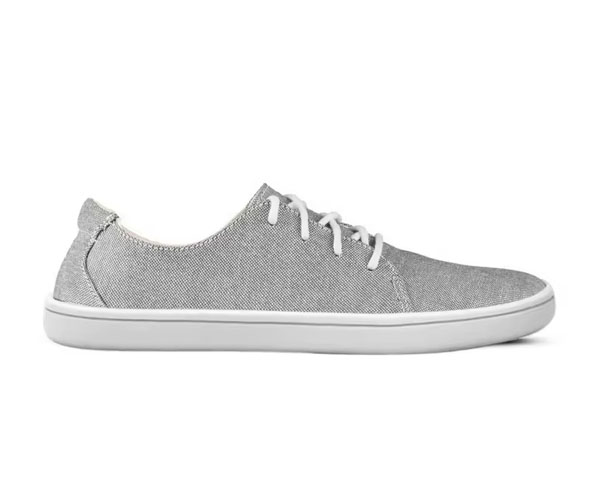
Image note: existing Keytop Barefoot Shoes media provides project context only; it is not article-specific approval evidence.
Match Upper Construction to the Selected Last
When you receive the first sample pair, measure the upper stretch and seam alignment against the last. A textile knit upper may conform easily to a high-volume last, while a full-grain leather upper requires precise seam placement and lasting allowance to avoid buckling. For a recent RFQ, the buyer required a verification test: the upper must not shift more than the approved tolerance after agreed response time on the last at the buyer-approved test temperature. This check ensures the material behavior matches the last geometry before production.
Compare textile knit leather and synthetic behavior
Textile knits offer high stretch and breathability but may lack structure for heavy use. Leather provides durability and shape retention but demands careful seam reinforcement to prevent tearing. Synthetics balance cost and performance but can delaminate under stress. Ask your factory for a material stretch test report at the buyer-approved test temperature to simulate hot-weather wear. This data confirms the upper will not distort during lasting.
Plan seams reinforcements and lasting allowances
Seam placement must avoid the last’s high-stress zones, such as the toe box and heel counter. Reinforcements like double stitching or tape add cost but reduce returns. Lasting allowance—typically the approved tolerance around the last bottom—must be verified on the first sample. If the allowance is too small, the upper may tear during lasting; if too large, excess material creates wrinkles. Include this check in your RFQ: request a lasting trial with the exact upper material before bulk production.
| Upper Material | Stretch Behavior | Seam Reinforcement Needed | Lasting Allowance (mm) |
|---|---|---|---|
| Textile Knit | High stretch, conforms easily | Minimal; tape at stress points | 10–12 |
| Leather | Low stretch, holds shape | Double stitch at toe and heel | 12–15 |
| Synthetic | Medium stretch, risk of delamination | Reinforce with binding tape | 10–13 |
After the lasting trial, request a fit test on the last to confirm the upper does not gap or wrinkle. This step reduces production risk and ensures the final shoe matches your barefoot specifications. For more on last selection, see our guide on barefoot running shoes.
Use barefoot running shoes manufacturer to place match upper construction to the selected last in the wider buying path.
Approve Prototype Fit and Appearance Together
Treat approve Prototype Fit and Appearance Together as a factory checkpoint: connect the fit target, construction notes, sample evidence, and RFQ fields a footwear supplier can confirm in writing.
Use repeatable fitting and flex checks
When you receive the first sample pair, the most common failure is approving fit and appearance separately. A last that looks correct on the shelf may wrinkle at the vamp or pinch the lateral toe during a flex test. To avoid this, conduct a repeatable fitting and flex check on the same sample: mark the ball girth and instep landmarks, then manually flex the shoe to 45 degrees for a set number of cycles. Document any wrinkles, pressure points, or shape drift on a photo log. For example, ask your factory to confirm the upper stretch tolerance and seam alignment against the last geometry before bulk cutting. This step prevents costly rework after the upper is lasted.
During the RFQ handoff, include a buyer verification question: “Will the factory provide a flex-test report with photos of the lasted upper at 0 and 45 degrees?” This ensures the control is repeatable and the factory can flag issues like lasting allowance drift or asymmetric stitching. If the sample shows persistent wrinkles at the medial side, request a last modification or upper pattern adjustment before approving the prototype. The goal is to lock both fit and appearance in one approval cycle, reducing sample iterations and production risk.
The RFQ should also cover flex test repeatability: Confirm cycle count and angle; Wrinkle documentation: Provide photo log with location; Pressure point check: Describe method and pass criteria.
By combining these checks into a single approval gate, you reduce the risk of approving a last that fails in production. Keytop Barefoot Shoes, a Jinjiang-based B2B barefoot shoe OEM/ODM manufacturer, uses this method to align fit and appearance before bulk cutting. Annie, who manages OEM, ODM, private-label, sample, and bulk production projects, can guide you through the sample handoff process. For more on last development, see the Shoe Last Development: Fit & Size Grading Guide and Shoe Sample Development Process: From Tech Pack to Production Approval.
Document wrinkles pressure points and shape drift
For casual barefoot shoe last upper specification matrix, use document wrinkles pressure points and shape drift within approve Prototype Fit and Appearance Together to connect the fit target, construction specification, sample evidence, and buyer approval record.
Use custom barefoot shoe development to place approve prototype fit and appearance together in the wider buying path.
Freeze Last and Upper Inputs for Factory Handoff
Treat freeze Last and Upper Inputs for Factory Handoff as a factory checkpoint: connect the fit target, construction notes, sample evidence, and RFQ fields a footwear supplier can confirm in writing.
Create a specification matrix and approved sample
For this sourcing order, compare create a specification matrix and approved sample on the physical sample with the approved specification, buyer acceptance record, supplier evidence, and production notes.
Control material substitutions and grading changes
The approved sample and its corresponding specification matrix form the binding record that freezes last and upper inputs for factory handoff. Without this sealed reference, material substitutions and grading deviations can introduce production risk.
- Verify the sealed sample matches the last geometry and upper material combination exactly as approved.
- Confirm that the specification matrix includes all critical dimensions and material properties referenced during the RFQ phase.
- Establish a written substitution control protocol requiring buyer approval before any material change.
- Define grading change rules that trigger a new sample approval cycle.
Additional RFQ items include conduct a handoff meeting with the factory team to review the frozen matrix and sample.
Key aspects of the specification matrix are summarized in the table below. Use these as buyer verification questions during handoff.
The RFQ should also cover last Geometry: Measure key points against buyer's reference; compare to sealed sample; Upper Material: Verify material specs against matrix; request supplier certificate; Material Substitution: Check substitution protocol; hold until buyer approval.
This matrix and sample handoff process ensures that the factory executes the casual barefoot shoe last upper specification without unauthorized changes. For more on last geometry, see barefoot shoe product range.
Conclusion: Select the Last and Upper as One Product System
The final approval for your casual barefoot shoe begins with a single check: verify that the last geometry and upper material TDS values are documented and compared before sample development. Without this locked specification matrix, a mismatch in instep height or stretch tolerance can cause overstretching, wrinkling, or fit drift across the size run. Shortlist a supplier who provides written last dimensions, upper TDS, and a signed fit report per size grade, then attach these to the RFQ to confirm compatibility. This step seals the cost and lead time in the quote and prevents reorder drift from unauthorized material substitutions.
To shortlist a supplier, visit barefoot shoe product range and confirm the final specification, quote assumptions, sample approval, QC evidence, approval risk, and supplier follow-up before bulk order.
Casual Barefoot Shoe Last and Upper FAQ
Which specs decide whether casual barefoot shoe last upper specification fits a bulk buying project?
The critical specs are the last’s toe spring, stack height, ball girth, and instep height, which must be documented in writing and compared against the upper material’s TDS stretch and tear strength values. For a casual barefoot shoe with an 8mm stack and zero drop, a mismatch can cause overstretching or wrinkling, leading to sample rejection. Request the last dimensions and upper TDS from the supplier, then attach both to the RFQ to confirm compatibility before sample development.
Which sample or QC proof should buyers request?
Buyers should request a signed fit report for every size grade, including measurements for toe splay, heel slip, and midfoot wrap at rest and during flex. Additionally, require a tension test on the last to verify the upper material sits smoothly without force, and a material behavior report documenting stretch and thickness alignment with the last’s ball girth and toe spring. Hold sample approval until the fit report matches the agreed spec and the QC report includes documented evidence of material tension and last grade.
Which quote terms should buyers compare before RFQ?
Compare the quoted MOQ and lead time against your production path: stock styles typically range from 50 to 100 pairs subject to inventory, while custom production requires 500 pairs per color per style. Lead time for a base-model ODM sample is 7–14 calendar days, whereas a full OEM sample with new tooling takes 10–21 days. Confirm the cost implications of stock last versus custom last geometry, and verify that the quote includes the signed specification matrix and sealed sample as binding references before bulk production.
Use Keytop barefoot shoe factory to place casual barefoot shoe last and upper faq in the wider buying path.
RFQ handoff: Ask B2B buyers to share product category, target quantity, market, timeline, and reference files for a practical quote. Send Specs for Review.
Source check: ISO 2859-1 sampling inspection standard; Footwear Technology Symposium. For the Casual Barefoot Shoe Last Upper Specification Matrix: Buyer Checklist decision, use these research sources as context, then record the project-specific acceptance rule, evidence owner, and approval step in the RFQ or quality file.
Leave a Comment
Ask a sourcing question, add your view, or request follow-up from our team. We keep the form short so it feels natural inside the article page.