
The sourcing record for indie brands: product selection is incomplete until it supports this Choose the right product type, structure, material, or specification.
For an indie brand the selection question is which product reaches market at an MOQ you can actually fund.
Buyer summary: For indie brands: product selection, buyers should choose the right product type, structure, material, or specification.
Define the Buyer Requirement
Compare Define the Buyer Requirement for indie brands product against one RFQ revision. Each row should identify the requirement, approval evidence, and buyer action before production.
| Requirement | Factory control | Evidence to verify | Order risk | RFQ follow-up |
|---|---|---|---|---|
| Sample approval | Factory issues signed approval sheet with photo and measurement record before bulk release. | Compare production sample against approved reference; retain sealed counter-sample for shipment benchmark. | Without written sign-off, factory may interpret verbal OK as go-ahead, leading to off-spec bulk. | Request signed sample approval report and retain one sealed counter-sample per style. |
| MOQ and order quantity | Factory confirms MOQ per color per style in writing; stock styles allow 50–100 pairs mixed. | Check MOQ line on quotation; request written confirmation for split-size or multi-color orders. | Under-ordering triggers per-unit cost increase; over-ordering ties up capital in slow-moving SKUs. | Request RFQ with exact color-style split; ask for tiered pricing at 500, 1000, and 2000 pairs. |
| Material / substrate | Factory provides material specification sheet with supplier origin, thickness, and test report. | Cross-check material data sheet against your spec; request physical swatch and abrasion/tear test results. | Substitute material may alter fit, durability, or barefoot feel; unseen defects cause returns. | Request material data sheet and swatch; ask for third-party test report if required by your market. |
| Finish or color control | Factory holds master color chip and uses spectrophotometer to keep buyer-approved color tolerance across production lots. | Compare production piece against approved master chip under buyer-approved viewing conditions; request color variance report. | Batch-to-batch color drift creates mismatched pairs; returns from retail partners due to visual inconsistency. | Request master color chip and spectrophotometer report; approve only after visual match under standard light. |
For indie brands product, use Define the Buyer Requirement as the decision scope. Read the rows as one approval sequence. Start with sample approval; use the risk and buyer-action columns to decide whether its evidence is sufficient. Verify it with the inspection method and approval evidence recorded in the table.
For this indie brands product sourcing record, keep the supplier response, marked sample, and approval owner under the same revision number. If any proof conflicts with the approved record, hold the quote, sample, or production release until the supplier explains the deviation in writing. Before closing the checkpoint, reconcile the latest drawing, sample, quotation, and approval comments, identify which record controls if they disagree, and document the resolution. Carry the signed Define the Buyer Requirement table into the purchase order and production handoff so the same checks support quote comparison, sample approval, shipment release, and later reorders.
Compare the Available Routes
| Option | Best fit | Trade-off | Risk to avoid | Verification | Follow-up |
|---|---|---|---|---|---|
| Stock barefoot shoe styles | Indie brands needing immediate inventory for a barefoot shoe product range launch or limited test run. | Limited to existing designs and materials; no customization of sole or upper construction. | Inventory may be depleted before your order ships; mixed-size availability can split your SKU plan. | Request current stock list and size-break report before issuing a purchase order. | Submit a stock inquiry with target sizes and quantities to confirm availability. |
| Custom barefoot shoes (ODM base model) | Brands that want a proven barefoot platform with buyer-selected color, branding, and packaging at lower MOQ. | Limited to existing base molds; stack height and last shape are pre-set by the factory. | Sample approval must verify that the base model's zero-drop and toe-box meet your spec sheet exactly. | Order a base-model sample and measure stack height, drop, and internal toe width against your requirement. | Send your color and branding brief for a sample development quote. |
| Custom barefoot shoes (full OEM) | Indie brands requiring a unique last, outsole pattern, or material stack not available in existing molds. | Higher MOQ (500 pairs per color per style) and longer lead time due to new tooling and pattern development. | Tooling costs and development timeline escalate if material or construction changes after sample approval. | Review the factory's tooling feasibility report and sign off on the 2D pattern before mold cutting begins. | Provide a detailed spec sheet and target price to initiate the OEM feasibility review. |
| Safer fallback: stock styles with private-label packaging | First-time importers who need a lower-risk entry with branded packaging but no custom shoe development. | Shoe design remains factory-owned; you cannot change the upper material or sole construction. | If the stock style is discontinued, you must redesign packaging or switch to a different base model. | Confirm the stock style's production continuity plan and minimum packaging order quantity. | Request a packaging mock-up and stock style sample for your retail shelf test. |
Evaluate Compare the Available Routes as one decision scope. Use this decision matrix as an approval sequence, not as a supplier claim. For stock barefoot shoe styles, a poor decision can mean inventory may be depleted before your order ships; mixed-size availability can split your sku plan. Request current stock list and size-break report before issuing a purchase order, then submit a stock inquiry with target sizes and quantities to confirm availability.
For indie brands product, preserve the stock barefoot shoe styles decision under one revision number: keep the supplier response, marked sample, approved specification, quotation, and approval owner together. If the evidence conflicts with the approved record, hold the quote, sample, or production release until the deviation is explained in writing. Carry that signed Compare the Available Routes record into the purchase order, production handoff, shipment release, and later reorder review so every team works from the same baseline.
RFQ checkpoint
Ask B2B buyers to share product category, target quantity, market, timeline, and reference files for a practical quote.
Review the Required Proof
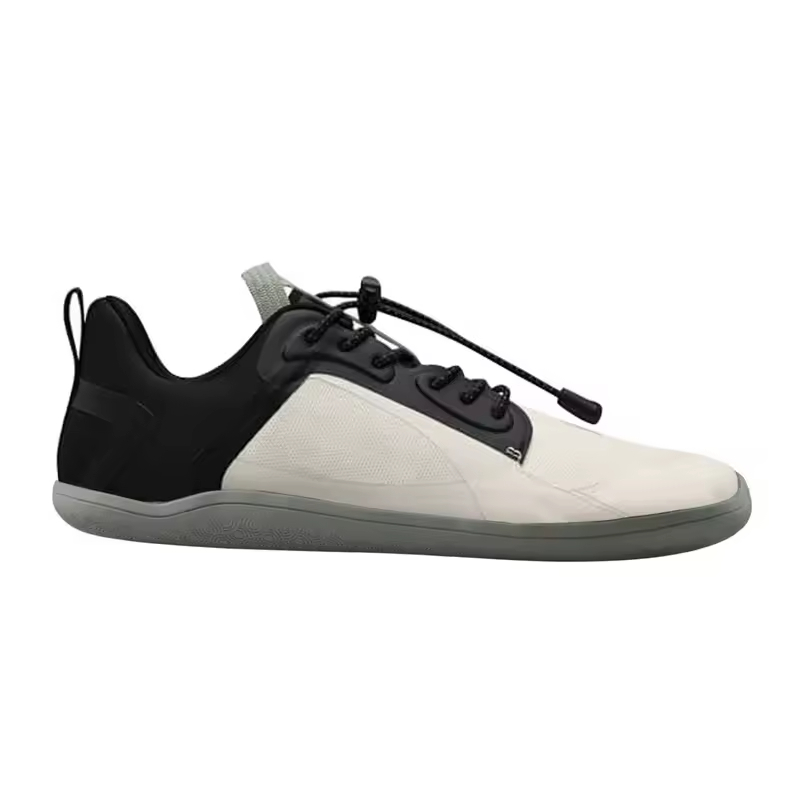
Before approving any product for your indie brand, verify that the supplier can produce objective evidence for each claim. Open with the proof, sample, measurement, or record that makes the decision verifiable. For barefoot shoes, request a physical sample showing the zero-drop measurement and a flex test video of the outsole. Ask the factory to share their RFQ-confirmed specification sheet, including material stack height and stitch density. Do not accept verbal assurances; require a signed document or a photo of the measurement tool in use.
Practical Checklist
- Specs: Does the supplier provide a written spec sheet with tolerances (e.g., the buyer-approved tolerance for sole thickness)?
- Cost/MOQ: Ask for a cost breakdown per component and confirm the minimum order quantity in writing.
- Production Risk: Request a defect rate report from the last three production runs.
- Factory Execution: Verify that the factory has a documented quality control process (e.g., inline inspection at stitching and lasting stages).
- quote request/Sample Handoff: Ensure the quote request includes a sample approval stage with a clear sign-off form.
Use this table to compare supplier responses against your buyer requirements:
| Requirement | Supplier Evidence Requested | Verified? |
|---|---|---|
| Zero-drop sole | Measurement photo with caliper | ☐ |
| Outsole flexibility | Flex test video (60° bend) | ☐ |
| Material composition | Material safety data sheet (MSDS) | ☐ |
| Stitch density | Stitch count per inch (SPI) report | ☐ |
After collecting this evidence, you can confidently shortlist suppliers who meet your verification criteria. For more on casual barefoot shoe options, see our casual barefoot shoes.
Build the Decision Asset
At the supplier proof checkpoint, the required output is a verified evidence package before moving to sample approval. For indie brands, this means confirming the factory’s actual production capability—not just marketing claims. Keytop Barefoot Shoes, a Jinjiang-based B2B barefoot shoe OEM/ODM manufacturer, provides documented proof of their manufacturing process, which serves as a reliable starting point.
Supplier evidence to request
Verify that the supplier can produce your spec consistently. Request photos or videos of their production line, not just finished samples. Cross-check their claimed capabilities against your product requirements—for example, if you need a specific sole compound, ask for material test reports. This step filters out traders or factories that lack the necessary equipment.
Sample approval evidence
Once the supplier passes proof, move to sample approval. Evaluate the sample against your spec sheet, focusing on dimensions, material feel, and assembly quality. Document any deviations and decide if they are acceptable or require a revision. The approved sample becomes the benchmark for bulk production.
Reorder control records
Before committing to production, establish a reorder control process. Define how you will inspect future batches—whether through a third-party QC or in-house checks. This ensures consistency across orders and reduces the risk of receiving substandard goods. A simple table can track these checks:
| Check | What to Verify | Action if Failed |
|---|---|---|
| Supplier proof | Production capability evidence | Request more proof or disqualify |
| Sample approval | Spec compliance | Request revision or reject |
| Reorder control | Batch consistency plan | Adjust QC protocol |
By building this decision asset, you create a repeatable framework that reduces production risk and streamlines the quote request-to-sample handoff. For more on customization options, visit custom barefoot shoe development.
Prepare Comparable RFQ Inputs
- Does the supplier have documented experience producing barefoot shoe lasts and zero-drop outsoles? Barefoot construction requires specific last geometry and outsole flexibility that general footwear suppliers may not have. Supplier provides a portfolio of barefoot shoe models with last specifications and outsole flexibility test data. Selecting a supplier without barefoot-specific capability can result in shoes that fail the zero-drop or wide-toe-box requirement. Request a capability statement and photos of previous barefoot shoe production runs.
- What verification method does the supplier use to confirm material and construction compliance before bulk production? Without a documented verification step, you cannot confirm the quote request specs will be met in the finished product. Supplier has a written pre-production approval process that includes material test reports and sample sign-off. Missing verification can lead to non-compliant bulk goods that require rework or rejection at arrival. Ask for a copy of the pre-production verification checklist and sample approval form.
- What is the supplier’s approval risk for a first-time custom barefoot shoe order? First-time custom orders carry higher risk of spec drift, tooling issues, or communication gaps. Supplier offers a structured sample approval gate with written sign-off before bulk production begins. Without a clear approval gate, you may receive bulk goods that do not match the approved sample. Define a written sample approval milestone in the purchase order with a sign-off deadline.
- How does the supplier handle buyer follow-up after sample approval and before shipment? Post-approval changes or production drift can occur if there is no follow-up checkpoint. Supplier provides a mid-production quality report and a pre-shipment inspection option. Lack of follow-up can result in final goods that deviate from the approved sample without your knowledge. Schedule a mid-production check and a pre-shipment inspection for every custom order.
- What quality control checks are performed on the final barefoot shoe before packing? Final QC ensures the product meets the agreed specs and reduces the risk of defective goods arriving. Supplier has a documented final inspection that includes visual, dimensional, and flexibility tests. Without final QC, you may receive shoes with sole separation, incorrect sizing, or material defects. Request a copy of the final QC checklist and agree on a defect threshold before production.
Source check: ISO 2859-1 sampling inspection standard; Expert Guide: Small Business Manufacturing | Tory Burch Foundat…; Supplier Deals Checklist for Indie Wax Brands.
In conclusion
The final approval for your product selection checklist comes down to verifying that each shortlisted option aligns with your spec, cost, and MOQ parameters. Compare supplier proofs—such as consistent production samples and material certifications—against your documented requirements. Document any quality or lead-time risks, then approve the sample before moving to the quote request handoff. This structured approach ensures your indie brand sources with confidence, reducing costly revisions later.
To request a quote for indie brands product, use indie brands to confirm the final specification, quote assumptions, sample approval, QC evidence, approval risk, and supplier follow-up before bulk order.
Frequently Asked Questions
How should a b2b buyer choose product type?
Shortlist product types by matching your target market’s foot morphology and activity use case. For barefoot shoes, verify the stack height and zero-drop spec against your brand positioning—Keytop offers 4mm for running and 6–8mm for casual or trail styles. Compare the cost and MOQ impact: stock styles require 50–100 pairs with mixed sizes, while custom production starts at 500 pairs per color per style. Document the supplier’s material and construction feasibility check before requesting a quote. Ask how QC will check the sample, color, finish, packing, and bulk order.
Which supplier proof should buyers request for indie brands?
Request supplier proof that demonstrates consistent production of your spec, such as photos or videos of past similar orders, a factory tour, or third-party proof such as ISO 9001:2015 certification or an amfori BSCI audit report. Verify the supplier can meet your lead time—stock orders ship within 7 calendar days, while custom samples take 7–21 days depending on tooling. Check sample quality against your spec before approving bulk production, and confirm the MOQ and payment terms (typically 30% deposit, 70% before shipment) in the quote request.
What should buyers lock before approving product selection checklist?
Lock the product specification, including stack height, drop, material, and color, plus the approved sample and QC criteria, before approving the product selection checklist. Confirm the minimum order (500 pairs per color per style for custom production) and lead time (30–45 days standard, 45–60 days for complex custom projects) in writing. Document the reorder control process and define how deviations will be handled. Verify the supplier’s capacity exceeds your projected volume—Keytop’s annual production exceeds 1 million pairs—to reduce supply risk.
quote request handoff: Ask B2B buyers to share product category, target quantity, market, timeline, and reference files for a practical quote. Send Specs for Review.
Leave a Comment
Ask a sourcing question, add your view, or request follow-up from our team. We keep the form short so it feels natural inside the article page.