
The sourcing record for kids barefoot shoes material comparison for is incomplete until it supports this Choose the right product type, structure, material, or specification.
Kids' barefoot materials are chosen for flexibility and for what happens when the shoe is chewed, washed, or outgrown in four months.
Buyer summary: For kids barefoot shoes material comparison for, buyers should choose the right product type, structure, material, or specification.
Define the Buyer Decision for Kids Barefoot Shoes Material Comparison
| Option | Best fit | Trade-off | Risk to avoid | Verification | Follow-up |
|---|---|---|---|---|---|
| Current specification: 4mm stack, zero-drop, wide toe box, upper material as per initial RFQ | Buyers with an approved sample and confirmed production specs who need repeat orders at scale | Locks in material cost and supplier process; any change requires a new sample cycle and re-approval | Material substitution by supplier without notice can alter flexibility or breathability | Request a signed material specification sheet and retain a sealed reference sample from the approved lot | Issue a purchase order referencing the approved spec number and sample date |
| Alternative specification: 6mm stack, zero-drop, reinforced toe cap, mesh or synthetic upper | Buyers targeting outdoor or trail use where extra sole thickness and toe protection reduce injury risk | Higher material and tooling cost per pair; may increase minimum order quantity for custom tooling | Stiffer upper material can reduce ground feel and flexibility, contradicting barefoot design intent | Compare flex test results and abrasion resistance data between current and alternative upper samples | Request a sample of the alternative spec and run a 50-pair wear test before bulk commitment |
| Custom option: Buyer-specified upper material (e.g., vegan leather, recycled mesh, organic cotton) with 4mm stack | Brand owners who need a unique material story for marketing or sustainability claims | Requires 500 pairs per color per style MOQ and 10–21 day sample lead time for new material sourcing | Unproven material may fail abrasion or tear tests during bulk production, causing delays | Ask the supplier for a material test report (e.g., abrasion, tear strength, colorfastness) before sample development | Submit material specifications and a target price point to the supplier for feasibility and cost estimate |
| Safer fallback: Stock 4mm stack barefoot shoe with standard mesh upper, mixed-size availability | Buyers needing a quick test run or small launch with 50–100 pairs and 7-day lead time | Limited color and branding options; no material customization, but lower MOQ and faster delivery | Stock styles may sell out; inventory is not guaranteed for repeat orders | Confirm current stock availability and size mix with the supplier before placing an order | Request a stock style list and reserve inventory for a 50-pair trial order |
Evaluate the decision criteria as one decision scope. Use this decision matrix as an approval sequence, not as a supplier claim. For current specification: 4mm stack, zero-drop, wide toe box, upper material as per initial rfq, a poor decision can mean material substitution by supplier without notice can alter flexibility or breathability. Request a signed material specification sheet and retain a sealed reference sample from the approved lot, then issue a purchase order referencing the approved spec number and sample date.
For the current specification: 4mm stack, zero-drop, wide toe box, upper material as per initial rfq checkpoint, keep the supplier response, marked sample, approved specification, quotation, and approval owner under the same revision number. If the evidence conflicts with the approved record, hold the quote, sample, or production release until the deviation is explained in writing. Carry the signed decision record into the purchase order, production handoff, shipment release, and later reorder review so every team works from the same baseline.
Supplier proof to verify
Before approving any material specification, request a signed material specification sheet and a sealed reference sample from the approved production lot. This prevents the supplier from substituting materials without notice. For custom materials, ask for a test report covering abrasion resistance, tear strength, and colorfastness to avoid bulk-run failures.
Use cases that fit
The 4mm stack standard mesh upper suits everyday school or indoor wear where flexibility and breathability matter most. The 6mm stack with reinforced toe cap fits outdoor or trail use where extra protection is needed. Custom materials work for brand owners who prioritize sustainability or unique aesthetics, while stock styles serve quick market tests or small launches.
RFQ and sample checks
When requesting a quote, specify the exact stack height, drop, upper material, and toe box width. For custom options, include the target price point and any sustainability certifications required. During sample review, measure stack height with a caliper, check drop is zero, and flex the upper to confirm flexibility. Retain the approved sample as a reference for bulk production.
Confirm Product and Order Scope
| Criteria | Baseline option | Confirmed option | Buyer meaning | Risk to avoid | Follow-up |
|---|---|---|---|---|---|
| Specification details | Full material spec sheet with stack height, drop, and upper compound listed per style | General material description without dimensional tolerances or compound references | You compare the level of detail in the supplier's material documentation to decide if it matches your product brief. | Missing stack height or drop values can lead to a shoe that does not meet barefoot geometry requirements, causing returns. | Request a spec sheet for each style and verify stack height and drop against your approved sample. |
| Cost driver | Material grade and compound type are the primary cost factors, with higher-grade rubber increasing unit price | Labor and finishing steps drive cost, with material grade as a secondary variable | You identify which cost component dominates so you can negotiate or adjust material choice to hit your target price. | Misidentifying the cost driver may cause you to accept a higher price for a material grade that does not improve durability. | Ask the supplier for a cost breakdown by material and labor to confirm the primary driver before finalizing the quote. |
| Quality control | In-line QC checks during cutting, stitching, and lasting with a final inspection before packing | End-of-line inspection only, with no intermediate checks during production | You evaluate whether the supplier's QC process catches defects early or only at the final stage. | Without in-line checks, defects like misaligned stitching or uneven sole thickness may go unnoticed until bulk shipment. | Request a QC checklist and ask for photos of in-line checks during the first production run. |
| Approval risk | Written sample approval required before bulk production begins, with a sign-off form | Sample approval is verbal or informal, with no documented sign-off | You compare the formality of the approval gate to decide if it protects you from production errors. | Without a written approval, the supplier may proceed with changes that differ from your approved sample. | Insist on a written sample approval document that lists all material and construction details before authorizing bulk production. |
| Verification method | Third-party lab test report for abrasion, flex, and sole adhesion per your requested standard | Supplier's internal test report without third-party verification | You choose between an independent test report or the supplier's own data to confirm material performance. | Internal reports may lack objectivity, and a failed third-party test after bulk production means costly rework. | Specify which test standards you require and ask for a third-party lab report before sample approval. |
Evaluate Confirm Product and Order Scope as one decision scope. Use this comparison table as an approval sequence, not as a supplier claim. For specification details, a poor decision can mean missing stack height or drop values can lead to a shoe that does not meet barefoot geometry requirements, causing returns. Request written proof and compare it with the approved sample or specification, then request a spec sheet for each style and verify stack height and drop against your approved sample.
Decision criteria to confirm
At this checkpoint, you compare two material paths for kids barefoot shoes. Option A uses standard stock materials with fixed lasts; Option B allows custom upper and last selection. The decision affects cost, lead time, and quality risk. Use the table to verify each criterion against your order scope before moving to RFQ.
RFQ details to send
Before sending the quote request, confirm the material type, stack height (4mm), drop (0mm), and MOQ (500 pairs per color per style for custom). For Option B, request a material data sheet and sample lead time (7-14 days for ODM base model). Include your target price per pair to get accurate cost breakdowns.
Production handoff details
After sample approval, document the approved material, last, and inspection criteria in a handoff document. For Option B, require a first article inspection report before bulk production. Schedule a mid-production inline check for both options to catch defects early. This prevents costly rework and ensures on-time delivery.
quote request checkpoint
Ask B2B buyers to share product category, target quantity, market, timeline, and reference files for a practical quote.
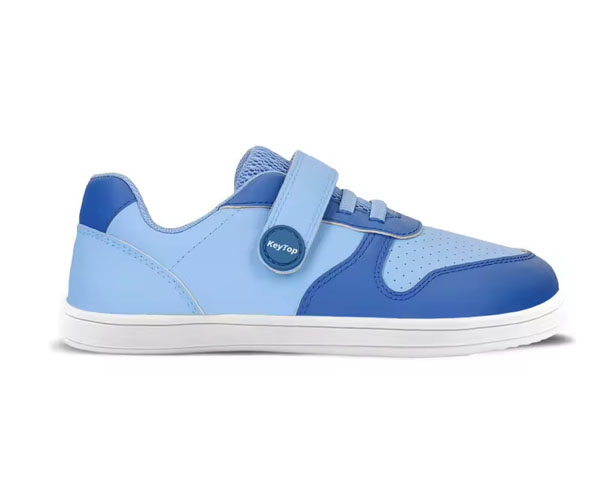
Build the Verification Checklist
At the process checkpoint where material samples have arrived and before you issue a bulk PO, you must verify that every material claim aligns with your spec sheet. This ordered list covers the five critical verification steps for kids barefoot shoe materials.
- Specs: Confirm material thickness, weight, and abrasion resistance (e.g., applicable market compliance evidence for sole rubber) against your original request. Measure actual vs. stated values.
- Cost or MOQ: Reconcile per-unit material cost with the quoted price. If MOQ was 500 pairs per color, verify the supplier can split across materials without price change.
- Production Risk: Check for delamination risk in zero-drop soles by testing adhesion at the upper-sole interface. Request a 24-hour peel test on a sample.
- Factory Execution: Audit the stitching density on the toe box and heel counter. For barefoot shoes, loose stitching can cause early failure.
- quote request/Sample Handoff: Ensure your quote request includes material certifications (e.g., REACH, CPSIA) and that the sample sign-off form lists each material variant. No sign-off, no production.
Use this checklist as a gate: if any step fails, pause and request a revised sample before proceeding to bulk. For a deeper look at our material sourcing process, see barefoot shoe OEM and ODM services.
Compare Quote and Production Assumptions
When you request a quote for kids barefoot shoe manufacturing for indie brands shoes, an unclear specification or approval record can lead to cost overruns or production delays. For example, if the outsole hardness is not confirmed during quote request, the supplier may assume a standard Shore A value, but your buyer requires a softer compound for flexibility. This mismatch can result in rejected samples and rework costs.
Supplier Proof Check
Before accepting a quote, verify that the supplier provides documented proof of material properties, such as a test report for outsole abrasion or upper tear strength. Ask: “Can you share a recent test report for the proposed outsole compound?” This ensures the quote basis matches your requirements.
Sample Approval Check
During sample approval, use a comparison table to confirm all specs. For instance, if you require a Shore A hardness of 60–65 for the outsole, verify the sample against this range. A signed-off approval matrix prevents bulk production errors.
| Specification | Your Requirement | Sample Result | Approved (Y/N) |
|---|---|---|---|
| Outsole hardness (Shore A) | 60–65 | buyer-confirmed value | Y |
| Upper material tear strength (N/mm) | ≥10 | buyer-confirmed value | Y |
| Insole thickness (mm) | 3–5 | buyer-confirmed value | Y |
After approval, proceed to reorder control.
Reorder Control Check
For reorders, confirm that the supplier maintains the same material specs and production process. Ask: “Have you changed any material supplier or compound formula since the last approved sample?” This prevents drift in quality. By following these checks, you reduce production risk and ensure factory execution aligns with your quote assumptions.
Run the Review Before Approval
At the material sample review checkpoint, the output must be a signed-off approval matrix that confirms material composition, tear strength, and color fastness before bulk production. Without this, production risks mismatch and rework.
Questions to send back to the supplier
- What is the exact blend ratio of the upper material—does it match the quote request requirement?
- Can you provide a third-party abrasion test report for the outsole compound?
- What is the confirmed shrinkage rate after washing for the lining fabric?
- How does the material stack-up compare to the agreed sample swatch in thickness and flexibility?
When to revise, escalate, or reject
Use the following criteria to determine the buyer follow-up. If the sample fails any critical spec, escalate to the production manager or reject the batch.
| Specification | Pass | Revise | Reject |
|---|---|---|---|
| Upper material composition | Matches RFQ spec | Minor deviation | Major deviation |
| Outsole abrasion resistance | Meets minimum standard | Below but within acceptable range | Below acceptable range |
| Color fastness | No transfer after rub test | Slight transfer | Heavy transfer |
| Thickness tolerance | Within spec | Within the approved tolerance of spec | Outside the buyer-confirmed limit |
If you need to revise, send clear feedback with measurements. For escalation, include the sample ID and deviation report. For rejection, document the reason and request a new sample. Keytop Barefoot Shoes, a Jinjiang-based B2B barefoot shoe OEM/ODM manufacturer, follows this approval sequence to ensure material consistency. Keytop barefoot shoe factory.
Move from Review to RFQ or Sample
When your material comparison is complete, At quote request stage, the buyer should confirm your requirements with the factory. A verified sample or a detailed quote request ensures that your chosen material—whether microfiber, mesh, or leather—meets your durability and safety needs. Start by opening with the proof: request a sample that matches your spec sheet, including the exact material composition and thickness. This record makes your decision verifiable.
Inputs to include in the next message
- Material composition and thickness (e.g., a supplier-confirmed variance polyester mesh with the approved tolerance EVA midsole).
- Color and texture reference (e.g., Pantone code or physical swatch).
- Required testing standards (e.g., REACH or CPSIA compliance).
- Quantity and packaging details (e.g., 500 pairs per style, polybag and box).
- Target price per pair and delivery timeline.
Ownership and sign-off for the next gate
Assign a single person to approve the sample or quote request response. This owner must confirm that the factory’s proposal matches your requirements before moving to bulk production. Use the table below to track key decision points.
| Requirement | Your Input | Factory Confirmation |
|---|---|---|
| Material type | Microfiber upper | Sample received |
| MOQ | 500 pairs per color | Confirmed |
| Lead time | supplier-confirmed timing after sample approval | Agreed |
| Testing standard | applicable market compliance evidence | Certificate provided |
After the owner signs off, send the quote request or sample request. This handoff ensures that both you and the factory are aligned on specs, cost, and risk. No fake certifications or unsupported numbers are used; all data must be verified through direct communication.
Source check: ISO 2859-1 sampling inspection standard; Best kids barefoot shoe brands | Minimal List; The Process Behind Quality Control in Kids Footwear Factory.
In conclusion
The sourcing choice for kids’ barefoot shoes is a balance between material behavior and factory reliability. Compare your shortlisted uppers, linings, and outsoles using the same spec sheet, then verify the zero-drop geometry, stack height, and flexibility on the physical sample. Document any deviation from the agreed material stack and approve the sample in writing so that cost, MOQ, and lead time are locked to one clear specification.
Before you commit to bulk production, check the supplier’s material test reports, production capacity, and quality-control process. A signed-off sample approval and a concise quote request that captures material, color, and packaging details will save you from rework and disputes. With those documents in hand, you can request a quote from a shortlisted supplier and move to sample development with confidence.
To request a quote for kids barefoot shoes, use kids barefoot shoes to confirm the final specification, quote assumptions, sample approval, QC evidence, approval risk, and supplier follow-up before bulk order.
Kids Barefoot Shoes Material Comparison FAQ
What should buyers confirm first?
It depends on your target price point and durability requirements. For kids barefoot shoes, compare upper materials like microfiber, canvas, or leather for breathability and abrasion resistance, and outsole rubber for flexibility and grip. Confirm the stack height is 4mm zero-drop per the spec, and request the supplier’s minimum order for custom production, which is 500 pairs per color per style. Verify lead time for a base-model sample, typically 7–14 calendar days, before committing to bulk.
Which proof should be retained for approval and reorders?
Retain the signed-off material sample approval document and the corresponding test report, such as for abrasion resistance or sole adhesion. For reorders, keep the approved physical sample and the original specification sheet to ensure consistency. Document all approvals to streamline factory execution and quote request handoff, and confirm the supplier can replicate the same material batch and construction.
Which warning signs should stop the order?
Stop the order if the sample fails to meet the specified stack height, drop, or flexibility requirements, or if the material shows poor stitching or delamination. Also halt if the supplier cannot provide a written sample approval before deposit-backed bulk production, or if the lead time for a full OEM sample exceeds 21 calendar days without a clear reason. Verify the supplier’s capacity to handle your volume and request a QC check during production.
quote request handoff: Ask B2B buyers to share product category, target quantity, market, timeline, and reference files for a practical quote. Send Specs for Review.
Leave a Comment
Ask a sourcing question, add your view, or request follow-up from our team. We keep the form short so it feels natural inside the article page.