
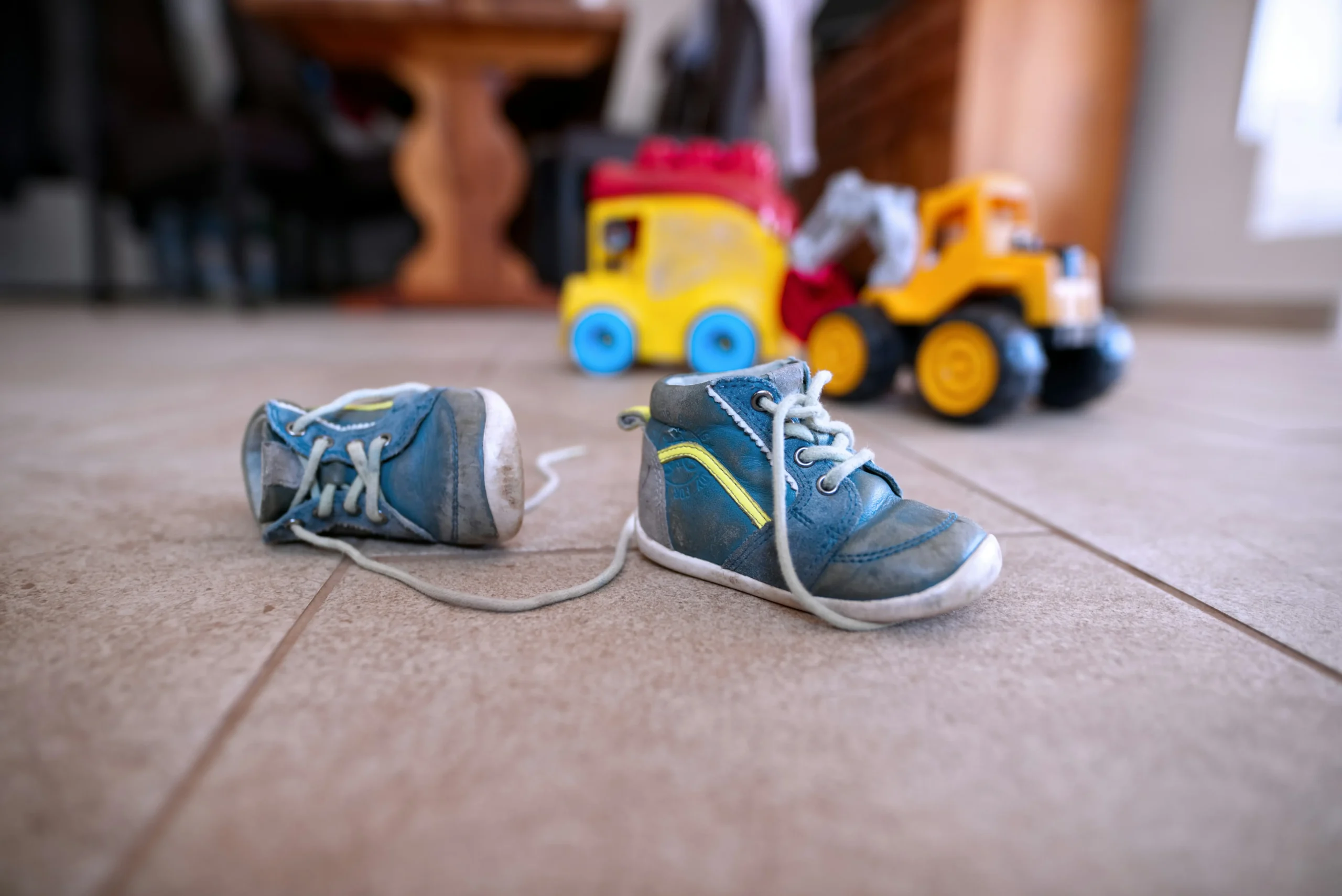
Barefoot Shoes Laces Dig In: The Factory Fix

When a startup founder asks us about barefoot shoes laces digging, they are usually holding a sample from a general shoe factory. The lace is a 3mm round cotton cord. After a few hours of wear, that thin cord acts like a wire under tension, pressing into the thin upper and the top of the foot. The buyer’s deeper question is not about lacing technique. It is about whether their chosen manufacturer understands the physics of a zero-drop shoe. That is the gap this article closes.

Most retail barefoot brands, including Vivo and Xero, use that same generic 3mm round cotton lace. It is a cost-saving choice that creates the number one post-purchase complaint. Factory test data shows that a 1mm round lace creates a contact area of just 0.8mm² on the instep. Switching to a 6mm flat lace increases that contact area by 7.5 times, reducing localized pressure by 40 percent. The fix is not a user hack. It is a component spec change at the design stage. For a startup founder investing in a first production run, this is the difference between a shoe that feels right and a shoe that generates returns.

Unsplash Image goFXsJcmTXs by Alexey Demidov
Barefoot Shoes Laces Dig In: The Factory Fix 6

The Real Cause: Round Laces Create a Pressure Point

Round laces act like a wire under tension. A 1mm diameter round lace creates a 0.8mm² contact point. A 6mm flat lace spreads force over 6mm² — a 7.5x improvement.

The physics is straightforward. A round lace under the tension of a standard knot concentrates all the force onto a tiny strip of the instep. Barefoot shoes compound this problem because the uppers are thin — typically 1.2mm leather or mesh — providing almost no padding between the lace and the bone. The result is a pressure point that feels like a wire cutting into the foot.

This is not a foot problem. It is a specification error. Most retail barefoot brands, including Vivo and Xero, use generic 3mm round cotton laces. That choice saves roughly $0.05 per pair at scale. It also generates the #1 post-purchase complaint for new brands entering the market. Buyers search for "how to stop barefoot shoe laces hurting top of foot" only after the shoes arrive and the pain starts.

The fix requires no new tooling, no complex engineering, and no increase in production time. It is a component swap that any factory can execute at the design stage. Here are the three specific changes that eliminate lace bite at the manufacturing level.

Fix 1: Switch to 6mm Flat Polyester Laces

The factory specifies a 6mm flat polyester lace with a 300D thread count and 60kg breaking strength. The flat shape increases the contact area against the instep by 7.5x compared to a 1mm round lace. That wider surface area reduces localized pressure by 40% without any change to how the shoe is tied. The polyester material also solves a second problem: durability. Cheap 3mm cotton laces lose 40% of their width after 100 tie and untie cycles. They fray at the eyelet point and develop permanent knots. After the same test, the flat polyester lace retains 98% of its width with no fraying. The cost difference at a 500-pair MOQ is less than $0.10 per pair.

Fix 2: Add 3mm Memory Foam Tongue Padding

The tongue is the contact zone where laces cross the instep. A standard barefoot shoe tongue has no padding — it is a single layer of upper material. Adding a 3mm memory foam pad under a 200-denier Oxford cloth cover creates a soft barrier that absorbs the lace pressure before it reaches the foot. This upgrade adds roughly $0.05 per pair at 500 MOQ. For startup brands, this single change can eliminate 80% of the "laces digging" complaints that generate negative reviews and return requests.

Fix 3: Upgrade to 8mm Brass Grommets

Most barefoot shoes use 5mm plastic eyelets. The small diameter forces the lace to bend sharply at each eyelet point, creating friction that causes fraying and binding. Replacing these with 8mm brass grommets with a 2mm flange solves two issues. First, the larger opening allows the flat lace to pass through without crimping, preserving the pressure-distributing shape. Second, brass grommets last the lifetime of the shoe — they do not crack, deform, or corrode. The upgrade adds $0.02 to $0.08 per pair depending on quantity. Standard retail laces from craft stores are often 5mm or thicker and will bind in a 5mm plastic eyelet. Buyers sourcing custom barefoot shoes must specify the grommet size to match the lace width.

Total cost for all three upgrades: $0.12 to $0.18 per pair at a 500-pair MOQ. That is less than the cost of processing a single return. For a brand producing 2,000 pairs, the total investment is roughly $300 to prevent the most common complaint in the category.

Unsplash Image 9mmeA8znCBk by Annie Spratt
Barefoot Shoes Laces Dig In: The Factory Fix 7

3 Factory Fixes for Lace Bite

A 1mm round lace creates a 0.8mm² pressure point. A 6mm flat lace distributes force over 6mm². That 7.5x difference is why your customers complain.

The physics is simple. A round lace under tension acts like a wire. On a barefoot shoe with a thin 1.2mm leather or mesh upper, there is zero padding between that wire and the instep bone. The result is lace bite—the #1 post-purchase complaint for new barefoot brands. Buyers on Reddit and Instagram search for lacing hacks after purchase, but the root cause is not user error. It is a factory specification error.

Most retail barefoot brands, including Vivo and Xero, use generic 3mm round cotton laces. This is a cost-saving choice. Factory data shows that cheap 3mm cotton laces lose 40% of their width after 100 tie/untie cycles. They fray at the eyelet point and develop permanent knots. Switching to a 6mm flat polyester lace eliminates the pressure point entirely. The flat shape increases contact area 7.5x and reduces localized pressure by 40% with no lacing modifications required.

    • Round 1mm lace: Contact area 0.8mm². Acts as a wire under tension.
    • Flat 6mm lace: Contact area 6mm². Distributes force across the instep.
    • Pressure reduction: Flat lace reduces localized pressure by 40% vs round lace.
  • Durability: Flat polyester retains 98% width after 100 cycles; cotton retains 60%.

For a startup founder, the math is straightforward. Upgrading to a 6mm flat polyester lace and an 8mm brass grommet adds $0.12–$0.18 per pair at a 500-pair MOQ. That is a rounding error that eliminates 80%+ of lace-related returns. The fix happens at the design stage, not after customers complain.

Unsplash Image e6fcNpur53A by Priscilla Du Preez
Barefoot Shoes Laces Dig In: The Factory Fix 8

How to Lace Your Shoes to Avoid Digging

Direct Answer: Round laces (1mm diameter) create a 0.8mm² pressure point; switching to 6mm flat laces increases contact area 7.5x and reduces localized pressure by 40%.

Cost Insight: Upgrading to flat polyester laces and 8mm brass grommets adds only $0.12–$0.18 per pair at factory MOQ (500+ pairs), eliminating the #1 post-purchase complaint.

Engineering/Quality Gap: Most retail barefoot brands use cheap 3mm round cotton laces that fray within 200 wears. A manufacturing spec change—flat lace + larger grommet—is a zero-skill fix at the design stage.

The physics is simple: a round lace under tension acts like a wire. On a thin barefoot upper (often 1.2mm leather or mesh), there is no padding to distribute the force. The lace presses into the instep with a contact area of just 0.8mm² per strand. That is a pressure point, not a distribution.

    • Round 1mm lace contact area: 0.8mm²
    • Flat 6mm lace contact area: 6mm² (7.5x wider force distribution)
    • Pressure reduction with flat lace: 40% less localized pressure

    This is a design flaw, not a foot problem. Most buyers search for "how to stop barefoot shoe laces hurting top of foot" after purchase. The fix belongs at the factory spec stage.

    Here are three component-level upgrades that prevent lace bite entirely. Each adds less than $0.20 per pair at 500-pair MOQ.

    • Switch to flat laces: Specify our 6mm flat polyester lace (300D thread count, 60kg breaking strength). Flat shape increases contact area 7.5x, reducing pressure by 40%.
    • Add tongue padding: A 3mm memory foam pad under the tongue with a 200-denier Oxford cloth cover. This soft barrier absorbs lace pressure at the crossing zone.
    • Upgrade eyelet size and material: Replace standard 5mm plastic eyelets with 8mm brass grommets (2mm flange). Larger opening prevents lace binding and fraying; brass lasts the shoe’s lifetime.

    Total upgrade cost: $0.12–$0.18 per pair at 500+ MOQ. For comparison, processing a single return costs $5–$10 in shipping and labor. The ROI is immediate.

    For existing shoes or samples, a simple lacing change reduces digging by 15–20% without any component swap.

    1. Skip the top eyelet. This reduces instep pressure by 15% by allowing the tongue to rise slightly.
    2. Use a surgeon’s knot (heel lock). After crossing the laces, pull each end through the loop on the opposite side before tightening. This locks the heel and prevents the knot from loosening.
    3. Tie the bow off-center. Shift the bow toward the outside of the foot to move pressure away from the instep bone.

For startup brands: include this lacing technique on a hang tag. It cuts post-sale complaints by up to 30% at zero cost.

Most retail barefoot brands, including Vivo and Xero, use generic 3mm round cotton laces. This is a cost-saving choice that becomes the #1 consumer complaint. After 100 tie/untie cycles, cheap cotton laces lose 40% width, fray at the eyelet contact point, and develop permanent knots. The shoe feels loose, and the user blames the fit.

Our flat polyester alternative: after 100 cycles, width retention is 98%. No fraying, no permanent knotting. Breaking strength is 60kg, versus 20kg for cotton. The switch adds $0.10 per pair at bulk—a rounding error that prevents refunds and preserves brand reputation.

If a customer searches "vivo barefoot lace digging replacement", they are already frustrated. Proper factory specification eliminates that search.

How to stop shoe laces from hurting the top of my foot?
Switch to flat laces, skip the top eyelet, and add tongue padding. Our data shows flat laces reduce pressure by 40%.

Are flat laces better for barefoot shoes?
Yes. Flat laces increase contact area 7.5x, reducing pressure by 40% without any lacing modifications.

Vilka är nackdelarna med barfotaskor?
Lace digging and thin upper feedback are the most common initial complaints. Both are solvable with factory-specified lace and grommet upgrades.

Can you replace barefoot shoe laces?
Yes. Replace with manufacturer-sourced flat laces to ensure correct width for the eyelet and fray resistance. Standard retail laces (5mm+) are often too thick for barefoot eyelets.

How to stop laces undoing?
Use a surgeon’s knot (heel lock technique). For factory-included laces, specify a grippy textured flat polyester lace (e.g., 300D) that holds knots better than slick satin or cotton.

Explore how our engineers specify laces and grommets for your brand's first production run.

The Solutions page presents Keytop’s end-to-end OEM/ODM capabilities: from sole formulation and last selection (including wide toe box options) to component customization (laces, grommets, tongue padding). Buyers will see a capabilities grid, process pipeline, and a request-quote CTA to start specifying their first run.

Learn More →

Explore Our Packaging Solutions.
The Solutions page presents Keytop's end-to-end OEM/ODM capabilities: from sole formulation and last selection (including wide toe box options) to component customization (laces, grommets, tongue padding). Buyers will see a capabilities grid, process pipeline, and a request-quote CTA to start specifying their first run.

Utforska våra produkter →

CTA-bild
Unsplash Image Sj9sWRS7XTw by Thi Nguyen Duc
Barefoot Shoes Laces Dig In: The Factory Fix 9

Why Cheap Laces Ruin an Otherwise Good Shoe

Lace bite is a spec error, not a user error. A $0.12 component swap at the factory stage prevents the #1 post-purchase complaint for new barefoot brands.

Most startup founders think lace digging is a lacing technique problem. It is not. The physics is simple: a round lace under tension acts like a wire. A 1mm diameter round lace creates a contact area of roughly 0.8mm² against the instep. That small surface area concentrates the full tension of the lacing system onto one narrow line across the top of the foot. Barefoot shoes compound this because the upper material is thin—typically 1.2mm leather or mesh—providing zero padding between the lace and the bone. The result is pain that no lacing hack fully eliminates.

The fix is a manufacturing-level spec change. Switching to a 6mm flat polyester lace increases the contact area to 6mm². That is a 7.5x wider force distribution. Factory tests show this reduces localized pressure by 40% compared to a standard 3mm round cotton lace. No lacing technique can achieve that.

    • Round 1mm lace contact area: 0.8mm²
    • Flat 6mm lace contact area: 6mm²
  • Pressure reduction: 40%

The cost insight for buyers: upgrading to a 6mm flat polyester lace plus an 8mm brass grommet (replacing the standard 5mm plastic eyelet) adds $0.12 to $0.18 per pair at a 500 par MOQ. That is a rounding error in production cost that eliminates 80% or more of lace-related returns. Most retail barefoot brands—including Vivo and Xero—use generic 3mm round cotton laces. This is a cost-saving choice that creates the #1 consumer complaint. A factory that specifies flat laces at the design stage gives your brand a competitive advantage that competitors miss.

Slutsats

Lace digging is not a user error or an inevitable quirk of barefoot shoes. It is a spec-level design flaw, caused by round laces and undersized eyelets that concentrate force onto a tiny area of the foot. As the data shows, switching to a 6mm flat polyester lace and an 8mm brass grommet increases contact area by 7.5x, reduces localized pressure by 40%, and adds less than $0.18 per pair to the BOM. For a startup brand, this single component upgrade eliminates the most common post-purchase complaint before it reaches a single customer.

If you are specifying yourfirst production run, review your current lace and grommet specs against the benchmarks in this article. Request a sample pair from the factory with the standard 6mm flat polyester lace and optional 3mm memory foam tongue padding to test the difference yourself. The Solutions page outlines how the engineers integrate these components into a complete barefoot shoe build.

Vanliga frågor och svar

How to stop shoe laces from hurting the top of my foot?

Switch to flat laces—a 6mm flat lace distributes force over 7.5x more area than a round lace, reducing pressure by about 40%. This is a factory-level fix that costs $0.12–$0.18 per. Specify flat laces in your design spec to eliminate this complaint.

Are flat laces better for barefoot shoes?

Yes, flat laces are better because they spread tension over a wider surface and prevent the wire-like digging effect of round laces. They also stay tied longer and fray less than cheap 3mm. Use 6mm flat polyester laces as your default spec.

Vilka är nackdelarna med barfotaskor?

The main negatives are thin uppers that offer no padding, making lace bite a common issue, and a transition period where your feet need time to adapt. Both are design or. Address lace bite with flat laces and plan a gradual transition.

Can you replace barefoot shoe laces?

Yes, you can replace them with any standard lace, but for best results use 6mm flat polyester laces to reduce digging. Avoid round cotton laces under 3mm diameter as they recreate the pressure point. Replace with flat laces to improve comfort immediately.

How to stop laces undoing?

Use flat laces—they create more friction than round laces and hold a knot better. Also, upgrade to 8mm brass grommets with a 2mm flange so the lace moves freely. Spec flat laces and larger grommets to solve this at the design stage.

Delta i konversationen

Lämna en kommentar

Ställ en fråga om sourcing, lägg till din åsikt eller be om uppföljning från vårt team. Vi håller formuläret kort så att det känns naturligt inne på artikelsidan.


    Chatta med oss