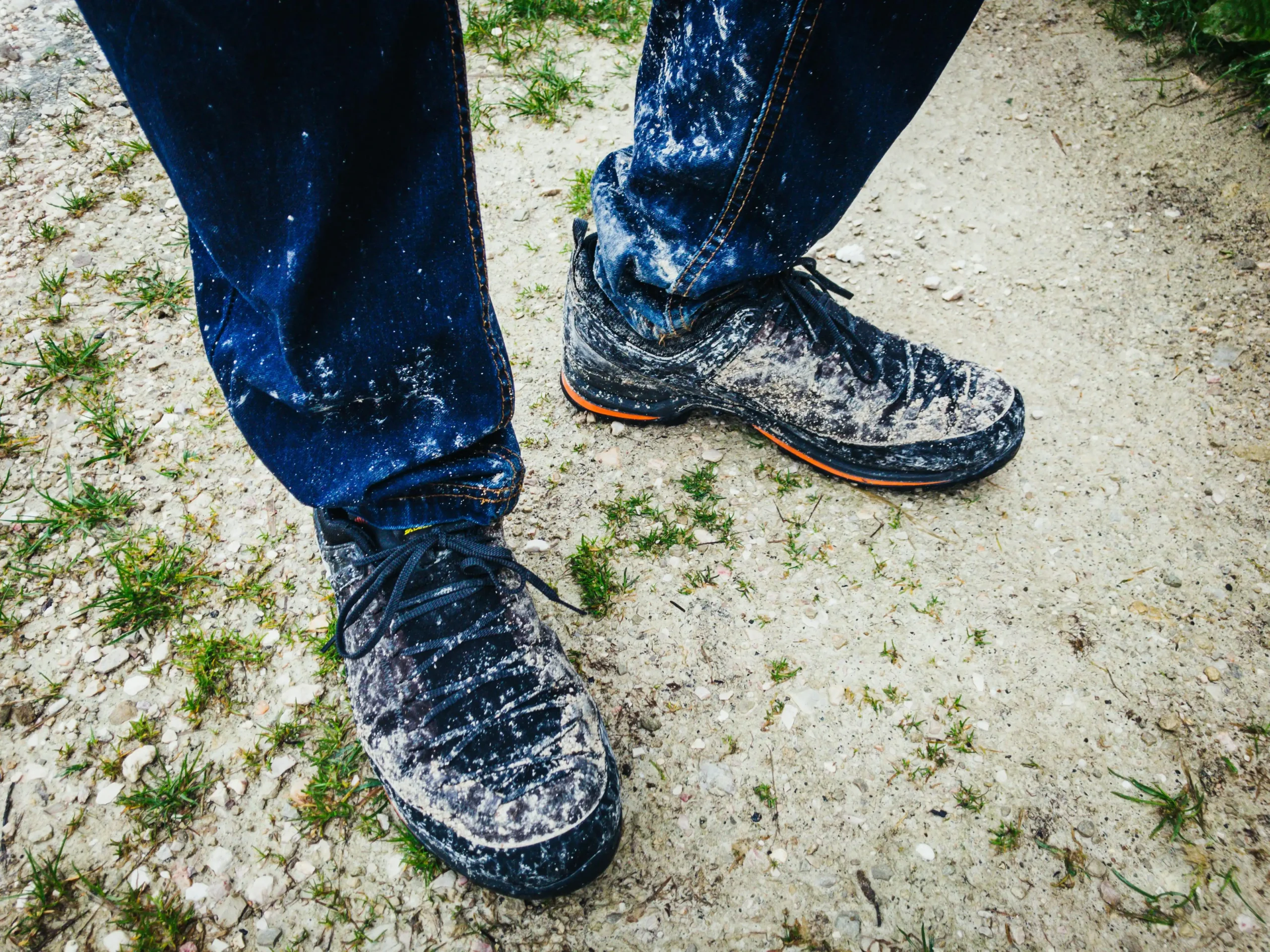
Kort svar: sole wear is managed by balancing compound, tread, thickness, flex and intended surface. Identify whether the outsole shows abrasion, tearing, cut growth, delamination or uneven geometry. Approve the relevant material and finished-shoe tests, then trace compound and molding lots in production. Use the supplier questions in the sole-wear guide to turn the wear diagnosis into defined material and test inputs.
Slitagemönster har inte en enda orsak
Ett jämnt nött område skiljer sig från en avriven klack eller en spricka som växer från en flexränna. Avskiktning mellan lager är en bindningsfråga, medan snabb förlust vid en kavitet kan tyda på formvariation. Fotografera yttersulan innan rengöring och markera storlek, sida, placering, ythistorik och produktionsidentitet.
- Progressiv ytförlust: granska nötningsbeständighet, blandning och mönsterkontakt.
- Klackavrivning eller lug- rivning: granska rivhållfasthet, skårans geometri och blandningens vulkning.
- Flexspricka: granska ränna, tjockleksövergång och spricktillväxtbeteende.
- Skiktskiljning: granska materialgränssnitt och bindningsprocess.
- Ojämnt lokalt slitage: granska formgjuten tjocklek, kontaktgeometri och kavitetskonsistens.
Använd separata tester för separata egenskaper
ISO 20871:2018 specificerar en metod för att bestämma yttersulans nötningsbeständighet, oavsett material. Den möjliggör jämförelse under en metod men fastställer ingen universell skolivslängd. Köparen och laboratoriet behöver ett acceptanskrav anpassat till den avsedda produkten och ytan.
ISO 17707:2005 omfattar flexbeständighet hos yttersulan och bedömer effekten av sulmaterial och ytmönster på spricktillväxt inom dess angivna styvhetsområde. För en tunn barfotayttersula, bekräfta tillämpligheten med laboratoriet snarare än att kopiera ett cykelantal från en annan konstruktion.
Om felet är en rivning, spricka eller delaminering, välj motsvarande aktuell metod för den egenskapen. Nötnings-, riv- och flexresultat svarar på olika frågor. Ett bra resultat i ett test ersätter inte bevis för en annan felfunktion.
Åtgärd 1: Lås blandningen som ett kontrollerat material
Registrera polymerfamilj, leverantör, artikel- eller formelkod, färg, hårdhetsmetod, vulkningsgrad och överenskomna materialtester. Pigment-, fyllnads- och återvunnet innehållsförändringar kan påverka bearbetning och slitbeteende. Behandla ett blandningsbyte som en teknisk ändring även när den formgjutna yttersulan ser likadan ut.
| Kontrollpunkt | Specifikationsprotokoll | Bulkeviden |
|---|---|---|
| Blandning | Leverantörs- och materialkod | Partiidentitet och inkommande resultat |
| Hårdhet | Metod, konditionering och intervall | Partiprovtagning enligt samma metod |
| Mönster | Godkänd ritning och ytfinish | Kavitets- och dimensionskontroll |
| Tjocklek | Mätkarta och tolerans | Storleks- och kavitetskontroller |
| Prestanda | Namngiven nötnings-, riv- eller flexmetod | Rapport kopplad till parti och prov |
Åtgärd 2: ta bort spänningskoncentratorer från slitbanan
Skarpa inre hörn, abrupta tjockleksförändringar, smala klackrötter och spår som slutar vid en belastad kant kan starta sprickor. Granska formritningen och ett gjutet tvärsnitt, inte bara yttersulans rendering. Håll flexzoner förenliga med den avsedda markkänslan samtidigt som tillräckligt med material lämnas runt skåror och övergångar.
Åtgärd 3: validera hela skon under representativa användningsförhållanden
Materialprover stödjer screening, men den färdiga skon tillför geometri, bindning och flex. Definiera representativa ytor och en kontrollerad utvärdering tillsammans med köparen och laboratoriet. Dokumentera startmått, konditionering, metod, resultat och brottmod. Spara kvarhållna prover för jämförelse när bulkproblem uppstår.
- Godkänn föreningens identitet och materialtestplan.
- Inspektera gjutna yttersulor med avseende på tjocklek, slitbana och kavitetsvariation.
- Testa den relevanta brottegenskapen på material- eller sulprover.
- Bygg kompletta skor med produktionsavsedd bindning och geometri.
- Utvärdera den färdiga konstruktionen under överenskomna förhållanden.
- Frys materialförteckningen, formrevisionen, processen och det signerade provet.
Kontroller för bulkproduktion
- Spåra föreningar och pigmentpartier.
- Registrera formsprutningsmaskin, kavitet, datum och härdningsinställningar.
- Kontrollera yttersulans vikt och tjocklek på definierade platser.
- Inspektera slitbanans fyllning, yta, blixt och innesluten förorening.
- Tillämpa överenskommen partiprovtagning för relevant prestanda.
- Håll ett parti när materialidentitet eller testbevis är ofullständigt.
- Omvalidera en förändring av förening, färg, form eller process.
Placera föreningskontroller i inkommande inspektionsplan och formningskontroller i produktionskontrollplanen. Om konstruktionen fortfarande är öppen, jämför alternativen i sulans bindningsguide.
Keytop Barefoot Shoes project terms
Keytop Barefoot Shoes supports OEM and ODM barefoot footwear development from 500 pairs per color and style. Samples are normally developed in 10–21 days after the compound, outsole drawing and project inputs are confirmed.
Metod och gränsvärden
Den här guiden beskriver inköp och kvalitetskontroll. Den anger ingen universell sulans tjocklek, nötningsgräns, flexcykel, livslängd, kostnad eller defektreducering. Projektkravet måste matcha material, geometri, användningsyta, storleksintervall och målmarknad.
VANLIGA FRÅGOR
Håller hårdare gummi längre?
Hårdhet ensamt avgör inte slitage. Gummiblandningens kemi, vulkning, slitbanans geometri, yta och flexbeteende påverkar resultatet. Jämför kandidater under samma metoder.
Kan en djupare sula lösa för tidigt slitage?
Extra material kan ändra slitagetillägget, men det ändrar också vikt, flexibilitet och markkänsla. Identifiera om felet är nötning, rivning, sprickbildning eller bindningsförlust innan du ändrar tjockleken.
Varför behålla kavitetsspårbarhet?
Upprepat slitage eller dimensionsproblem från en kavitet kan peka på formfyllning, ventilation eller geometrivariation. Kavitetens identitet gör undersökningen snävare och mer reproducerbar.
Skicka sulritningen, gummiblandningsdata och slitbilder för att diskutera en mätbar korrigering.
Lämna en kommentar
Ställ en inköpsfråga, lägg till din åsikt eller begär uppföljning från vårt team.