
Key takeaways
- Short answer: Build a barefoot shoe product family around distinct channel roles rather than visual variety.
- Write one channel brief before reviewing styles.
- Use the barefoot shoe product range as a route list.
Short answer: Build a barefoot shoe product family around distinct channel roles rather than visual variety. Define the customer, use case, price position, last, size range, construction, sample evidence and reorder reference for each family. Remove models that serve the same role without a meaningful specification difference.
A distributor range is a buying system. Casual, running, trail, training, kids, boots and sandals may share a brand language, but they need separate product jobs and approval records. The family matrix below helps turn a catalog shortlist into a quote-ready assortment.
Start with the channel job
- Sales channel and target customer.
- Primary activity and secondary use.
- Climate and surface conditions.
- Planned price position and merchandising story.
- Target size span and customer fit expectations.
- Launch depth, color plan and reorder route.
- Staff or product-page information needed to explain the range.
Write one channel brief before reviewing styles. A specialist outdoor distributor, children’s retailer and lifestyle ecommerce brand do not need the same family mix. The channel brief prevents a flexible-looking shoe from being assigned to a use case its specification does not support.
Assign one selling role to each family
| Family | Role to define | Specification focus | Approval evidence |
|---|---|---|---|
| Casual | Daily lifestyle and work setting | Appearance, fit, closure, cleanability and sole construction | Fit sample, material set and care review |
| Running | Road or smooth-surface activity | Last, hold, flex, outsole and upper movement | Identified samples and use-case checks |
| Trail | Defined mixed or loose surfaces | Tread, compound, debris, drainage and reinforcement | Outsole file, sample and agreed evaluation |
| Training | Indoor or cross-training activity | Floor contact, lateral movement, closure and upper support | Surface and movement review |
| Kids | Age and channel-specific range | Dedicated last, closure, grading, materials and labels | Representative sizes and market file |
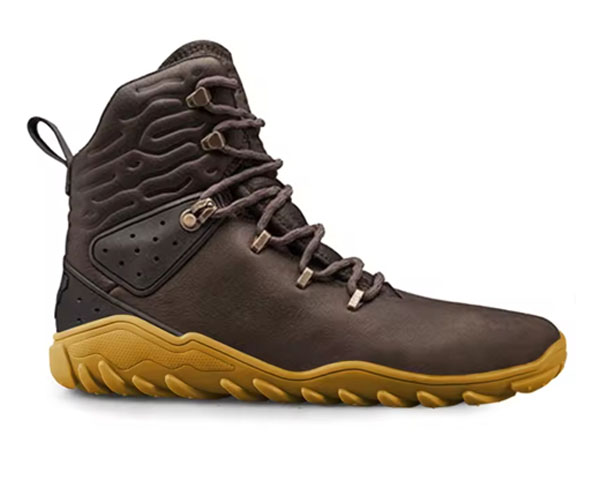
| Boots | Coverage and environmental exposure | Shaft, opening, flex, outsole, lining and care | Construction and conditioned sample checks |
Use the barefoot shoe product range as a route list. The family name should help buyers navigate, while the controlled specification determines what the factory produces.
Detect assortment overlap
Two models may look different but compete for the same shelf role. Compare customer, activity, fit platform, outsole, upper, price position and size range. If the fields are materially alike, decide whether both models justify inventory and separate sample work.
| Overlap signal | Buyer question | Action |
|---|---|---|
| Same channel and activity | What customer decision separates the models? | Clarify the role or remove duplication |
| Same last and sole | Is the upper difference meaningful to the range? | Compare merchandising value with SKU cost |
| Different labels, unclear construction | Which specification fields actually change? | Request model-level files |
| Shared customer, different price | What material or approval evidence supports the position? | Document the difference |
| Similar colors across models | Will size and color depth fragment the launch? | Concentrate the opening assortment |
Give each model a specification identity
- Model code and revision.
- Family role and intended use case.
- Last code, internal measurement method and size range.
- Pattern, upper, lining, reinforcement and closure.
- Outsole, component stack and construction route.
- Color and material references.
- Labels, packaging and market requirements.
- Approved sample code and open deviations.
ISO 19409 addresses last dimensions, and ISO 19410-1 addresses in-shoe measurement. Use the official documents to inform a project method, then state devices, landmarks, conditioning and tolerances in the model file.
The technical specification guide provides a field structure for a comparable RFQ.
Approve the range, not one hero sample
| Approval layer | Evidence | Decision |
|---|---|---|
| Material | Identified swatches and component references | Approve or revise the material package |
| Development size | Fit, construction, appearance and measurements | Freeze the model baseline |
| Representative sizes | Grading, internal measurements, pair and label checks | Approve the size range |
| Colorways | Production-material samples and artwork | Approve color and decoration |
| Packing | Box, labels, assortment and carton record | Release the SKU handoff |
Follow the sample approval workflow so model revisions, comments and approval owners remain traceable.
Build the SKU and reorder matrix
- Family, model and approved revision.
- Colorway and material references.
- Size span and quantity by size.
- Box, barcode, label and carton references.
- Approved sample and inspection file.
- Open exception, owner and due decision.
- Reorder change declaration and current component availability.
For a distributor order, discuss the assortment and stock-versus-custom route through the wholesale barefoot shoes program. Keep quantity planning separate from product approval so a commercial change does not silently revise the construction.
Prepare a range-level RFQ
Send the channel brief, family matrix, model files, size-color grid, packaging route, sample plan and required documents. Ask the quotation to identify existing platform fields, development work, tooling, testing, packaging, exclusions and commercial assumptions for each model.
Keytop project facts
Keytop was founded in 2006 and has confirmed capacity of 50,000 pairs per month. Custom OEM and ODM production starts at 500 pairs per color and style. Samples are normally developed in 7–14 days after model route, last, sole, materials, sizes, artwork and other required inputs are confirmed. Keytop also reports ISO 9001, BSCI, Sedex and GRS credentials; buyers should verify current scope and relevance for the order.
Method and limits
This matrix is an assortment-planning framework. It does not forecast sell-through, prescribe SKU quantities, set a price band or promise component availability. Use channel evidence, written quotations and current sample records for the exact program.
FAQ
Should all product families use the same last?
A shared platform may simplify the range, but the last must suit the approved use case, fit brief, size range and construction of each model.
How many families should a launch include?
Choose the number the channel can explain, stock and reorder. Distinct selling roles and controlled specifications matter more than catalog breadth.
What makes a model ready for reorder?
A frozen revision, material file, size-color grid, labels, packaging, approved sample, inspection record and current change declaration provide the reorder baseline.
Send the channel brief, family matrix, size-color grid and sample needs to discuss an assortment review.
Leave a Comment
Ask a sourcing question, add your view, or request follow-up from our team. We keep the form short so it feels natural inside the article page.