An outsole compound change is invisible on inspection while abrasion resistance, wet grip, and cold weather behaviour all shift. Reformulation typically arrives on a repeat order rather than on the first production run, when nobody is looking for it.
Compound formulations are factory process assets and most suppliers will not release them. Batch traceable physical property data is the practical substitute, and whether a supplier can produce a batch number at all is a direct signal of whether process control exists.
Below are ways to state the outsole performance brief, the traceable evidence to request, how to evaluate the moulded sample, and the notification and revalidation terms that should apply to any compound or process change.
Direct answer: Request batch traceable physical property data rather than the compound formulation, which suppliers will not release. Set abrasion, hardness, and wet grip targets in the brief, tie them to a batch number on the approved sample, and require written notification and revalidation before any compound or process change reaches a repeat order.
Copy this barefoot shoe outsole compound sample approval record into the RFQ file. Keep every checked item on the same revision before releasing the order.
- ☐ Final specification and intended use
- ☐ Supplier feasibility and documented exceptions
- ☐ Sample or inspection evidence
- ☐ Commercial assumptions, owner, decision, and date
Move the barefoot shoe outsole compound sample order forward only when each gate leaves written evidence for the next. Return an unresolved specification, sample, or quote exception to its owner before bulk production.
Use a written sourcing sequence that covers Requirement review before quotation; keep each checkpoint tied to the quote revision, sample evidence, approval owner, and bulk-production handoff.
Define the outsole performance brief
For barefoot shoe outsole compound sample, compare the outsole performance brief against one RFQ revision. Each row should identify the requirement, approval evidence, and buyer action before production.
| Specification | Quality control | Verification method | Risk to avoid | Buyer action |
|---|---|---|---|---|
| Sample approval | Signed measurement sheet and flex test certificate for exact revision | Compare sample dimensions and test results against approved tech pack | Approving a sample that cannot be reproduced at scale | Hold approval until evidence matches the same revision |
| Material / substrate | Material data sheet for the exact compound revision | Verify batch number on MDS matches flex test certificate | Supplier switches to a lower-cost blend after sample approval | Request MDS and flex certificate before RFQ shortlist |
| Width or size tolerance | Signed measurement sheet with buyer-agreed tolerance range | Measure critical points against approved CAD drawing | Bulk production outsole dimensions drift outside spec | Confirm tolerance in writing before sample approval |
| Finish or color control | Approved swatch and surface condition photo timestamped to test run | Inspect for cracks, delamination, or abnormal wear patterns | Surface defects cause returns or field failure | Document result with photo before bulk release |
| Packing format | Packing specification agreed in quotation | Check packing format against signed RFQ record | Mismatched packing leads to shipping delays or damage | Confirm packing format in purchase order |
For barefoot shoe outsole compound sample, use the outsole performance brief as the decision scope. Read the rows as one approval sequence. Start with sample approval, because the risk is approving a sample that cannot be reproduced at scale. Verify it by asking the supplier to compare sample dimensions and test results against the approved tech pack. Then resolve material / substrate: a supplier may switch to a lower-cost blend after sample approval, so request the MDS and flex certificate before the RFQ shortlist. Finish with width or size tolerance, confirm that the supplier can measure critical points against the approved CAD drawing, and confirm tolerance in writing before sample approval.
Keep the barefoot shoe outsole compound sample supplier response, marked sample, and approval owner under the same revision number. If any proof conflicts with the approved record, hold the quote, sample, or production release until the supplier explains the deviation in writing. Before closing the checkpoint, reconcile the latest drawing, sample, quotation, and approval comments, identify which record controls if they disagree, and document the resolution. Carry the signed outsole performance brief table into the purchase order and production handoff so the same checks support quote comparison, sample approval, shipment release, and later reorders.
Request traceable compound evidence
Start with evidence for barefoot shoe outsole compound sample:
- Supplier cannot produce a material data sheet for the exact compound revision used in the sample. Without a traceable MDS, the bulk compound can differ from the approved sample, causing flex failure or adhesion issues that the buyer absorbs.
- Flex test certificate does not name the test method, bend angle, or sample conditioning. An unverifiable flex test means the sample may crack during wear, leading to returns and a mismatch between sample performance and bulk production.
- Signed measurement sheet references a different mold or batch than the material data sheet and flex certificate. Inconsistent records allow the supplier to approve one compound during sampling while bulk production uses a different blend, causing dimensional or performance deviations.
- Supplier proposes a compound or process change after sample approval without written buyer disposition. An undocumented change voids the existing sample approval and can introduce flex failure, adhesion issues, or cost overruns that the buyer discovers only at bulk shipment.
Also flag an RFQ response where outsole thickness at specified points from the 2D drawing is not measured or reported. Without a dimensional report, the bulk outsole may not fit the upper or meet the stack height requirement, causing assembly issues and rework.
See barefoot shoe product range for compound evidence requests.
RFQ checkpoint
Share product category, target quantity, market, timeline, and reference files for a practical quote.
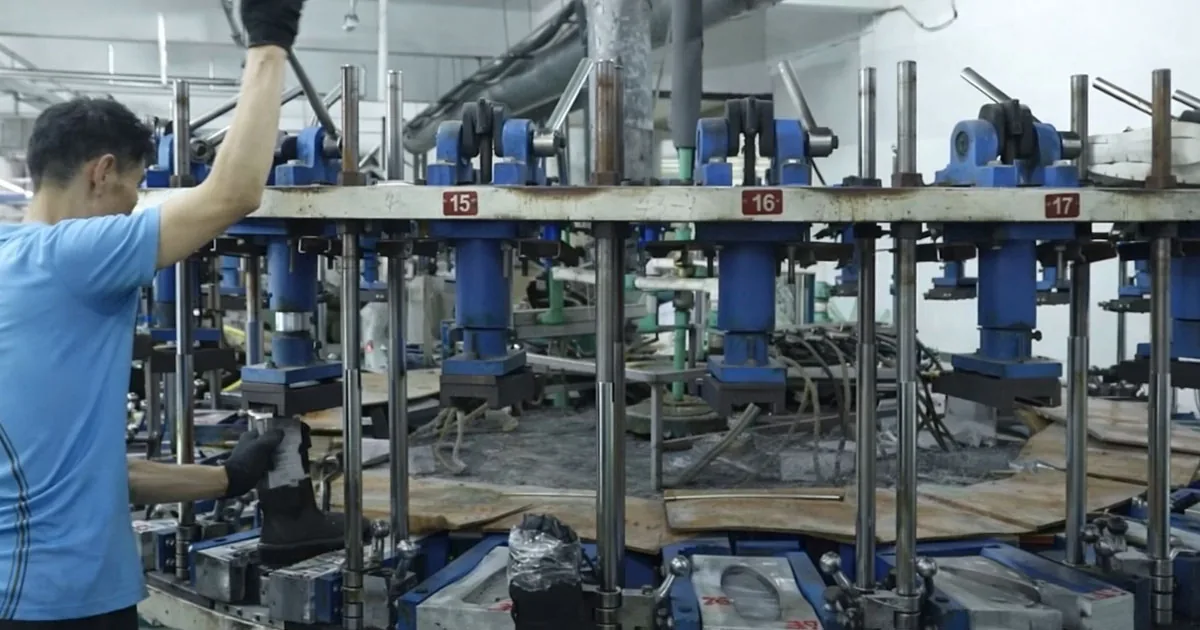
Evaluate the molded outsole sample
When outsole performance specifications are not clearly defined during the RFQ stage, the sample evaluation becomes a source of costly misunderstandings and rework. A buyer who does not confirm the exact flex test method or surface acceptance criteria risks approving a sample that fails in production or field use. This commercial gap often leads to repeated mold revisions, delayed shipments, and unexpected cost overruns.
Check flex and surface condition
Begin by verifying the sample against the flex test condition agreed in the RFQ. The test should be run at the buyer-specified number of cycles on a confirmed flexing machine. Inspect the surface for any cracks, delamination, or abnormal wear patterns. The surface condition must match the approved swatch without any visible defects. Document the result with a photo timestamped to the test run.
Inspect dimensions and bonding zones
Measure the outsole dimensions against the opening brief or the approved CAD. Use a buyer-agreed tolerance range for all critical points. Pay special attention to the bonding zones where the outsole attaches to the upper. The edge thickness and bonding area width must be within the tolerance confirmed in the quotation. Any deviation requires a written deviation request before proceeding to bulk production.
Sample evaluation is a two-way checkpoint. The factory should provide a measurement report with the sample. The buyer should confirm the acceptance criteria in writing. This handoff step reduces the risk of approving a sample that later causes production delays or quality issues.
| Checkpoint | Requirement | Verification |
|---|---|---|
| Flex test condition | RFQ-confirmed number of cycles | Test certificate with photo |
| Surface condition | No cracks or delamination | Visual inspection matched to swatch |
| Critical dimensions | Buyer-agreed tolerance | Measurement report with CAD overlay |
| Bonding zone | Width and thickness per RFQ | Deviation form if needed |
For more on barefoot shoe construction, see barefoot running shoes manufacturer.
For the molded outsole sample, confirm the sample timing and bulk production schedule affected by this checkpoint before the buyer signs the approval record.
Control compound or process changes
At the outsole performance brief checkpoint, the buyer must confirm the compound specification and agree on a change-control protocol before sample molding begins. Without a signed change-control agreement, any later compound revision can invalidate the test evidence and delay the project.
Set notification requirements
Define in the RFQ or sample handoff document that the supplier must notify the buyer in writing before any change to the compound formula, curing temperature, or mixing process. The notification must include the reason for the change and the expected effect on hardness, abrasion resistance, and flex fatigue.
Require revalidation after a change
After a notified change, the supplier must re-run the agreed flex test and abrasion test on three samples from the new batch. The buyer must receive the test certificates and a signed statement that the new compound meets the original specification before the change is approved for production.
Use the following checklist during sample handoff to verify the change-control process:
- Written notification of any compound or process change received before the change is made.
- Revalidation test results (flex and abrasion) for the changed compound.
- Signed approval from the buyer that the change is acceptable.
- Updated material data sheet reflecting the final compound revision.
For indie brands scaling from sample to bulk, a documented change-control protocol reduces the risk of outsole failure and ensures consistent performance across production runs. See barefoot shoe manufacturing for indie brands.
Hand approved evidence to bulk production
Start with the compound test certificate and the signed-off sample measurement report. These two documents make the handoff verifiable and prevent disputes during bulk production.
Define the requirement and success criteria
Before any sample is approved, confirm the outsole compound specification against the performance brief. Use this checklist:
- Material data sheet (MDS) for the exact compound revision
- Flex test certificate naming the test method and sample count
- Abrasion test result (applicable market compliance evidence or equivalent)
- Hardness range (Shore A) agreed in writing
Additional RFQ items include color swatch and surface texture reference.
Confirm execution details with the factory
Once the evidence matches the brief, verify the factory’s production plan:
Approve samples and control reorder risk
Final approval must be documented. Use this handoff table to track decisions:
| Item | Status | Evidence |
|---|---|---|
| Compound MDS | Approved | Signed revision |
| Flex test | Pass | Certificate |
| Abrasion test | Pass | Report |
| Sample measurement | Approved | Report |
After approval, lock the compound revision and test criteria into the RFQ. Any future reorder must reference the same evidence set to avoid drift. For more on outsole specification, see blog.
Source check: ISO 2859-1 sampling inspection standard; ASTM standards and footwear outsole materials. Record the acceptance rule, evidence owner, and approval step in the RFQ or quality file.
In conclusion
The final approval for a barefoot shoe outsole compound sample depends on verifying that the material data sheet, flex test certificate, and signed measurement sheet all reference the same revision. Without this traceable evidence, a supplier can approve one compound during sampling while bulk production uses a different blend, causing flex failure or adhesion issues that the buyer absorbs. Check that the flex test certificate names the test method and sample conditioning, and compare the molded outsole dimensions against the approved tech pack drawing. Shortlist only suppliers that back every claim with written, traceable proof, and carry this evidence into the RFQ and sample handoff to ensure consistent quality across production runs.
To shortlist a supplier, visit barefoot shoe OEM and ODM services and confirm the final specification, quote assumptions, sample approval, QC evidence, approval risk, and supplier follow-up before bulk order.
Frequently Asked Questions
Which outsole compound evidence should buyers request?
Request a material data sheet for the exact compound revision, a flex test certificate naming the test method and sample conditioning, and a signed measurement sheet for the same sample revision. Without these three records tied to a single revision, the supplier can approve one compound during sampling while bulk production uses a different blend, causing flex failure or adhesion issues. Verify that the flex test certificate references the same batch as the material data sheet, and carry this evidence into the RFQ to shortlist only suppliers that back every claim with written, traceable proof.
How can buyers compare outsole flexibility samples?
Compare outsole flexibility samples by requiring each supplier to submit a flex test certificate that states the bend angle, test method, and sample conditioning for the exact revision submitted. The risk is approving a sample that passes visual inspection but cracks during wear, causing returns. Ask the supplier to confirm the target durometer and flex method in writing before the RFQ, and compare the molded outsole dimensions against the approved tech pack drawing. If the certificate references a different batch or the measurement sheet lists a different mold, hold the shortlist decision until the evidence matches the same revision.
When does an outsole change require new approval?
An outsole change requires new approval whenever the compound formula, mold, or production process is altered, because a change voids the existing sample approval. Without a written change-control rule, a supplier can switch to a lower-cost compound after sample approval, and the buyer discovers the change only when the bulk shipment arrives with different flex or adhesion properties. Require the supplier to submit a new sample, a fresh flex-test certificate, and a signed measurement sheet for the revised spec before bulk production resumes, and document every proposed change in writing before implementation. Approving the wrong structure or supplier proof can create quality, cost, or delivery problems.
RFQ handoff: Share product category, target quantity, market, timeline, and reference files for a practical quote. Send Specs for Review.
Leave a Comment
Ask a sourcing question, add your view, or request follow-up from our team.