Importers lose weeks when last, upper, outsole, carton marks, and commercial terms are negotiated after the first quote instead of before sample release.
Compare factories by shoe samples, measurement records, material confirmations, and QC evidence—not catalog language alone.
Work through the sample, inspection, and quote inputs that keep the order comparable across suppliers.
Direct answer: Approve the sample only when intended use, construction or material route, measured sample, packing method, and quote assumptions sit on the same written revision—not when a catalog photo and a unit price arrive in separate chats.
Use a written sourcing sequence that covers Material and construction feasibility check; keep each checkpoint tied to the quote revision, sample evidence, approval owner, and bulk-production handoff.
Map Every Label and Carton Mark Before Artwork
When comparing options, map every label and carton mark against one RFQ revision. Each row should identify the requirement, approval evidence, and buyer action before production.
| Specification | Quality control | Verification method | Risk to avoid | Buyer action |
|---|---|---|---|---|
| Finish or surface effect | Match approved finish standard across all sizes and production runs | Compare production sample against sealed finish reference under buyer-approved viewing conditions | Gloss mismatch or texture drift causes brand inconsistency and returns | Request finish standard sample and light box test report from supplier |
| Artwork or logo file | Verify artwork file revision, color codes, and placement coordinates | Overlay approved artwork proof on production sample using registration gauge | Misaligned logo or wrong PMS color leads to carton rejection at DC | Send final vector artwork with PMS and placement spec before sample approval |
| Lead time after approval | Confirm production path: stock, ODM, or OEM before counting lead time | Verify lead time against approved production path: 45-60 days bulk production | Assuming 7-day stock lead time for custom production causes order delay penalties | Request written lead time confirmation per production path before deposit |
For this specification, use the label and carton mark map as the decision scope. Read the rows as one approval sequence. Start with finish or surface effect because gloss mismatch or texture drift causes brand inconsistency and returns. Verify it by asking the supplier to compare production sample against sealed finish reference under buyer-approved viewing conditions.
Keep the barefoot shoe label carton supplier response, marked sample, and approval owner under the same revision number. If any proof conflicts with the approved record, hold the quote, sample, or production release until the supplier explains the deviation in writing. Before closing the checkpoint, reconcile the latest drawing, sample, quotation, and approval comments, identify which record controls if they disagree, and document the resolution. Carry the signed label and carton mark table into the purchase order and production handoff so the same checks support quote comparison, sample approval, shipment release, and later reorders.
Questions to confirm before ordering:
Compare suppliers on the same barefoot shoe label and carton requirements, proof records, and hold points.
- Label artwork proof matches approved specification matrix: Misprinted label leads to carton rejection at DC and reorder delay Buyer or sourcing partner Compare label proof against spec sheet revision number and date Sign off on proof and archive one sealed copy with project code
- Carton mark dimensions and quiet zone meet retailer scan guide: Barcode unreadable at distribution center causes return or chargeback QC lead or third-party inspector Measure quiet zone, contrast, and UPC size on flat proof and sample carton Request corrected proof if any dimension fails; hold production until sign-off
- Lead time from sample approval to bulk shipment: Bulk production lead time of 45-60 days conflicts with a shorter delivery expectation Buyer and production planner Confirm production path: ODM base model or full OEM tooling Document agreed lead time in purchase order and attach to approval record
- Label and carton mark consistency across all size grades: Size-specific mark mismatch causes picking errors at warehouse Buyer or sourcing partner Verify every size grade's carton mark against the approved master Request factory to submit one sample carton per size before bulk run
Confirm Size Material and Origin Fields
At this stage, the record needed before the next stage is a verified specification sheet that confirms the size, material, and origin fields across all label and carton components.
- Size field: Verify that the size marking (e.g., EU 42) matches the tech pack and is consistent on inner label, hang tag, and carton. Require the factory to provide a signed verification that the size code aligns with the last used.
- Material field: Confirm that the material composition is listed exactly as per the product specification sheet. Use the approved material sourcing document as a cross-reference.
- Origin field: Ensure the country of origin is correctly stated on all labels and cartons. Request a physical sample label with the origin field printed for visual inspection.
- Reprinting incorrect labels can add unexpected costs. Mitigate by asking the factory for an RFQ-confirmed reprint cost per unit during the sample handoff.
Mismatched fields can delay shipment. Reduce risk by using a buyer verification question: "Has the factory confirmed the size, material, and origin fields on a physical sample?".
After completing this checklist, proceed to artwork approval. For more on the process, see our private label barefoot shoes for ecommerce sellers.
RFQ checkpoint
Share product category, target quantity, market, timeline, and reference files for a practical quote
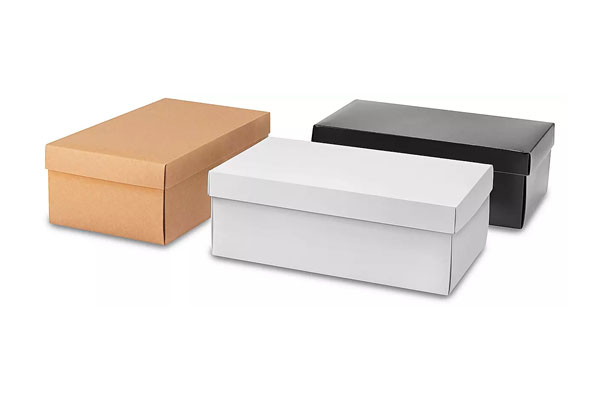
Match SKU Codes Across Shoe Box and Carton
For barefoot shoe labels and cartons, treat SKU matching across shoe box and carton as a release rule: approve only when the supplier evidence matches the written requirement.
- Verify SKU code on shoe box matches the approved specification sheet. Approved specification sheet with SKU, size, and barcode. Shoe box with printed SKU, size, and barcode. Mismatched SKU causes shipment rejection and relabeling costs. Compare box label to spec sheet and document match or deviation.
- Confirm carton label SKU matches the shoe box SKU for each pack. Packing list and carton label template. Carton label with correct SKU, quantity, and barcode. Wrong carton label delays customs clearance and incurs fines. Scan carton barcode and verify against packing list.
- Check that all SKU codes are consistent across shoe box, carton, and packing list. Packing list, shoe box sample, and carton label. Matched SKU codes on all three documents. Inconsistent codes lead to inventory errors and chargebacks. Cross-reference all three documents and sign off.
- Document the lead time required for label and carton reprint if mismatch found. Lead time schedule from supplier. Reprint lead time and cost estimate. Unplanned reprint delays production and shipment. Update production schedule and approve reprint order.
Decision criteria to confirm
Before approving artwork, confirm that the SKU code on the shoe box matches the approved specification sheet. This step prevents shipment rejection due to mismatched labels. Compare the printed barcode and size against the spec sheet and document any deviation. A signed record ensures traceability and reduces relabeling costs.
RFQ details to send
During RFQ, require the supplier to provide a carton label template and packing list for review. Verify that the carton label SKU matches the shoe box SKU for each pack. This check avoids customs delays and fines. Include a clause in the RFQ that any label mismatch must be corrected at supplier cost within the agreed lead time.
Production handoff details
Before bulk production, cross-reference the SKU codes on the shoe box, carton label, and packing list. Inconsistent codes cause inventory errors and chargebacks. Document the lead time required for reprint if a mismatch is found. Update the production schedule accordingly and obtain written approval from the buyer before proceeding.
See barefoot shoe product range for SKU matching.
Approve Artwork and Physical Placement Samples
A signed proof sheet with measured dimensions and color codes is the only evidence that confirms artwork matches the approved specification. Without it, a supplier can quote one finish while the sample proves another, causing brand inconsistency and returns.
Supplier evidence to request
Request the supplier’s signed proof sheet showing label dimensions, color codes, and finish reference. Compare each value against the RFQ-confirmed spec. If the finish or surface effect deviates, hold the quote and request a corrected proof before sample development.
Sample approval evidence
Approve the physical placement sample on the actual shoe box and carton, verifying label position, adhesion, and readability against the approved artwork. The supplier must provide a signed proof sheet with measured dimensions and color codes, plus a revision-locked record that matches the latest PO. Check that the SKU code on the shoe box, carton label, and packing list are identical; any mismatch requires a corrected sample at supplier cost before bulk production.
Reorder control records
For repeat orders, require the supplier to reference the same spec sheet version and compare the new PO against the last approved sample record. Document the lead time for reprint if a mismatch is found, and hold production until the deviation is explained in writing. Confirm MOQ and order quantity by color, width, artwork, and packing route. Ask for a sample, specification confirmation, or QC evidence before approval. For more on the process, see our blog.
Control Label Revisions for Repeat Orders
When a repeat order ships with an outdated label—wrong carton mark or obsolete barcode—the buyer absorbs the cost of rework and delayed clearance. The failure mode is assuming the previous approval file is still current. The control is a revision-lock step that compares the new PO against the last approved sample record.
Specification details to confirm
Every repeat order must reference the exact spec sheet version. Confirm the label material, adhesive type, print method (thermal transfer vs. flexo), and carton mark layout. A table can capture the critical fields:
| Field | Previous Order | Current Order |
|---|---|---|
| Label size | 4×6 in | 4×6 in |
| Carton mark content | PO12345 | PO67890 |
| Barcode type | Code 128 | Code 128 |
If any field differs, the factory must issue a new sample for approval before production.
Sample approval record
Maintain a log of each approved sample with a unique revision number. The buyer signs off on the physical sample and the digital file. For barefoot shoe OEM, the sample must include the shoe box label, outer carton mark, and pallet label. Without a signed record, the production team has no baseline.
Production handoff notes
The handoff from sample approval to bulk production must include a revision checklist. The production manager confirms the label file version matches the approved sample. Any deviation triggers a stop-work order. This prevents the factory from using an old file from a previous order.
For this specification, use barefoot shoe OEM and ODM services to align the product baseline, sample evidence, packing record, and quote owner before order release.
Conclusion: Release the Order Only After the Evidence Matches the Approved Sample
The final approval for a barefoot shoe label carton traceability order is not the sample itself—it is the evidence that the sample matches the approved specification. Before releasing production, compare the signed proof sheet, the physical placement sample, and the revision-locked record against the original artwork and specification sheet. Verify that the SKU codes on the shoe box, carton label, and packing list are identical, and confirm that the label material, adhesive type, and print method align with the approved sample. Document any deviation in writing and require the supplier to explain the cause before proceeding. This checklist ensures that cost drivers like reprint lead time and MOQ are managed upfront, and that supplier capability is validated through traceable evidence rather than assumption.
To validate the spec, visit custom barefoot shoe development and confirm the final specification, quote assumptions, sample approval, QC evidence, approval risk, and supplier follow-up before bulk order.
Barefoot Shoe Label and Carton Traceability Approval FAQ
What inputs should buyers send with the RFQ?
Send the approved artwork file, the specification sheet with all label and carton mark fields (SKU, barcode, size, origin, care symbols), and the signed proof sheet from the previous order if this is a repeat. Include the exact finish or surface effect reference so the supplier can match gloss and texture. Confirm the MOQ for custom label printing and the lead time for proof revision before quoting. Ask how QC will check the sample, color, finish, packing, and bulk order.
Which physical sample and supplier records should be approved?
Approve the physical placement sample, the signed proof sheet, and the revision-locked record, and compare the physical shoe sample with the approved fit target, construction notes, material specification, and intended use.
What should be frozen for bulk production and reorders?
Freeze the exact artwork file version, the approved physical sample with its unique revision number, and the specification sheet that includes label material, adhesive type, print method, and carton mark layout. For reorders, require the supplier to reference the same spec sheet version and compare the new PO against the last approved sample record. Document the lead time for reprint if a mismatch is found, and hold production until the deviation is explained in writing. Confirm MOQ and order quantity by color, width, artwork, and packing route. Ask for a sample, specification confirmation, or QC evidence before approval.
Source check: Threading Your Way Through the Labeling Requirements Under the…. For the Barefoot Shoe Label and Carton Traceability Approval decision, use these standards as the reference frame, then record the project-specific method, acceptance rule, evidence owner, and approval step in the RFQ or quality file.
Leave a Comment
Ask a sourcing question, add your view, or request follow-up from our team.