Overseas footwear programs break when fit, size grading, materials, construction, and packing rules live in separate chats instead of one sample record.
On the factory side, useful replies connect intended use, last and fit target, materials, sample evidence, and size-run approval in one record.
The sections below turn those factory decisions into sample checks, supplier questions, and RFQ fields you can put on one revision.
Direct answer: Approve barefoot shoe toe spring ground contact sample checks only when intended use, construction or material route, measured sample, packing method, and quote assumptions sit on the same written revision—not when a catalog photo and a unit price arrive in separate chats.
Use a written sourcing sequence that covers material and construction feasibility checks; keep each checkpoint tied to the quote revision, sample evidence, approval owner, and bulk-production handoff.
Define the Intended Ground-Contact Profile
Compare the rows below against one RFQ revision. Each row should identify the requirement, approval evidence, and buyer action before production.
| Specification | Quality control | Verification method | Risk to avoid | Buyer action |
|---|---|---|---|---|
| Sample approval | Signed measurement record confirming toe spring angle and forefoot contact area | Compare physical sample values against RFQ-confirmed spec using calibrated tools | Approving a sample without signed record can cause fit disputes and bulk rework | Request signed measurement record from supplier before sample sign-off |
| MOQ and order quantity | Order quantity confirmed per color, width, artwork, and packing route | Verify MOQ against supplier's written quote and production capacity | Under-ordering can trigger short-run surcharges; over-ordering inflates inventory cost | Confirm MOQ and order quantity in writing before sample development |
| Material / substrate | Upper material TDS stretch and tear strength values verified against last geometry | Request material data sheet and compare with last dimensions during sample trial | Incompatible material can cause overstretching, puckering, or fit drift across sizes | Request material TDS and compatibility check from supplier before RFQ |
| Width or size tolerance | Size-run measurement record showing consistent toe spring and ground contact across grades | Measure ball girth and toe spring on every graded sample using calibrated ruler | Inconsistent grading can cause fit returns and quality disputes across the size run | Obtain signed size-run measurement report from supplier before bulk approval |
| Finish or color control | Approved color standard and finish sample sealed against production batch | Compare production sample against sealed color standard under buyer-approved viewing conditions | Uncontrolled color variation can cause brand inconsistency and customer returns | Collect sealed color standard and finish sample before bulk production release |
Read the rows as one approval sequence. Start with sample approval, because approving a sample without a signed record can cause fit disputes and bulk rework. Verify it by comparing the physical sample values against the RFQ-confirmed spec using calibrated tools.
Keep the barefoot shoe toe spring ground contact sample checks supplier response, marked sample, and approval owner under the same revision number. If any proof conflicts with the approved record, hold the quote, sample, or production release until the supplier explains the deviation in writing. Before closing the checkpoint, reconcile the latest drawing, sample, quotation, and approval comments, identify which record controls if they disagree, and document the resolution. Carry the signed profile table into the purchase order and production handoff so the same checks support quote comparison, sample approval, shipment release, and later reorders.
Measure Toe Spring on the Approved Sample
The physical sample is the only evidence that confirms toe spring and ground contact. Without a marked sample and a signed measurement record, a supplier can quote one toe spring angle while the sample proves another, causing fit issues and bulk disputes.
| Check Point | Risk If Ignored | Verification Method | Buyer Action |
|---|---|---|---|
| Toe spring angle on approved sample | Bulk shoes deviate from approved fit, causing returns | Measure angle on physical sample using a protractor; compare to signed spec | The buyer should request supplier’s signed measurement report; hold sample approval until match |
| Forefoot ground contact area | Reduced proprioception, altered gait, buyer complaints | Place sample on flat surface; check that forefoot sits flat without rocker | Document with photo; attach to approval record before bulk release |
| Flex point relative to toe spring | Upper material stress or delamination at wrong flex zone | Hand-flex sample; mark flex crease; compare to last’s flex point | Obtain supplier’s flex test report; approve only if flex point matches spec |
After measuring, compare the supplier’s signed measurement report against the RFQ-confirmed spec. If the toe spring angle or ground contact area deviates, hold the sample and request written explanation before approving bulk production. For more on supplier capability, see barefoot running shoes manufacturer.
RFQ checkpoint
Share product category, target quantity, market, timeline, and reference files for a practical quote
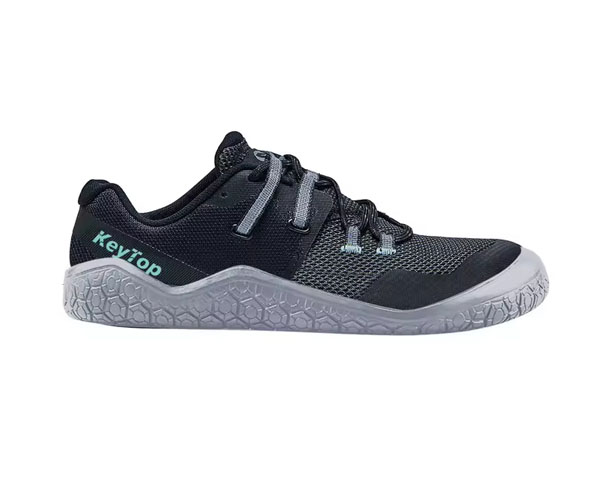
Compare Last Outsole and Flex Location
| Option | Best fit | Trade-off | Risk to avoid | Verification | Follow-up |
|---|---|---|---|---|---|
| Current specification | Approved toe spring angle and forefoot contact area from prior production run | May not match new upper material stretch or last geometry revision | Silent fit drift across reorders if measurement record is not re-verified | Compare signed measurement record from last approved sample against current RFQ spec | Collect updated measurement report from supplier before bulk production |
| Alternative specification | Revised toe spring angle or flex point location based on updated last geometry | Requires new sample development and approval cycle, extending lead time | Without signed measurement record, supplier may quote one profile while sample proves another | Measure toe spring angle and forefoot contact area on physical sample; compare to RFQ-confirmed spec | Hold sample approval until supplier provides written explanation for any deviation |
| Custom option | Best when custom option changes application fit, operating conditions, verification evidence, or buyer approval. | Better consistency may require extra sample checks, slower approval, or tighter supplier control. | Risk includes quote mismatch, unexpected cost, sample rejection, quality dispute, packing error, reorder drift. | Check sample photos, QC notes, written limits, or factory proof for custom option. | Ask for RFQ confirmation, attach proof, and approve only after sample review. |
| Safer fallback | Stock last geometry with 8mm stack and zero drop, using previously approved outsole compound | Limited toe spring adjustment range; may not meet updated fit promise | Upper material substitution without updating specification matrix can alter flex point location | Compare upper material TDS stretch and tear strength against last dimensions; seal new reference sample | Update signed last-and-upper specification matrix before approving bulk production |
For the current specification, a poor decision can mean silent fit drift across reorders if measurement record is not re-verified. Ask the supplier to compare signed measurement record from last approved sample against current rfq spec, then request updated measurement report from supplier before bulk production.
For the current specification checkpoint in barefoot shoe toe spring ground contact sample checks, keep the supplier response, marked sample, approved specification, quotation, and approval owner under the same revision number. If the evidence conflicts with the approved record, hold the quote, sample, or production release until the deviation is explained in writing. Carry the signed decision record into the purchase order, production handoff, shipment release, and later reorder review so every team works from the same baseline.
Before comparing suppliers, review casual barefoot shoes for the related product or solution route.
Check the Profile Across Key Sizes
When you receive the toe spring sample, the first verifiable step is to compare the ground-contact profile across the size run. A signed measurement record from the factory, confirming the approved toe spring angle and forefoot contact area, provides the proof needed for approval. Without this document, the sample is not yet ready for sign-off.
Use this practical checklist during your review:
- Confirm the factory has provided a signed measurement record linking the toe spring angle to the approved RFQ requirement.
- Verify that the forefoot contact area matches the intended ground-contact profile for each size.
- Check that the flex line aligns with the metatarsal break point, not the toe spring apex.
- Ensure the measurement record includes a buyer verification question, such as: ‘Does the toe spring angle fall within the range specified in the RFQ?’
After the checklist, evaluate the sample against production risk. A mismatch in the toe spring profile across sizes can lead to inconsistent ground contact, increasing the risk of returns. The factory must demonstrate that the same last and outsole construction method is used for all sizes to maintain uniformity.
During the RFQ and sample handoff, require the factory to submit a signed measurement record for each size before bulk production begins. This step ensures that the toe spring and ground contact are consistent, reducing the need for costly rework.
The RFQ should also cover signed measurement record: Provided for each size; Toe spring angle: Matches RFQ-confirmed requirement; Forefoot contact area: Consistent across sizes.
Finally, confirm that the factory’s execution matches the approved sample. If the signed record shows any deviation, request a revised sample before proceeding. This approach keeps the approval process objective and tied to verifiable evidence.
For the wider buying path, see barefoot shoe OEM and ODM services.
Record the Accepted Profile for Production
Choose to shortlist a supplier only when they provide a signed measurement record linking the approved toe spring angle, forefoot contact area, and flex point to the sealed sample. Without this record, a supplier can quote one profile while the sample proves another, causing fit disputes and bulk rework.
Supplier evidence to request
The buyer should request the supplier’s signed measurement report showing toe spring angle, ground contact area, and flex point for the approved sample. Compare each value against the RFQ-confirmed spec. If any value deviates, hold the quote and request written explanation before sample approval.
Sample approval evidence
During sample review, measure the toe spring angle and forefoot contact area on the physical sample using a calibrated protractor and ruler. Document the values on a sample tag and compare them to the signed spec. Approve only when the measured values match the RFQ-confirmed range.
Reorder control records
For repeat orders, request a new measurement report from the supplier and compare it against the frozen approval record. If the toe spring angle, contact area, or flex point has changed, treat the reorder as a new sample approval cycle before bulk production begins. This prevents cost-cutting substitutions from altering the intended ground-contact profile.
For the wider buying path, see barefoot shoe manufacturing for indie brands.
Conclusion: Release the Order Only After the Evidence Matches the Approved Sample
The final approval for barefoot shoe toe spring ground contact sample checks comes down to one verifiable record: a signed measurement report that matches the approved sample. Without this document, a supplier can quote one toe spring angle while the sample proves another, leading to fit disputes and bulk rework that inflate cost and delay lead time. Before releasing the order, compare the measured values on the physical sample against the RFQ-confirmed spec, and request written explanation for any deviation. This checkpoint protects your MOQ investment and ensures every size run maintains consistent ground contact, reducing the risk of returns. Carry the signed decision record into the purchase order and production handoff so the same evidence supports sample approval, shipment release, and future reorders.
To request a quote, visit barefoot shoe product range and confirm the final specification, quote assumptions, sample approval, QC evidence, approval risk, and supplier follow-up before bulk order.
Barefoot Shoe Toe Spring and Ground Contact Sample Checks FAQ
What inputs should buyers send with the RFQ?
Send the RFQ with the intended ground-contact profile, including the target toe spring angle, forefoot contact area, and flex point, all tied to one revision number. Include a signed specification sheet and request the supplier to confirm feasibility before sample development, as this prevents fit disputes and bulk rework later.
Which physical sample and supplier records should be approved?
Approve the physical sample only when it is accompanied by a signed measurement record from the factory that confirms the toe spring angle, forefoot contact area, and flex point match the RFQ-confirmed spec. Without this document, a supplier can quote one profile while the sample proves another, causing fit issues and bulk disputes.
What should be frozen for bulk production and reorders?
Freeze the signed measurement record, the sealed sample, and the approved specification under the same revision number for bulk production and reorders. Before releasing the order, verify that the measured values on the physical sample match the RFQ-confirmed spec, and request written explanation for any deviation to protect your MOQ investment. Ask the supplier to confirm factory capability and who owns follow-up.
For sample and production handoff, see Keytop Barefoot Shoes barefoot shoe factory.
Primary references
These sources define the test methods and regulatory context referred to in this article.
- ISO 9001:2015 — Quality management systems — QMS requirements for controlled processes, records and continual improvement.
- ISO 2859-1:2026 — AQL sampling by attributes — Lot-by-lot sampling schemes and acceptance or rejection thresholds.
Leave a Comment
Ask a sourcing question, add your view, or request follow-up from our team.