Overseas footwear programs break when fit, size grading, materials, construction, and packing rules live in separate chats instead of one sample record.
On the factory side, useful replies connect intended use, last and fit target, materials, sample evidence, and size-run approval in one record.
The sections below turn those factory decisions into sample checks, supplier questions, and RFQ fields you can put on one revision.
Direct answer: Approve the sample only when intended use, construction or material route, measured sample, packing method, and quote assumptions sit on the same written revision—not when a catalog photo and a unit price arrive in separate chats.
Use a written sourcing sequence that covers Material and construction feasibility check; keep each checkpoint tied to the quote revision, sample evidence, approval owner, and bulk-production handoff.
Define the Closure Use Case and Wear Load
Start the closure use case and wear-load definition with evidence:
- Request a written cycle-test protocol from the supplier: Without a written protocol, the buyer cannot verify that the test method, cycle count, and failure criteria match the RFQ requirement. Verbal assurances are not verifiable evidence. Ask the supplier: "Please provide your written cycle-test protocol, including the test environment, number of cycles, and failure criteria." Treat any example number (e.g., 20 flexes) as illustrative only. Accepting a verbal claim of durability without a written protocol can lead to approving a closure that fails during the buyer's target use period. If the supplier cannot provide a written protocol, escalate to a buyer verification question: "Can you demonstrate the closure survives the agreed number of cycles without visible wear or detachment?"
- Compare the cycle-test report against the RFQ-specified threshold: The RFQ-specified cycle count is the release condition, not an example number. A test report that shows a different cycle count or failure criteria may indicate a mismatch. Check that the cycle-test report documents the number of open-close cycles the closure survived before failure, the test method, and the failure criteria. Compare these against the RFQ requirement. Approving a closure based on a test report that does not match the RFQ threshold can result in a product that fails prematurely in the field. If the test method or pass/fail threshold differs from the RFQ, document the deviation and request a corrected test or reworked sample.
- Verify supplier capability to perform cycle testing: Supplier claims of in-house lab capability or ISO 9001 certification are not proof of test validity. The buyer must verify that the test was conducted according to a recognized method. Ask the supplier: "Do you have an in-house test lab or third-party certification for cycle testing?" Treat any claim as a prompt to request a copy of the certificate or a third-party report—do not accept the claim as fact. Relying on unverified supplier capability claims can lead to accepting test results that are not repeatable or accurate, increasing the risk of field failures. If the supplier claims in-house capability, request a video of the test setup and a copy of the test protocol. If they claim third-party certification, request a copy of the certificate.
- Document the closure assembly record and freeze the bill of materials: This affects quote accuracy, sample approval, quality control, reorder consistency for barefoot shoe closure durability. Check sample photos, QC notes, written limits, or factory proof for the closure assembly record and frozen bill of materials. Risk includes quote mismatch, sample rejection, quality dispute, packing error, reorder drift. Ask for RFQ confirmation, attach proof, and approve only after sample review.
Freeze Closure Components and Attachment Specs
Treat the frozen closure component and attachment specs as a release rule: approve only when the supplier evidence matches the written requirement.
- Closure cycle-test report must include test method, cycle count, and failure criteria. Written cycle-test protocol with defined pass/fail threshold and setup video. Supplier's quality lab or third-party test facility. Without written method, verbal durability claims are unverifiable and may cause defects.
- In-process QC records must confirm closure components match the approved sample. Inspection report for eyelet alignment, elastic tension, and hook-and-loop adhesion. Supplier's QC department during production run. Deviation in component specs can reduce closure lifespan and lead to returns.
- Supplier claims in-house lab or ISO 9001 certification for cycle testing. Copy of ISO 9001 certificate or third-party lab accreditation report. Supplier's quality manager or compliance team. Unverified capability claims may hide inadequate test equipment or inconsistent methods.
- Approving closure without cycle-test evidence risks hidden wear patterns. Cycle-test report from supplier lab or third-party, with signed approval record. Supplier's test lab and buyer's quality team. Hidden wear patterns cause field failures, returns, and quality disputes.
Closure components (eyelets, elastic, hook-and-loop) must match RFQ specification. Bill of materials for closure assembly, with component dimensions and material specs. Supplier's sourcing or engineering team. Substituted materials can alter closure durability, fit, and cost.
Use barefoot running shoes manufacturer to align the related specifications and RFQ inputs.
RFQ checkpoint
Share your product category, target quantity, market, timeline, and reference files for a practical quote.
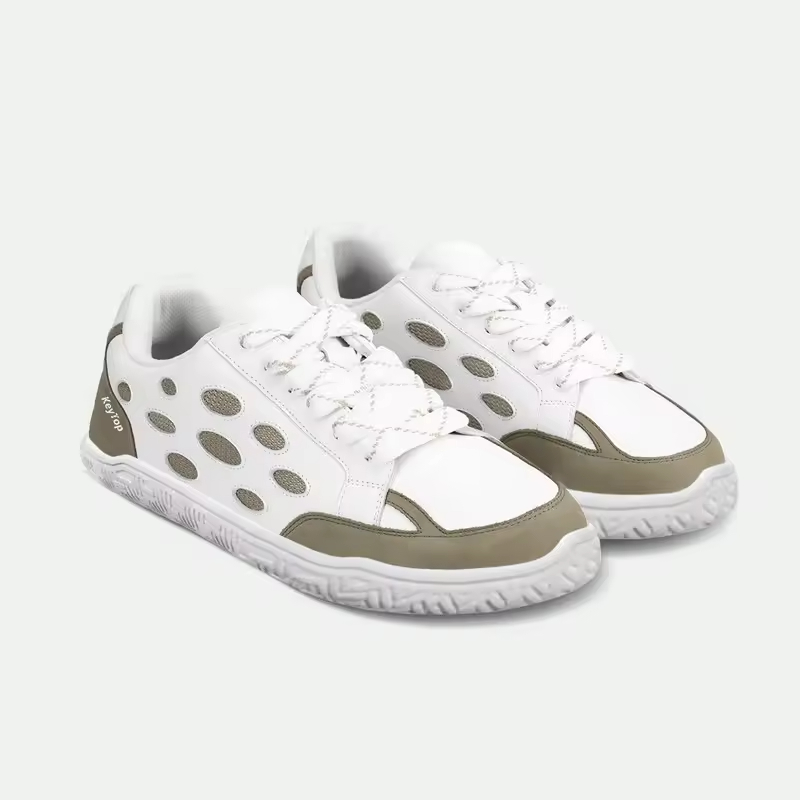
Run Eyelet Elastic and Hook-and-Loop Sample Checks
Start the eyelet, elastic and hook-and-loop sample checks with evidence:
- Can you provide the cycle-test report for the eyelet elastic and hook-and-loop closure, including the test method and cycle count? Verifies the supplier has a documented, repeatable test for closure durability, not just a verbal claim. Supplier submits a report specifying the test method appropriate to the closure material and failure mode and the number of flex cycles completed without failure, with a video of the test setup. Approving a closure sample without a cycle-test report can lead to delamination or tear during normal wear, causing returns and brand damage. Request the test report and video; if not provided, treat the sample as unapproved and require corrected evidence before bulk production.
- Can the supplier provide a suitable closure-test protocol and report, and identify the test provider? Provides evidence to review the test method, specimen conditions and provider scope. ISO 9001 management certification and a BSCI social audit do not establish closure durability or laboratory competence. Supplier provides a certificate or lab scope document showing cycle-testing capability, or a third-party lab report for the closure. Without verified test capability, the supplier may use inconsistent methods, leading to production batches that fail earlier than the approved sample. Ask for the certificate or lab report; if unavailable, request a third-party test at buyer's cost and include the requirement in the RFQ.
- Can you demonstrate repeatability by running a second cycle test on a random production sample from the same batch? Ensures the closure durability is consistent across the production run, not just a single hand-picked sample. Supplier provides a second test report with matching cycle count and no failure, confirming the process is repeatable. A single sample test may pass, but production variability can cause silent failures, leading to costly rework or returns. Require the second test before approving bulk production; document the result in the approval record.
Use casual barefoot shoes to align the sample and production handoff.
Compare Supplier Cycle-Test Evidence
When a buyer receives a closure sample without a cycle-test report, the ambiguity is whether the closure will survive the intended wear cycle. The control is a supplier-provided cycle-test report that matches the RFQ-specified threshold. Use this checklist to compare evidence:
- Does the supplier provide a cycle-test report for the exact closure type (e.g., hook-and-loop, lace, or buckle)?
- Does the report specify the number of cycles completed without failure, matching your RFQ requirement?
- Is the test method documented (e.g., ASTM or ISO standard) and reproducible?
- Does the report include failure mode descriptions (e.g., fraying, detachment, or deformation)?
Resolve these questions before approval: is the test performed on the same material and attachment method as your sample?
If the supplier cannot provide this evidence, request a new sample with a test report before bulk production. For more on sample verification, see our barefoot shoe OEM and ODM services.
Lock the Approved Closure for Bulk and Reorders
At this stage, the output must be a signed-off closure assembly record that matches the buyer’s RFQ-confirmed requirement. Without this, the next production stage cannot proceed.
Supplier evidence to request
Before bulk production, require the supplier to submit a closure durability test report that includes cycle counts and failure criteria. Ask: “What is the minimum cycle count your test protocol requires for this closure type?” The answer must match the RFQ. If the supplier cannot provide a written test method, escalate to a buyer verification question such as: “Can you demonstrate the closure survives the agreed number of cycles without visible wear or detachment?”
Sample approval evidence
Compare the approved sample’s closure components—eyelets, elastic, hook-and-loop, or laces—against the supplier’s test evidence. Use a simple table to record the match:
| Closure Component | Approved Sample Spec | Supplier Test Evidence | Match? |
|---|---|---|---|
| Eyelet reinforcement | RFQ-confirmed material and stitch type | Test report showing cycle count and failure mode | Yes/No |
| Elastic stretch recovery | RFQ-confirmed elongation and recovery rate | Test report with measured values | Yes/No |
| Hook-and-loop peel strength | RFQ-confirmed minimum force | Test report with peel force data | Yes/No |
If any row shows “No,” the closure is not locked. The buyer must request a corrected sample or revised test evidence before bulk release.
Reorder control records
For reorders, the factory must confirm that the same closure components and attachment methods are used. Ask: “Has the closure specification changed since the last approved bulk run?” If yes, treat the reorder as a new sample approval. This prevents production risk from substituted materials or altered stitching that could reduce durability. The factory execution step is to freeze the closure bill of materials and attach it to the purchase order.
See barefoot shoe manufacturing for indie brands for the approved closure record.
Conclusion: Release the Order Only After the Evidence Matches the Approved Sample
The final approval hinges on comparing the supplier’s sample evidence against the written specification, not on verbal assurances. Before releasing the order, check that the closure components (eyelets, elastic, hook-and-loop) match the approved sample, and that the cycle-test report—whether from the supplier’s lab or a third party—documents the number of open-close cycles the closure survived before failure. If the supplier’s test method or pass/fail threshold differs from the RFQ, document the deviation and ask for a corrected test or reworked sample. Also confirm that the MOQ, unit cost, and packing assumptions from the RFQ are still valid, and that the sample approval record is signed and attached to the purchase order.
Lead time and supplier risk are managed by requiring a written protocol that defines the test environment, failure criteria, and cycle count threshold (use the RFQ requirement, not an arbitrary number like 20 or 50 flexes). As a buyer verification step, ask: “Can you provide a video of the test setup and a copy of the cycle-test protocol?” If the supplier claims in-house lab capability or ISO 9001 certification, treat that as a prompt to request a copy of the certificate or a third-party report—do not accept the claim as fact. Treat any example thresholds in the supplier’s response as illustrative only; the actual release condition is the RFQ-specified cycle count. Carry the signed approval record into the production handoff so that the factory, QC, and shipping teams all reference the same evidence.
barefoot shoe closure durability FAQ
When can a buyer rely on the factory’s closure QC records?
Only if the factory’s internal QC records include a cycle-test report that matches the RFQ-specified threshold. Ask the supplier: “What is the minimum cycle count your test protocol requires for this closure type?” and request a video of the test setup. Treat any example number, such as a specific flex count, as illustrative only; the actual release condition is the RFQ-specified cycle count. If the supplier cannot provide a written test method, escalate to a buyer verification question: “Can you demonstrate the closure survives the agreed number of cycles without visible wear or detachment?” Confirm MOQ and order quantity by color, width, artwork, and packing route. Approving the wrong structure or supplier proof can create quality, cost, or delivery problems.
When is a closure sample ready for approval?
Only if the buyer approved the sample based on a written cycle-test report, not verbal assurance. Compare the supplier’s test evidence against the approved specification: check that the closure components (eyelets, elastic, hook-and-loop) match the approved sample, and that the cycle-test report documents the number of open-close cycles the closure survived before failure. If the supplier’s test method or pass/fail threshold differs from the RFQ, document the deviation and ask for a corrected test or reworked sample. Confirm that the MOQ, unit cost, and packing assumptions from the RFQ are still valid, and that the sample approval record is signed and attached to the purchase order.
Can a supplier's closure durability claim be trusted?
Only if the supplier provides a written cycle-test report that specifies the number of open-close cycles the closure survived before failure, the test method, and the failure criteria. For example, a test might require a certain number of flexes, but treat that number as illustrative; the actual requirement is the RFQ-specified cycle count. Ask the supplier: “What is the minimum cycle count you guarantee for this closure design under normal use?” and “Can you provide a video of the test in progress?” If the supplier cannot provide a clear report, treat the closure durability as unverified and request a re-test or an alternative closure design before proceeding to bulk production. Ask how QC will check the sample, color, finish, packing, and bulk order.
Use Keytop Barefoot Shoes barefoot shoe factory to align the sample and production handoff.
RFQ handoff: Share your product category, target quantity, market, timeline, and reference files for a practical quote. Send Specs for Review.
Primary references
These sources define the test methods and regulatory context referred to in this article.
- ISO 9001:2015 — Quality management systems — QMS requirements for controlled processes, records and continual improvement.
- ISO 2859-1:2026 — AQL sampling by attributes — Lot-by-lot sampling schemes and acceptance or rejection thresholds.
Leave a Comment
Ask a sourcing question, add your view, or request follow-up from our team.