
The sourcing record for crowdfunding: custom program planning is incomplete until it supports this Plan custom artwork, dielines, samples, finishes, and production handoff.
A crowdfunding program plans an unknown quantity against a fixed date. Tooling decisions should be made against the low end of that range.
Buyer summary: For crowdfunding: custom program planning, buyers should plan custom artwork, dielines, samples, finishes, and production handoff.
Define the Buyer Requirement
Compare Define the Buyer Requirement for crowdfunding custom program against one RFQ revision. Each row should identify the requirement, approval evidence, and buyer action before production.
| Requirement | Factory control | Evidence to verify | Order risk | RFQ follow-up |
|---|---|---|---|---|
| Finish or surface effect | Factory holds approved physical finish standard and gloss/ texture limit | Compare production run to sealed finish sample under buyer-approved viewing conditions | Off-spec finish triggers rework cost and delays campaign delivery window | Request finish chip set with signed approval before production deposit |
| Artwork or logo file | Factory converts vector file to print-ready plate and confirms color match | Check first-article print against PMS reference and artwork approval form | Misaligned logo or wrong color leads to a supplier-confirmed variance scrap on branded units | Submit high-res vector artwork and request digital proof for sign-off |
| Sample approval | Factory holds signed sample report and measurement record as production benchmark | Measure production units against approved sample dimensions and weight | No signed sample allows factory to ship non-conforming goods without recourse | Issue written sample approval letter and attach measurement report to PO |
For crowdfunding custom program, use Define the Buyer Requirement as the decision scope. Read the rows as one approval sequence. Start with finish or surface effect; use the risk and buyer-action columns to decide whether its evidence is sufficient. Verify it with the inspection method and approval evidence recorded in the table.
For this crowdfunding custom program sourcing record, keep the supplier response, marked sample, and approval owner under the same revision number. If any proof conflicts with the approved record, hold the quote, sample, or production release until the supplier explains the deviation in writing. Before closing the checkpoint, reconcile the latest drawing, sample, quotation, and approval comments, identify which record controls if they disagree, and document the resolution. Carry the signed Define the Buyer Requirement table into the purchase order and production handoff so the same checks support quote comparison, sample approval, shipment release, and later reorders.
Compare the Available Routes
| Option | Best fit | Trade-off | Risk to avoid | Verification | Follow-up |
|---|---|---|---|---|---|
| Current specification | Matches your existing barefoot shoe design and material specs exactly. | Higher per-unit cost due to low MOQ; limited to 50–100 pairs per stock style. | Inventory may not cover crowdfunding demand spikes; reorder lead time adds 30–45 days. | Confirm stock availability and size mix with supplier before campaign launch. | Request current stock list and reserve pairs for your pledge fulfillment window. |
| Alternative specification | Uses a different outsole or upper material to reduce cost or improve durability. | Requires new sample approval; adds 7–14 days for ODM base-model customization. | Material change may alter fit or barefoot feel; crowdfunding backers expect zero-drop consistency. | Compare stack height and drop against your original spec; request wear-test feedback. | Submit alternative material request and approve sample before bulk order. |
| Custom option | Full OEM/ODM program with your branding, packaging, and chosen materials. | MOQ of 500 pairs per color per style; higher upfront investment for tooling and samples. | Delayed timeline if new tooling is needed; sample and production lead times may exceed campaign schedule. | Verify tooling requirements and sample timeline; confirm custom barefoot shoe development fits your launch date. | Share your spec sheet and target delivery date for a feasibility review and quote. |
| Safer fallback | Uses a proven base model with minor color or logo changes to reduce risk. | Limited design flexibility; may not differentiate your brand from other resellers. | Backers may perceive lower value if the shoe looks generic; verify sole and upper match your quality expectations. | Request a pre-production sample of the base model with your logo applied. | Select a base model from the catalog and request a customization quote with lead time. |
Evaluate Compare the Available Routes as one decision scope. Use this decision matrix as an approval sequence, not as a supplier claim. For current specification, a poor decision can mean inventory may not cover crowdfunding demand spikes; reorder lead time adds 30–45 days. Ask the supplier to confirm stock availability and size mix with supplier before campaign launch, then request current stock list and reserve pairs for your pledge fulfillment window.
For crowdfunding custom program, preserve the current specification decision under one revision number: keep the supplier response, marked sample, approved specification, quotation, and approval owner together. If the evidence conflicts with the approved record, hold the quote, sample, or production release until the deviation is explained in writing. Carry that signed Compare the Available Routes record into the purchase order, production handoff, shipment release, and later reorder review so every team works from the same baseline.
RFQ checkpoint
Ask B2B buyers to share product category, target quantity, market, timeline, and reference files for a practical quote.
Review the Required Proof
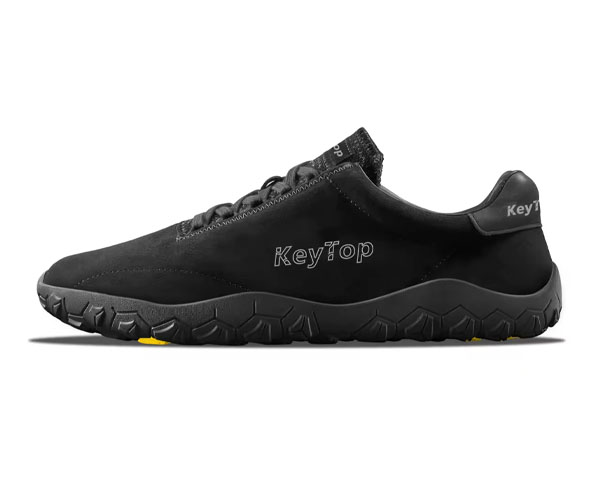
Begin with the physical sample and its measurement report. Compare the recorded dimensions to your original design file—this is the verifiable proof that the factory can execute your spec. For example, Keytop Barefoot Shoes, a Jinjiang-based B2B barefoot shoe OEM/ODM manufacturer, provides detailed measurement sheets with every sample. Visit our fitness studios for more on reliable partnerships. Use the checklist below to ensure every critical decision point is covered.
| Checkpoint | What to Verify |
|---|---|
| Specs | Dimensions, materials, weight match design file |
| Cost or MOQ | Unit price per the agreed quantity; MOQ requirements |
| Production Risk | Potential issues in manufacturing, e.g., color variance, assembly flaws |
| Factory Execution | Factory’s track record with similar products; Annie works with B2B buyers on OEM/ODM/sample/bulk |
| RFQ/Sample Handoff | Formal RFQ document and sample approval process |
After reviewing each checkpoint, proceed to sample handoff with a signed RFQ to lock in the terms.
Build the Decision Asset
At this process checkpoint, the output that must exist before the next stage is a verified supplier proof, approved sample, and reorder control plan. Without these, production risk escalates and cost control fails.
Supplier evidence to request
Compare the supplier’s manufacturing capability against your design file. Keytop Barefoot Shoes, a Jinjiang-based B2B barefoot shoe OEM/ODM manufacturer, provides a proof-of-concept sample that validates material sourcing, construction method, and MOQ feasibility. Ensure the proof matches your spec sheet exactly; any deviation signals production risk.
Sample approval evidence
Evaluate the physical sample against your original design file dimensions. Annie, who works with B2B barefoot shoe buyers on OEM, ODM, private-label, sample, and bulk production, recommends using a measurement report to confirm tolerances. Approve only when all specs align; otherwise, request revision before quote request handoff.
Reorder control records
Establish a reorder trigger based on lead time and sales velocity. Use a simple table to track decision points:
| Check | Action |
|---|---|
| Supplier proof | Verify against design file |
| Sample approval | Measure and approve |
| Reorder control | Set trigger threshold |
This decision asset reduces production risk and ensures factory execution aligns with your crowdfunding timeline. For more on barefoot shoe manufacturing, see our barefoot shoe product range page.
Prepare Comparable RFQ Inputs
- Does the supplier have documented experience producing zero-drop, wide-toe-box footwear at scale? Verifies the factory can handle the specific last geometry and sole construction required for barefoot shoe manufacturing for indie brands brands. Supplier provides a capability statement listing at least three barefoot or minimalist shoe programs with production volumes above 500 pairs. A general shoe factory may lack the tooling or stitching expertise for zero-drop assembly, leading to sample rejection and delayed crowdfunding delivery. Request a capability statement and photos of similar past production runs; shortlist only suppliers with confirmed barefoot experience.
- What verification method does the supplier use to confirm first-article dimensions match the design file? Ensures the physical sample matches your CAD or tech pack before bulk production begins. Supplier uses a calibrated 3D scanner or CMM to measure stack height, toe-box width, and overall length against the approved design file. Without a documented measurement method, dimensional drift can cause fit failures across sizes, increasing returns and backer dissatisfaction. Ask for a sample measurement report with tolerance bands; approve only after comparing against your design file.
- What is the approval risk if the supplier starts bulk production before receiving written sample sign-off? Prevents unauthorized production runs that lock in uncorrected defects and consume your MOQ. Supplier policy requires a signed sample approval form and a deposit confirmation before any bulk material cutting. Starting bulk without sign-off can result in 500 pairs of non-compliant shoes, wasting your crowdfunding budget and timeline. Include a written sample-approval gate in the quote request; confirm the supplier will not cut materials until you issue a signed approval.
- What buyer follow-up is needed after the first bulk shipment to confirm ongoing quality consistency? Establishes a reorder trigger and QC checkpoint to catch process drift before the next production batch. Supplier provides a production lot report with inline inspection results and a recommended reorder point based on lead time and sales velocity. Without follow-up, a single good batch may mask process changes that degrade fit or material quality in subsequent orders. Schedule a post-shipment review call to review the lot report and set a reorder trigger; document the agreed QC check frequency.
- How does the supplier handle quality control for mixed-size orders within the same style? Ensures size-graded components (lasts, insoles, uppers) are correctly paired and inspected per size, not just per style. Supplier uses size-specific inspection checkpoints and maintains separate last records for each size in the production order. Mixed-size orders without size-level QC can ship mismatched pairs, causing fit complaints and costly returns for a crowdfunding campaign. Request the supplier's size-grading procedure and ask for a sample of the inspection checklist used for mixed-size lots.
Source check: ISO 2859-1 sampling inspection standard; Plan your business – Small Business Administration – SBA; Crafting your crowdfunding marketing plan | Alumni & Friends.
In conclusion
The final approval of your crowdfunding custom program planning checklist comes down to verifying that every specification, cost estimate, MOQ, and lead time aligns with your campaign timeline and budget. Compare the physical sample and its measurement report against your design file, document any deviations, and ensure the supplier’s production capability matches your volume needs. Shortlist only those factories that provide clear proof of quality control and a signed sample approval, then request a quote that locks in the agreed terms before moving to bulk production.
To request a quote for crowdfunding custom program, use crowdfunding to confirm the final specification, quote assumptions, sample approval, QC evidence, approval risk, and supplier follow-up before bulk order.
Frequently Asked Questions
How should a b2b buyer plan custom order?
Only if you first shortlist the exact specification—stack height, drop, upper material, and outsole tread—for each blog tier. Compare the cost and MOQ impact: stock styles require 50–100 pairs, while custom production needs 500 pairs per color per style. Verify supplier risk by requesting a base-model sample within 7–14 days and a full OEM sample within 10–21 days. Document the approved sample and measurement report before locking the program.
Which supplier proof should buyers request for crowdfunding?
Request the supplier’s physical sample with a measurement report, plus proof documents such as ISO 9001:2015 certification or an amfori BSCI audit report. Check that the sample matches your design file dimensions and material specifications. For crowdfunding, also ask for a written sample approval form that confirms the lead time—30–45 days for standard production—and the payment terms of 30% deposit, 70% before shipment. This proof reduces supplier risk and ensures factory execution aligns with your campaign timeline. For more detail, read the related blog on sample verification.
What should buyers lock before approving custom program planning checklist?
Lock the approved physical sample and its signed measurement report, the confirmed minimum order of 500 pairs per color per style, and the production lead time—30–45 days for standard orders or 45–60 days for complex custom projects. Compare the supplier’s manufacturing capability against your design file, and verify that the QC checklist includes in-line inspection and final random inspection. After sample approval, proceed with the deposit-backed quote request and schedule a follow-up to confirm the production timeline.
quote request handoff: Ask B2B buyers to share product category, target quantity, market, timeline, and reference files for a practical quote. Send Specs for Review.
Leave a Comment
Ask a sourcing question, add your view, or request follow-up from our team. We keep the form short so it feels natural inside the article page.