
The sourcing record for trail barefoot shoes: shortlist scorecard is incomplete until it supports this Shortlist Trail Barefoot Shoes: Supplier Shortlist Scorecard suppliers using proof, capability, quality, MOQ, and delivery criteria.
Shortlist trail suppliers on abrasion and bonding evidence, because those two are what separate trail capability from road.
Buyer summary: For trail barefoot shoes: shortlist scorecard, buyers should shortlist Trail Barefoot Shoes: Supplier Shortlist Scorecard suppliers using proof, capability, quality, MOQ, and delivery criteria.
Define the Buyer Requirement
Compare Define the Buyer Requirement for trail barefoot shoes against one RFQ revision. Each row should identify the requirement, approval evidence, and buyer action before production.
| Requirement | Factory control | Evidence to verify | Order risk | RFQ follow-up |
|---|---|---|---|---|
| Sample approval | Factory requires written sign-off on pre-production sample before bulk production begins. | Request a sealed sample with agreed reference number; compare against approved spec sheet. | Bulk production may deviate from sample if approval is verbal or incomplete. | Request a pre-production sample and issue written approval before deposit. |
| Material / substrate | Factory tests inbound material batches for composition, thickness, and tear strength. | Request material test reports or mill certificates for each production lot. | Substitute materials can alter stack height, flexibility, or durability of trail shoes. | Specify exact material grade and request supplier material declaration with RFQ. |
| Width or size tolerance | Factory uses graded last measurements and in-line width checks per size run. | Measure sample across size curve; request width tolerance range in mm. | Off-tolerance widths cause returns or poor fit in wide toe-box trail shoes. | Define acceptable width deviation in spec sheet and confirm with sample approval. |
| Finish or color control | Factory holds standard color chips and inspects under buyer-approved viewing conditions for each batch. | Request color standard chip and ask for pass/fail report from final inspection. | Color mismatch between uppers and outsoles or across production runs affects brand consistency. | Submit Pantone or physical color standard with RFQ and approve first production piece. |
| Packing format | Factory verifies inner box size, polybag material, and master carton strength per order. | Request packing checklist and photos of sealed cartons before loading. | Wrong packing format leads to damaged goods or customs delays for trail shoe shipments. | Confirm packing spec (single-pair box, polybag, label placement) in the RFQ follow-up. |
For trail barefoot shoes, use Define the Buyer Requirement as the decision scope. Read the rows as one approval sequence. Start with sample approval; use the risk and buyer-action columns to decide whether its evidence is sufficient. Verify it with the inspection method and approval evidence recorded in the table.
For this trail barefoot shoes sourcing record, keep the supplier response, marked sample, and approval owner under the same revision number. If any proof conflicts with the approved record, hold the quote, sample, or production release until the supplier explains the deviation in writing. Before closing the checkpoint, reconcile the latest drawing, sample, quotation, and approval comments, identify which record controls if they disagree, and document the resolution. Carry the signed Define the Buyer Requirement table into the purchase order and production handoff so the same checks support quote comparison, sample approval, shipment release, and later reorders.
Compare the Available Routes
| Option | Best fit | Trade-off | Risk to avoid | Verification | Follow-up |
|---|---|---|---|---|---|
| Current specification | Matches the original trail barefoot shoe design with 6mm stack and zero drop, using existing tooling. | Limited to in-stock materials and colors; no room for sole compound or upper mesh changes. | Outsole lug pattern may not match new trail conditions; risk of delamination if last is unchanged. | Request the current spec sheet and compare against your trail terrain test results. | Approve the spec only after a 7-14 day sample run confirms traction on wet rock and loose gravel. |
| Alternative specification | Adjusts stack height to 8mm for added underfoot protection on rocky trails while keeping zero drop. | Requires new midsole tooling, extending lead time to 45-60 days for bulk production. | Higher stack may reduce ground feel, which core barefoot buyers reject; tooling cost is non-refundable. | Ask for a 3D render of the revised midsole and a 10-21 day sample to test flex and torsional stiffness. | Confirm the new stack height with your product team before committing to tooling investment. |
| Safer fallback | Uses a proven base-model ODM trail barefoot shoe with 6mm stack and standard rubber outsole, modified only for branding. | No changes to sole geometry or upper pattern; limited to existing mold shapes and colorways. | The base model may not meet your specific traction or durability requirements for aggressive trail use. | Request a sample of the base model and run a 50-mile trail test before approving the fallback route. | Order a base-model sample (7-14 day lead) and evaluate against your trail barefoot shoes performance criteria. |
Evaluate Compare the Available Routes as one decision scope. Use this decision matrix as an approval sequence, not as a supplier claim. For current specification, a poor decision can mean outsole lug pattern may not match new trail conditions; risk of delamination if last is unchanged. Request the current spec sheet and compare against your trail terrain test results, then approve the spec only after a 7-14 day sample run confirms traction on wet rock and loose gravel.
For trail barefoot shoes, preserve the current specification decision under one revision number: keep the supplier response, marked sample, approved specification, quotation, and approval owner together. If the evidence conflicts with the approved record, hold the quote, sample, or production release until the deviation is explained in writing. Carry that signed Compare the Available Routes record into the purchase order, production handoff, shipment release, and later reorder review so every team works from the same baseline.
RFQ checkpoint
Ask B2B buyers to share product category, target quantity, market, timeline, and reference files for a practical quote.
Review the Required Proof
- Supplier capability: Verify the factory has a dedicated trail barefoot shoe production line with documented zero-drop tooling and wide-toe-box lasts. Factory shows a separate production area and sample-room records for barefoot shoes manufacturer orders. Supplier cannot show a distinct line or uses modified standard lasts without a written tolerance check. Request a video walkthrough of the production line and last measurement records before shortlisting.
- MOQ or order quantity: Confirm the minimum order quantity per color per style for custom trail barefoot shoes matches the 500-pair threshold. Supplier states 500 pairs per color per style for custom production and offers stock styles from 50 to 100 pairs. Supplier quotes a higher minimum order without a written exception or cannot split by color for a trial run. Get the minimum order in writing on the quotation and verify it applies to the exact trail model you need.
- Quality control: Check that the QC plan includes a dimensional check for stack height (6mm) and zero-drop angle on every sample lot. Supplier provides a QC checklist with stack-height tolerance and drop-angle measurement as standard line items. QC report omits stack height or drop angle, or uses a generic footwear checklist without barefoot-specific checks. Request the last three QC reports for trail barefoot shoes and compare the measured values against your spec.
- Verification method: Require a written sample approval procedure that includes a sign-off gate before bulk production begins. Supplier has a formal sample approval form with buyer sign-off fields and a hold point for production release. Supplier expects verbal approval or ships bulk without a signed sample approval record. Ask for a blank copy of their sample approval form and confirm the sign-off process in the contract.
- The risk is that Assess the risk of approving a sample that does not match the production run due to material or tooling drift. Supplier uses the same production tooling and material batch for sample and bulk, with a documented change-control process. Supplier develops samples from a different material lot or tooling set than the bulk order. Stipulate in the purchase order that sample and bulk must use the same material batch and tooling, and request batch numbers.
Build the Decision Asset
Hold the trail barefoot shoes review when evidence for Supplier cannot demonstrate a dedicated trail custom barefoot shoe development production line. is unresolved; record the discrepancy, supplier owner, and release condition before approval.
- Supplier cannot demonstrate a dedicated trail barefoot shoe production line. Trail barefoot shoes require specific outsole lug patterns and zero-drop lasting boards. A general footwear line may lack the tooling or trained operators, leading to inconsistent stack height and tread adhesion. Request a factory layout diagram and photos of the dedicated barefoot shoe assembly area. Ask for the number of operators trained on zero-drop construction. Factory layout diagram with barefoot shoe line highlighted; operator training records for zero-drop assembly. Include the dedicated line requirement in the RFQ and verify during the initial factory audit.
- Supplier has no written sample approval procedure before bulk production. Without a formal sign-off gate, the first bulk run may deviate from the approved sample. This can cause costly rework, missed delivery windows, and out-of-spec product that fails buyer quality checks. Ask for the supplier's sample approval workflow, including who signs off and what measurements are recorded. Insist on a written approval step before any deposit for bulk. Sample approval workflow document; signed sample approval form from a recent trail barefoot shoe order. Write the sample approval gate into the purchase contract and confirm the signatory name before the first sample is shipped.
- Supplier cannot provide a reorder checklist or repeat-order quality report. Repeat orders for trail barefoot shoes must maintain consistent material sourcing, last shape, and outsole compound. Without a reorder control, the second batch may use different components, causing fit or durability issues. Request the supplier's reorder checklist that captures material lot numbers, last serial numbers, and outsole compound batch. Ask for a quality report from the last three repeat orders. Reorder checklist template; quality reports from the last three repeat orders for this order. Add the reorder checklist as a required attachment to every repeat purchase order.
Supplier evidence to request
Before shortlisting a factory for the current product, verify they have a dedicated zero-drop production area. General footwear lines often lack the specific lasting boards and outsole molds needed. Request a factory layout diagram and operator training records. This prevents costly specification drift and ensures the supplier can consistently deliver the required stack height and tread pattern.
Sample approval evidence
A formal sample approval procedure is critical for trail barefoot shoe production. Without it, the first bulk run may deviate from the approved sample, leading to rework and delays. Ask the supplier for their written workflow, including signatory names and measurement records. Make this approval gate a binding step in your purchase contract before any deposit is made.
Reorder control records
Repeat orders for this sourcing program require strict consistency in materials and tooling. A supplier without a reorder checklist risks using different components in subsequent batches. Request their checklist that tracks material lot numbers and last serial numbers. Review quality reports from recent repeat orders to ensure the supplier can maintain the same fit and durability over time.
Prepare Comparable RFQ Inputs
- What is the written sample approval protocol for a new trail barefoot shoe upper and outsole assembly? Verifies the supplier has a gate before bulk production, reducing the chance of dimensional or material deviations. Supplier shares a step-by-step approval form that includes fit, adhesion, and tread depth checks. Bulk production starts without a signed-off sample, leading to costly rework or rejected goods. Ask for a blank copy of their sample approval form and confirm the sign-off authority is a QC manager, not sales.
- Does the factory have a dedicated line or work cell for low-volume trail barefoot shoe manufacturing for indie brands brands? Indie brands often need flexible scheduling and smaller batch sizes; a dedicated cell indicates they understand this workflow. Supplier describes a separate cutting, stitching, and lasting area for orders under 1,000 pairs. Your order gets deprioritized or mixed with high-volume runs, causing delays and quality inconsistency. Request a photo or floor plan of the dedicated cell and ask for the last three indie-brand orders completed there.
- How do you verify outsole adhesion on a trail barefoot shoe with a thin 6mm rubber layer? Thin soles are prone to delamination on rocks and roots; the test method must match real use conditions. Supplier uses a peel test at 90 degrees with a minimum force threshold, and shares the last five test results. Shoes fail after a few trail miles, leading to returns and brand damage. Request a video of the peel test being performed and ask for the acceptable force range in Newtons.
Source check: ISO 2859-1 sampling inspection standard; maryrosedentonwriter.com; marketreportsworld.com.
In conclusion
Before you shortlist a supplier for this order, check that the final specification—stack height, drop, outsole tread, and upper material—matches your exact trail requirements. Compare the quoted cost and minimum order against your budget and volume needs, and verify lead time against your launch calendar. Quality risk is best managed by requesting proof of a dedicated barefoot production line and a formal sample approval procedure. Once you have validated the spec and approved a sample, you can confidently shortlist a supplier and move forward with the quote request handoff.
To shortlist a supplier for the current product, use trail barefoot shoes to confirm the final specification, quote assumptions, sample approval, QC evidence, approval risk, and supplier follow-up before bulk order.
Frequently Asked Questions
How should a b2b buyer compare supplier options?
Compare suppliers by locking the exact trail barefoot shoe specification—stack height, outsole tread pattern, and upper material—then check each factory’s cost and minimum order against your volume. For custom production, confirm the minimum order per color per style with the supplier; for stock styles, verify mixed-size availability and lead time. Document each supplier’s risk level by reviewing their experience with zero-drop, wide-toe-box construction and request a sample to validate fit and durability before shortlisting.
Which supplier proof should buyers request for trail barefoot shoes?
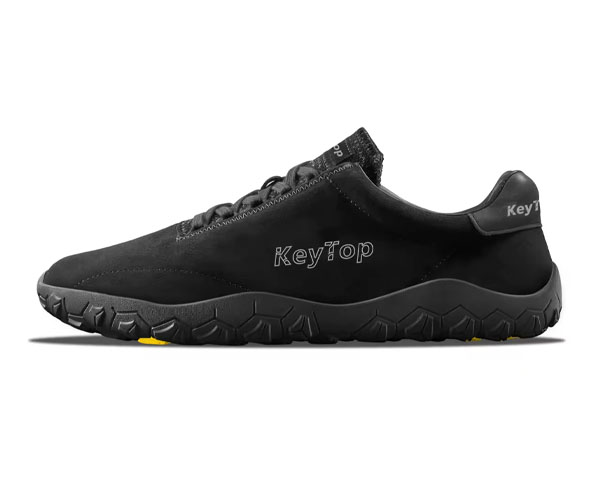
Request proof of a dedicated trail barefoot shoe production line, including material sourcing records for the specified outsole and upper, plus a written sample approval procedure. Ask the Keytop barefoot shoe factory for a base-model sample within 7–14 days or a full OEM sample within 10–21 days, then verify the sample against your specification before approving the scorecard. Confirm the supplier’s ISO 9001:2015 certification or amfori BSCI audit report, and request QC documentation for past trail shoe orders to reduce supplier risk.
What should buyers lock before approving supplier shortlist scorecard?
Lock the final specification, agreed cost, and confirmed minimum order in writing, then ensure the supplier has provided a signed sample approval report for the trail barefoot shoe prototype. Verify the lead time for standard production—typically 30–45 days after sample approval—and document the payment terms (e.g., T/T 30% deposit, 70% before shipment) as a reference. Complete the scorecard by comparing these locked details across shortlisted factories and proceed to quote request follow-up only after sample approval is documented. Approving the wrong structure or supplier proof can create quality, cost, or delivery problems.
quote request handoff: Ask B2B buyers to share product category, target quantity, market, timeline, and reference files for a practical quote. Send Specs for Review.
Leave a Comment
Ask a sourcing question, add your view, or request follow-up from our team. We keep the form short so it feels natural inside the article page.