
The sourcing record for barefoot boots workflow before bulk production is incomplete until it supports this Verify samples, materials, print, tolerances, certifications, and bulk-production risk.
Barefoot boot approval needs a flex test at temperature, and that is the step most sample workflows leave out.
Buyer summary: For barefoot boots workflow before bulk production, buyers should verify samples, materials, print, tolerances, certifications, and bulk-production risk.
Define the Buyer Decision for Barefoot Boots Sample Approval Workflow before production
- Check barefoot boot specification match against tech pack: A single mm deviation in stack height or toe-box width changes the barefoot feel and can cause end-buyer returns Compare sample measurements against the approved tech pack using a calibrated caliper and last check gauge Bulk production runs with wrong specs, leading to rejected goods and reorder loss Document all measurement readings on the sample approval form and initial each field
- Verify sample approval document includes photos and measurement records: Without signed evidence, the supplier can claim the sample was approved verbally, causing quality drift Confirm the approval document contains dated photos of the sample from three angles plus a measurement log Supplier ships bulk goods that differ from the sample, and the buyer has no proof to reject Retain the signed approval document in the order file before issuing the deposit
- Confirm MOQ feasibility before sample sign-off: Custom barefoot boots require 500 pairs per color per style; stock styles need 50-100 pairs subject to inventory Check the order quantity against the brand's MOQ table and confirm inventory availability for stock styles Buyer approves a sample but cannot meet the MOQ, delaying production or forcing a costly short run Include the MOQ confirmation in the sample approval email and request a production slot reservation
- Inspect material and construction against barefoot boot requirements: Zero-drop construction and flexible outsole are critical for barefoot function; wrong materials cause discomfort Check the outsole flexibility by hand-bending the sample and verify the stack height is 6-8mm using a ruler Bulk boots are stiff or have a raised heel, making them non-barefoot and unsellable Request a material specification sheet from the supplier and cross-reference it with the tech pack
Confirm Product and Order Scope
For barefoot boots workflow, use a release rule: approve only when the supplier evidence matches the written requirement.
- Supplier has verified last and stack height for barefoot boots sample. Request last specification sheet and stack height measurement record. Supplier's sample room or development team. Incorrect fit or zero-drop geometry leads to sample rejection and rework cost. Compare against your tech pack before approving sample for bulk.
- Supplier has quality control checks for barefoot boots sample approval. Request QC checklist or inspection report from the sample run. Supplier's quality control team. Defects in bulk production if sample issues are not documented and fixed. Document any non-conformance and request a revised sample before sign-off.
- Supplier capability includes barefoot-specific construction and materials. Request evidence of previous barefoot boots production or material sourcing records. Supplier's R&D or sourcing team. Poor durability or fit if supplier lacks barefoot boot experience. Verify capability through references or past sample photos before committing.
Material and specification fit
Before approving a barefoot boots sample, verify that the last shape, stack height, and zero-drop angle match your tech pack. A mismatch here can cause fit issues in bulk. Ask the supplier for a specification sheet and measurement record. This step reduces rework and keeps your production timeline on track.
MOQ, cost structure, and lead time
Confirm the minimum order per color per style and the lead time for custom barefoot boots production. Keytop Barefoot Shoes requires 500 pairs per color per style for custom orders, with standard production taking 30 to 45 days after sample approval. Get these numbers in writing during the RFQ to avoid surprises in cost or delivery.
Supplier reliability and quality checks
Check that the supplier has a documented quality control process for sample approval. Request the QC checklist or inspection report from the sample run. This helps catch defects like sole separation or stitching issues before bulk production. A reliable supplier will provide this proof without delay. Always document any non-conformance and request a revised sample before signing off.
RFQ checkpoint
Ask B2B buyers to share product category, target quantity, market, timeline, and reference files for a practical quote.
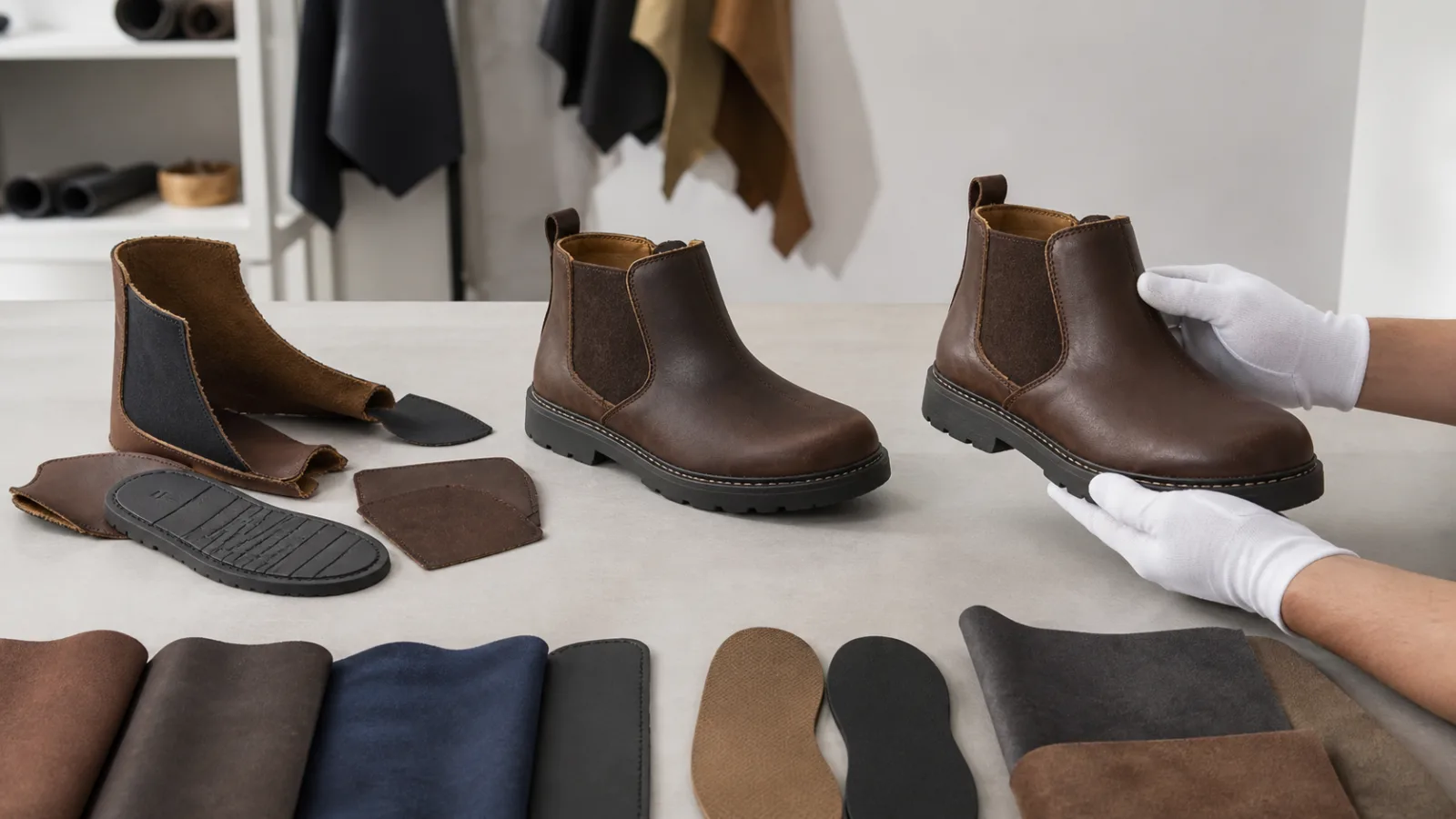
Build the Verification Checklist
- Supplier cannot demonstrate a documented sample approval gate before bulk production: Without a formal sign-off, the bulk run may repeat sample-stage defects, causing rework or shipment rejection. Request the supplier's written sample approval workflow and confirm it includes a pass/fail decision point. A copy of the supplier's internal sample approval checklist or workflow document. Verify the document lists specific checks for the barefoot shoe product range, such as stack height and sole flexibility.
- Sample approval record lacks measurement data for zero-drop and stack height tolerances: Barefoot boots require precise the buyer-confirmed requirement drop and the buyer-confirmed limit stack height; missing data means the bulk order may deviate from specs. Ask for the measurement report from the sample approval, including drop and stack height readings. A signed sample measurement report showing actual drop and stack height values. Compare the report against your tech pack tolerances and reject if outside the buyer-approved tolerance.
- Supplier has no documented quality control process for sample approval before bulk production: Lack of QC process increases risk of material defects, poor construction, or non-compliance with barefoot boot standards. Request the supplier's QC process documentation specific to sample approval. A flowchart or written procedure for sample inspection and approval. Confirm the process includes a verification step for the barefoot shoe product range, such as sole adhesion and toe-box width.
- Supplier cannot provide a written approval record from the previous sample stage: Without a record, there is no evidence that the sample was formally approved, risking unauthorized changes in bulk. Request the signed approval record for the last sample, including date and approver name. A signed and dated sample approval form or email confirmation. Cross-check the approval date against the production timeline to ensure no gaps.
- Supplier's sample approval workflow does not include a buyer sign-off step: Without buyer sign-off, the supplier may proceed to bulk production with unapproved changes. Ask the supplier to add a buyer approval gate to their workflow before bulk production. An updated workflow document that includes a buyer sign-off step. Require written buyer approval for every sample before bulk production begins.
Compare Quote and Production Assumptions
The main failure mode for barefoot boots workflow is approval before the supplier has resolved the listed evidence gaps.
- For barefoot shoe manufacturing for indie brands brands, has the supplier produced barefoot boots with zero-drop last and wide toe box? Verifies factory experience with barefoot geometry and avoids retooling delays. Supplier shares past production records and sample photos of similar boots. Approving sample from inexperienced supplier may yield incorrect fit at bulk. Request supplier portfolio of barefoot boot projects and client references.
- How will you verify the sample's stack height, drop, and flex point match the spec? Ensures sample meets barefoot boot requirements before bulk production. Supplier provides measurement report with tolerances and photos of test. Without verification, bulk boots may deviate from approved sample. Require written measurement report and photo evidence for each sample.
- What aspects of this barefoot boot sample change the cost compared to standard production? Identifies cost drivers like custom last, special material, or tooling. Supplier itemizes sample cost vs bulk and explains each variable. Hidden costs may blow budget or delay approval. Request a cost breakdown by line item for sample and bulk.
- What is the timeline for sample approval and deposit before bulk production? Aligns buyer schedule with supplier production lead time. Supplier provides clear approval gate and deposit trigger. Without timeline, bulk production may be delayed or started without approval. Document approval date, deposit deadline, and bulk start date in agreement.
Run the Review Before Approval
At this process checkpoint, the buyer must have a documented evidence package from the supplier that matches the written requirements. Without this output, do not move to the next stage.
Questions to send back to the supplier
- Does the sample match the spec sheet for sole thickness, toe box width, and zero-drop measurement?
- What is the exact cost per pair at the confirmed minimum order, and are there any hidden tooling or setup fees?
- Can the supplier provide a production risk assessment for the chosen materials (e.g., outsole adhesion, upper stitching tension)?
- How will the factory execute the RFQ-to-sample handoff—do they have a documented internal approval gate before bulk?
When to revise, escalate, or reject
If the supplier cannot show evidence of a documented sample approval workflow, revise the request. Escalate when the sample fails critical specs (e.g., toe spring, ground feel). Reject if the supplier bypasses the review step entirely. For barefoot boots, use a release rule: approve only when the supplier evidence matches the written requirements. As Annie from Keytop Barefoot Shoes advises, B2B buyers should treat sample approval as a production gate, not a formality. For more on this workflow, see blog.
Move from Review to RFQ or Sample
The main failure mode at this gate is ambiguity: the buyer reviews a sample but lacks a clear, documented path to either issue an quote request or order a revised sample. Without a structured handoff, the supplier may proceed with bulk production on assumptions that do not match the buyer’s requirements. The control that prevents this is a formal release rule: approve only when the supplier evidence matches the written requirements and the buyer follow-up is explicitly defined.
Inputs to include in the next message
- Specification sheet with all measurements, materials, and construction details verified against the approved sample.
- Cost breakdown or minimum order confirmation tied to the approved sample version.
- Production risk assessment: list any deviations from the original spec and how they are mitigated.
- Factory execution evidence: photos or video of the sample being produced, showing tooling and process.
- Clear statement of buyer follow-up: either quote request for bulk or request for a revised sample with specific changes.
Ownership and sign-off for the next gate
Annie, as the buyer’s representative, must sign off that the evidence package is complete. The supplier’s production manager must confirm that the sample matches the spec and that the factory can replicate it at scale. Keytop Barefoot Shoes, a Jinjiang-based B2B barefoot shoe OEM/ODM manufacturer, typically assigns a dedicated project coordinator to manage this handoff. The sign-off is documented in a simple table:
| Role | Responsibility | Sign-off |
|---|---|---|
| Buyer (Annie) | Verify evidence matches requirements | Yes/No |
| Supplier Production Manager | Confirm factory can replicate sample | Yes/No |
| Project Coordinator | Document buyer follow-up and timeline | Yes/No |
Once all sign-offs are obtained, the buyer can confidently move to quote request or request a revised sample. This structured approach eliminates ambiguity and ensures both parties are aligned before committing to bulk production.
Source check: ISO 9001 quality management standard; And Others TITLE Critical Thinking Handbook: 4th-6th Grades .; Shoe Sample Approval Checklist Before Bulk Production.
In conclusion
The sourcing choice for barefoot boots ultimately rests on a documented sample approval workflow that verifies every specification—from stack height and zero-drop geometry to material and construction—before any bulk production deposit is placed. Buyers who compare the approved sample against the original tech pack, verify the supplier’s inspection checklist and AQL plan, and confirm minimum order and lead time commitments in writing eliminate the ambiguity that causes costly rework or shipment delays.
By shortlisting only suppliers who provide signed approval documents with photos, measurement records, and evidence of a gate-based release rule, you transfer risk from the buyer to the factory process. This approach ensures that the quote request and sample handoff are backed by proof, not promise, and that bulk production begins only when the evidence package is complete and approved.
Barefoot Boots Sample Approval Workflow before production FAQ
What should buyers confirm first?
Buyers should first confirm that the sample matches the barefoot boot specification—stack height (6–8mm), zero drop, and wide toe box—and that the supplier’s documented QC process covers these parameters. Check the cost impact of any material or construction change, and verify the minimum order for custom production (500 pairs per color per style) before proceeding to sample development. Approving the wrong structure or supplier proof can create quality, cost, or delivery problems.
Which proof should be retained for approval and reorders?
Retain a signed sample approval document that includes photos, measurement records, and material swatches, plus the supplier’s written confirmation that the bulk run will match the approved sample. For reorders, keep the original approval file and compare it against the new production sample to ensure consistency in fit, construction, and finish. Approving the wrong structure or supplier proof can create quality, cost, or delivery problems.
Which warning signs should stop the order?
Stop the order if the supplier cannot provide a documented sample approval workflow, if the sample shows deviations in stack height or drop, or if the lead time for sample revision exceeds the quoted timeline without explanation. Also halt if the supplier requests a deposit before sample approval or cannot show evidence of bulk-control measures like material traceability or in-process QC checks.
quote request handoff: Ask B2B buyers to share product category, target quantity, market, timeline, and reference files for a practical quote. Send Specs for Review.
Leave a Comment
Ask a sourcing question, add your view, or request follow-up from our team. We keep the form short so it feels natural inside the article page.